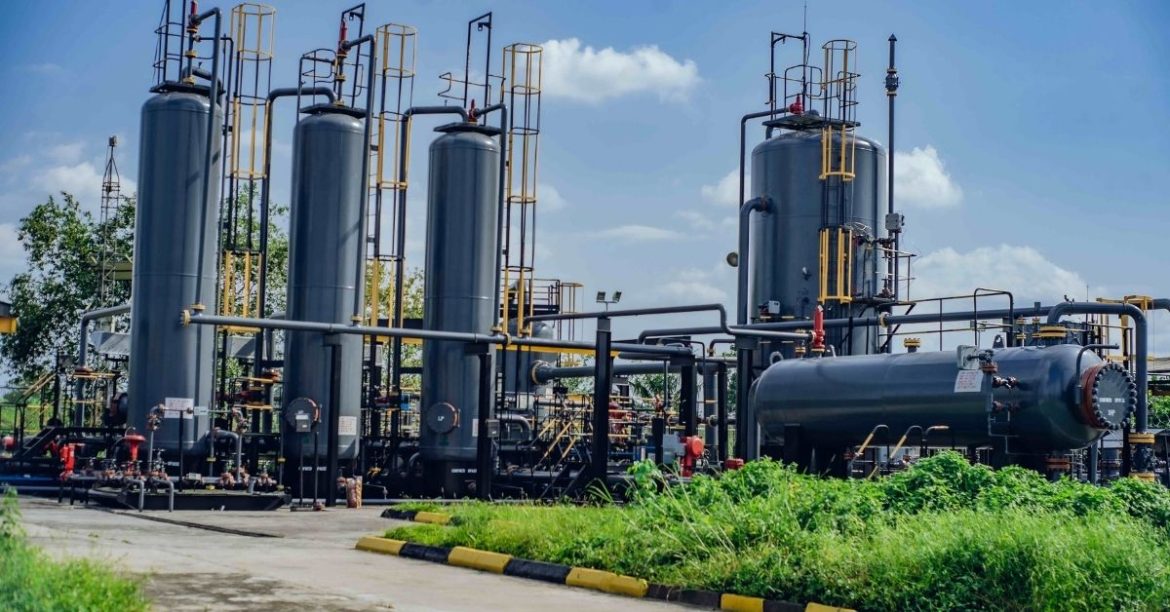
Nigeria’s electricity grid received a major lift this week after the revival of the Agbada-67 gas well in Rivers State restored a crucial flow of domestic gas to the eastern corridor, marking one of the most significant engineering interventions undertaken at OML 17 and reshaping how the country can extract value from ageing energy assets.
The operation, carried out by the NNPC/Heirs Energies Joint Venture, relied on a complex rigless through-tubing method that restored a well once considered uneconomical, and in doing so, delivered a direct boost to national power generation at a moment when the country is struggling to stabilise supply.
The well had long been written off because of excessive water production that made conventional drilling or workovers financially unjustifiable. The team deployed a 52-day intervention that combined targeted chemical treatments with the placement of a 60-foot ceramic sleeve inside three-inch tubing at a depth of about 10,000 feet.
This approach allowed the operators to isolate water-producing zones without shutting in the well entirely. Nigerian engineers who followed the project describe it as one of the most technically demanding brownfield completions attempted in years, largely because it required executing high-precision work inside narrow tubing in a live well. The outcome is a steady production of roughly 45 million standard cubic feet of gas per day, dedicated fully to domestic supply.
The immediate effect of the restored volumes is evident across the Eastern Nigeria power network, where gas availability had been a persistent bottleneck. Transcorp’s TransAfam Power Plant, which had been oscillating around 50 megawatts due to insufficient feedstock, surged to more than 180 megawatts and has recorded peaks of about 200 megawatts. Combined output across the region’s plants has jumped from an average of 100 megawatts to about 325 megawatts, with high points reaching 455 megawatts.
Other plants, including those operated by First Independent Power Limited and Geometric Power, have reported steadier generation as a result of the increased gas flow. The situation offers a practical example of how a single upstream breakthrough can shift downstream performance, especially in an energy system where most generation capacity depends on gas-fired turbines.

The financial implications of the intervention also stand out. The project was completed at 15 percent of the cost of drilling a new well, and operators say it represents a 65 percent saving compared with a full conventional workover. This is significant in a sector where capital shortages have slowed field development nationwide. Nigeria holds an estimated 208 trillion cubic feet of proven gas reserves, yet suffers frequent generation constraints because the infrastructure needed to deliver fuel to power plants either underperforms or remains underdeveloped.
A number of energy economists have pointed out that Nigeria routinely generates below 4,500 megawatts for a population exceeding 220 million, far below South Africa’s installed capacity of more than 52,000 megawatts and Egypt’s 60,000-plus megawatts. Bringing dormant wells back to life at a fraction of the cost gives the country a way to close part of the supply gap without waiting for large, capital-intensive greenfield developments.
There is also a continental relevance to the engineering technique used at Agbada-67. Several African producers are currently contending with declining output from ageing fields. Angola, Congo and Equatorial Guinea have reported sustained reservoir depletion over the past decade, and even new discoveries in Senegal and Mozambique face long development timelines.
A replicable low-cost method for reviving marginal wells could lengthen the productive life of brownfields across the continent, freeing up gas for domestic industries and opening space for gradual, smoother energy transitions. In markets where grid shortages and fuel scarcity routinely suppress manufacturing and contribute to unemployment, a restored gas well becomes more than an engineering achievement; it becomes a tool for economic resilience.
The intervention arrives as Nigeria is attempting to position gas as a bridge fuel for both industrial growth and cleaner power generation. The federal government has repeatedly stated that domestic gas development sits at the centre of its energy policy, but project delivery has often been slowed by financing difficulties and ageing infrastructure.
The Agbada-67 outcome offers a working model that senior officials at NNPC and the Nigerian Upstream Investment Services have called a template for future development. Following the earlier restoration of Agbada-68 in 2024, the joint venture has signalled confidence that similar wells can be reclaimed using the same approach.

For communities in the eastern corridor, the effect is immediate. Improved gas supply reduces the frequency of deep load-shedding that has undermined small industries across Port Harcourt, Aba and surrounding towns.
Local factory operators say periods of stable grid power translate directly into reduced diesel consumption and lower operating costs, which in turn determine whether they keep staff or downsize. A number of business forums in the region have repeatedly pointed to electricity availability as the most decisive factor affecting competitiveness, more than taxation or market access.
By strengthening domestic gas feedstock and demonstrating new engineering capability, the Agbada-67 revival adds a practical layer to Nigeria’s broader sustainability effort.
Engage with on LinkedIn: Africa Sustainability Matters