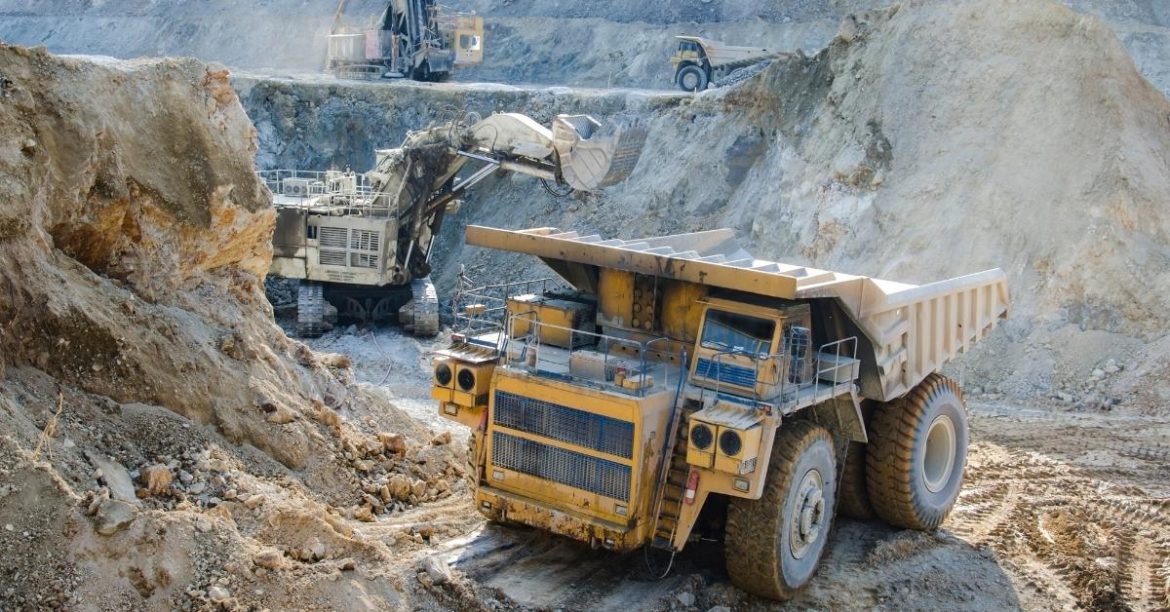
Glencore, one of the world’s largest mining and commodities trading groups, is set to prioritise copper production at its operations in the Democratic Republic of Congo in 2026, recalibrating output plans as export restrictions continue to weigh on cobalt shipments from the country, a move that underscores how market controls and global energy transition dynamics are reshaping mining strategies in Africa.
The Swiss-based commodities group said this week that it had issued production guidance for copper next year but withheld forecasts for cobalt, citing high levels of uncertainty. While the company continues to mine cobalt in the DRC, exports remain constrained by quotas introduced by the Congolese government to manage oversupply and stabilise prices in a market critical to electric vehicle batteries.
Read also: Sierra Leone seeks private firms to deliver renewable mini-grids under €24m EU-funded programme
In 2025, Glencore produced 33,500 tonnes of cobalt in the DRC, a decline of about five percent from the previous year. Much of that output, however, could not be shipped after authorities imposed an export embargo in February 2025, later replacing it with a quota system in October. The restrictions were intended to address a global surplus that had driven cobalt prices sharply lower, but slow approval processes meant exports did not resume before the end of the year.
Congolese authorities have since allowed producers to carry forward unused 2025 export allocations until March 31, 2026, an exception to standard rules. Even with that flexibility, Glencore expects to export about 22,800 tonnes of cobalt in 2026, including the rolled-over volumes, before shipments fall to an estimated 18,800 tonnes in 2027. Those figures remain well below annual production levels at its two Congolese operations, Kamoto Copper Company and Mutanda, highlighting the growing mismatch between output and market access.
Against that backdrop, the company said it would focus on copper production in the DRC, where exports face no such constraints and market conditions have turned increasingly favourable. Cobalt is typically produced as a byproduct of copper or nickel mining, and Glencore indicated that surplus cobalt generated in the course of copper extraction would be stockpiled until export conditions improve.

Copper’s global price rally has reinforced the strategy. On the London Metal Exchange, three-month copper prices reached fresh record highs this month, extending gains of more than 40 percent recorded in 2025. Analysts attribute the surge to tightening supply and rising demand linked to investments in power grids, renewable energy, electric transport and data infrastructure.
Investment banks have also taken a long-term bullish view. Goldman Sachs has projected that copper prices could approach $15,000 per tonne by the mid-2030s as demand outpaces supply, with consumption expected to accelerate as digitalisation, artificial intelligence and electrification drive heavy infrastructure spending. Market analysts say those expectations are already influencing investor behaviour, lending momentum to the current price cycle.
For Glencore, copper has become an increasingly central pillar of its Congolese portfolio. The company’s DRC mines produced 247,800 tonnes of copper in 2025, a year-on-year increase of 10 percent, accounting for nearly a third of its total copper output. Across its global operations, Glencore said it aims to produce up to 870,000 tonnes of copper in 2026, up from 851,600 tonnes last year, though it has yet to provide a detailed country-by-country breakdown.
The shift has broader implications for sustainability and industrial policy in Africa’s mineral-rich economies. The DRC dominates global cobalt supply and plays a growing role in copper markets, positioning it at the centre of energy transition supply chains. Export controls, while designed to stabilise prices and increase state leverage, also introduce uncertainty for producers and downstream manufacturers seeking reliable access to critical minerals.
Read also: Liberia signs $30m BADEA deal to upgrade Salayea–Konia road in Lofa County
The situation highlights a recurring tension: how to balance market management and value capture with the need for predictable investment conditions. While copper’s current price strength offers short-term relief for producers, the longer-term outlook will depend on regulatory clarity, infrastructure investment and how countries like the DRC position themselves within rapidly evolving global clean energy markets.
As 2026 approaches, Glencore’s decision to lean into copper while navigating cobalt restrictions reflects a pragmatic response to current market realities. Whether that strategy delivers lasting benefits will hinge not only on prices, but on how Africa’s mineral policies align with the accelerating global demand for metals that underpin the energy transition.