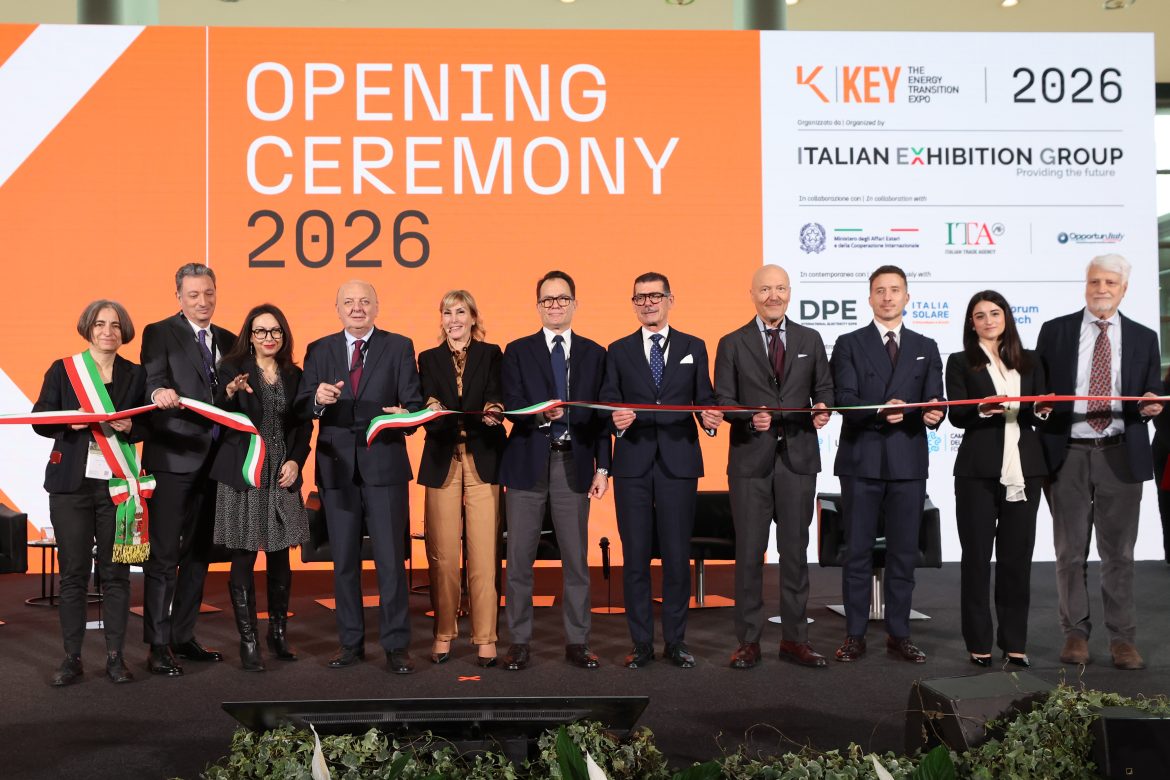
Italy opened one of Europe’s largest energy transition trade events on March 4 at the Rimini Expo Centre, where policymakers, energy companies and investors gathered for the 2026 edition of KEY – The Energy Transition Expo, a three-day international forum bringing together more than 1,000 exhibitors and delegations from about 50 countries to showcase technologies and financing models shaping the next phase of global energy systems.
The event, organised by the Italian Exhibition Group and inaugurated by Italy’s Minister for the Environment and Energy Security Gilberto Pichetto Fratin, is positioning Italy as a convening hub for energy transition dialogue across Europe, Africa and the Mediterranean basin.
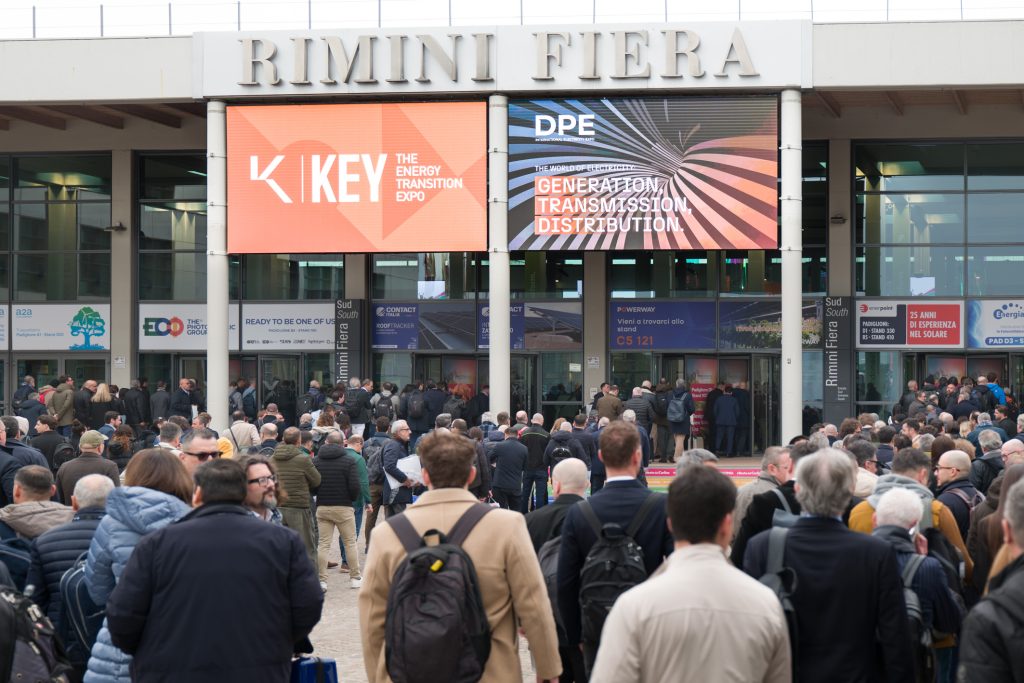
The exhibition occupies more than 125,000 square metres across 24 halls and is expected to host more than 500 international buyers, according to organisers, with roughly 30% of exhibiting companies coming from outside Italy.
Delegations attending the forum were supported by the Italian Trade Agency and the Ministry of Foreign Affairs and International Cooperation as part of Italy’s broader economic diplomacy strategy around energy technology and infrastructure.
Opening the event, Pichetto Fratin said Italy’s approach to the energy transition would rely on a broad technology mix that balances renewable expansion with energy security considerations.
According to the minister, the government views renewables, storage technologies and emerging nuclear capacity as complementary tools within a “technologically neutral” strategy aimed at strengthening energy resilience while reducing emissions. The approach reflects ongoing policy discussions within Europe about how to accelerate decarbonisation while maintaining industrial competitiveness and grid stability.
Read also: Ampersand Energy launches first franchise battery swap station in Rwanda with Power Charge Ltd
The exhibition brings together companies and research institutions working across solar power, battery storage, electric mobility infrastructure, smart building technologies and grid digitalisation. Among the technologies showcased are sodium-ion batteries, thermal storage systems based on fluidised sand, agrivoltaic installations that combine agriculture with solar power generation, and high-capacity electric vehicle charging networks.
According to organisers, the range of technologies reflects a growing market for integrated energy solutions rather than single-technology approaches.
Alongside the exhibition, the Italian Exhibition Group announced the launch of the Storage & Solar Expo Conference, a specialised business-to-business forum scheduled for September 2026 in Vicenza that will focus specifically on photovoltaic technology, battery storage and integrated energy management systems.
The conference is intended to provide a dedicated platform for manufacturers, project developers, investors and large energy users to develop partnerships within the rapidly expanding solar and storage supply chains.
The event is running in parallel with the International Electricity Expo, which focuses on electricity generation, transmission and distribution technologies, including automation systems and distributed generation equipment. The electricity forum is organised with industry associations representing companies across the electrical engineering and power equipment manufacturing sectors.
Beyond technology displays, the conference programme includes discussions on energy finance, international cooperation, power market reforms and infrastructure planning.
Sessions scheduled during the week involve organisations including the United Nations Development Programme, the United Nations Environment Programme and the International Energy Agency, alongside industry groups examining investment trends in renewable energy deployment and grid modernisation.
For African stakeholders attending the event, the discussions reflect broader questions about how emerging markets can scale renewable energy systems while addressing persistent infrastructure gaps. According to international energy agencies, Africa remains the region with the lowest electricity access rates globally, with roughly 600 million people lacking reliable power.
Expanding renewable generation, improving grid integration and developing storage capacity are therefore widely viewed as central to the continent’s economic development and industrialisation strategies.
European technology suppliers and financial institutions have increasingly identified Africa as a priority market for renewable investment, particularly in solar generation, battery storage and decentralised energy systems.
Read also: AfDB approves €6.5 million investment in Saviu II Fund to scale tech startups in Francophone Africa
Countries including Morocco, Egypt, Kenya and South Africa have already become focal points for international renewable energy investment, while other markets across West and East Africa are developing regulatory frameworks intended to attract private capital into power generation and transmission projects.
According to analysts, forums such as KEY are becoming part of a wider ecosystem of international energy diplomacy where technology providers, financiers and governments negotiate partnerships that shape the future of power systems.
For African economies seeking to expand electricity access while managing rising energy demand, the relevance of such platforms lies less in technology exhibitions themselves and more in the financing structures, supply chains and policy models that underpin large-scale deployment.
As global energy markets continue to adjust to geopolitical tensions, commodity price volatility and climate commitments, the Rimini gathering reflects the growing intersection between industrial policy, energy security and decarbonisation strategies.