


India’s Gujarat state has approved a new implementation framework for its Gujarat Integrated Renewable Energy Policy-2025 (GIREP-2025), introducing standardized procedures aimed at accelerating renewable energy and battery storage deployment while strengthening grid stability and investor confidence in one of the country’s largest clean energy markets. The policy framework, approved on May 5, establishes time-bound procedures for project approvals, digital permitting and grid integration across solar, wind, hybrid renewable systems and standalone Battery Energy Storage Systems (BESS), reflecting wider efforts by emerging economies to modernize electricity infrastructure amid rising energy demand and decarbonization pressures.
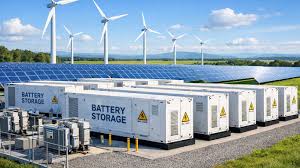
The new Standard Operating Procedure (SOP) seeks to simplify project development by consolidating registration, technical approvals, connectivity permissions, and commissioning processes through a centralized digital platform. Gujarat’s government said the updated framework is intended to improve transparency and reduce administrative delays that have historically slowed renewable energy deployment despite growing investor appetite for low-carbon infrastructure.
The policy arrives at a critical stage in India’s energy transition. According to India’s Ministry of New and Renewable Energy, the country aims to install 500 gigawatts of non-fossil fuel electricity capacity by 2030 as part of its broader climate and energy security strategy. Gujarat has emerged as one of the country’s leading renewable energy states due to its extensive solar irradiation, coastal wind resources and industrial infrastructure, positioning it as a key testing ground for integrated renewable energy systems and storage technologies.
A central feature of the GIREP-2025 framework is its emphasis on battery storage integration to address intermittency risks associated with solar and wind generation. As renewable penetration increases within electricity grids, energy storage systems are becoming increasingly important for balancing supply fluctuations, reducing curtailment and supporting grid reliability during peak demand periods.
The framework applies to a broad range of projects including ground-mounted solar facilities, rooftop systems, floating solar installations, wind farms, hybrid renewable projects, and standalone storage infrastructure. Developers will also be required to comply with technical standards established by the Central Electricity Authority and the Gujarat Electricity Regulatory Commission, including advanced metering and real-time communication systems connected to load dispatch centers.
The digitization of project approvals reflects a broader shift underway across global energy markets, where governments are increasingly relying on centralized digital infrastructure to accelerate clean energy deployment and improve regulatory oversight. Gujarat’s upgraded single-window portal is expected to handle project registration, capacity allocation, approvals, and connectivity permissions through a unified interface designed to reduce transaction costs and administrative fragmentation.
For African economies pursuing similar renewable energy expansion strategies, Gujarat’s model illustrates how procedural reforms and digital permitting systems are becoming as significant as generation capacity itself in attracting investment into clean energy infrastructure. According to the African Development Bank, Africa requires more than $100 billion annually in energy sector investment to meet growing electricity demand and support industrialization, yet regulatory bottlenecks and grid constraints continue to limit project execution across many markets.

Battery storage systems are also gaining strategic importance across Africa as countries seek to integrate larger shares of renewable energy into national grids while reducing dependence on imported fossil fuels and expensive diesel generation. South Africa, Kenya, Morocco and Egypt have all expanded utility-scale battery storage initiatives linked to renewable energy programmes aimed at improving grid resilience and reducing power shortages.
In many African markets, however, permitting delays, fragmented regulatory systems and weak transmission infrastructure continue to constrain renewable energy investment despite strong solar and wind potential. Analysts note that streamlined approval systems like Gujarat’s could help reduce financing risks and improve investor confidence, particularly in countries attempting to scale independent power producer programmes and regional electricity interconnections.
The Gujarat framework also highlights the growing role of storage technologies in future electricity systems. According to the International Energy Agency, global battery storage capacity additions are expected to accelerate sharply over the coming decade as renewable generation expands, and grids become increasingly decentralized. Storage infrastructure is expected to become central not only to electricity reliability but also to industrial competitiveness and energy security.
The policy further introduces simplified procedures for smaller renewable installations, including rooftop solar systems and small-scale wind projects. Residential consumers have been exempted from application processing fees, reflecting efforts to encourage distributed renewable generation and reduce barriers for household adoption.
Distributed energy systems are becoming increasingly relevant for developing economies where centralized grid expansion remains capital-intensive and uneven. Across parts of sub-Saharan Africa, decentralized renewable systems are playing a growing role in expanding electricity access for households and small businesses while reducing strain on national utilities facing financial pressures and infrastructure deficits.
GIREP-2025 replaces Gujarat’s previous 2023 renewable energy policy and will remain in effect until the end of 2030. Existing projects under earlier regulations have been granted a six-month transition period before moving into the new framework.
For emerging economies balancing rising energy demand, industrial growth and climate commitments, Gujarat’s policy demonstrates how regulatory modernization is becoming integral to energy transition planning. The expansion of renewable energy increasingly depends not only on generation targets and financing availability, but also on the efficiency of permitting systems, digital infrastructure and grid management capabilities capable of integrating more complex electricity networks.
For African policymakers and energy investors, the evolution of India’s renewable energy governance model offers insight into how large developing economies are attempting to align industrial expansion, energy security and decarbonization objectives through integrated infrastructure planning and regulatory reform.


