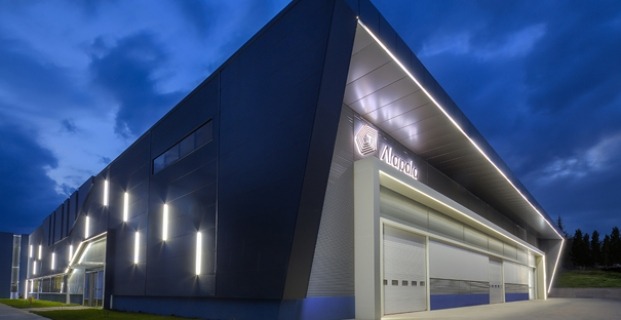
A 300-tonne daily capacity flour mill commissioned by Turkish industrial group Alapala has entered operations in Mali, marking a significant expansion of West Africa’s secondary agricultural processing infrastructure at a time of heightened regional food price volatility.
The facility, integrated with 15,000 tonnes of steel silo storage, was delivered via a turnkey Engineering, Procurement, and Construction (EPC) model by Alapala’s subsidiary ACCON, signaling a shift toward consolidated industrial investment in the Sahel.
By localizing the milling of grain, the project aims to reduce Mali’s structural dependence on imported finished flour, addressing a critical vulnerability in the national balance of payments and strengthening domestic value chains in one of the world’s most landlocked and climate-stressed economies.
The technical specifications of the plant, which includes six 2,500-tonne silos, reflect an shift toward industrial resilience rather than mere production volume. In the context of West African logistics, where post-harvest losses and supply chain disruptions frequently spike the cost of basic commodities, the addition of substantial storage capacity is a strategic necessity.
According to data from the West African Economic and Monetary Union (UEMOA), regional cereal demand is outstripping local processing capacity, leaving markets exposed to the fluctuating costs of global wheat and energy. By maintaining a buffer of raw materials, the Alapala facility allows for operational continuity during seasonal supply dips, providing a more stable price floor for local bakeries and food manufacturers who constitute the backbone of the urban informal economy.
From a fiscal and development perspective, the project underscores a broader trend of South-South investment moving into the “missing middle” of African agribusiness. While much of the region’s agricultural policy has historically focused on primary production, the lack of sophisticated milling and fortification infrastructure has limited the economic multiplier effect of the sector. The implementation of modern milling technologies in Bamako suggests a growing confidence among international EPC firms in the long-term viability of Malian industrial assets, despite the broader geopolitical transitions within the Alliance of Sahel States. For the Malian government, such investments are essential for job creation, the facility is expected to sustain dozens of skilled technical roles, and for reducing the inflationary pressure that high import costs exert on public social safety nets.
The role of ACCON in managing the structural and mechanical implementation under a single coordination framework points to a maturing market for infrastructure delivery in West Africa. Historically, fragmented procurement processes have led to project delays and technical mismatches in regional industrial builds.
The turnkey approach applied here minimizes these execution risks, a model that regional development banks are increasingly advocating for to attract private equity into the processing sector. This is particularly relevant as the African Continental Free Trade Area (AfCFTA) seeks to encourage intra-regional trade in processed goods rather than raw commodities.
Ultimately, the success of Mali’s new milling capacity will depend on its integration with regional grain origination and the stability of the local energy grid. As West Africa navigates the dual challenges of population growth and the transition toward food sovereignty, the establishment of high-efficiency processing hubs serves as a practical template for industrialization.
The focus on “operational continuity” mentioned by Alapala officials is not merely a technical target but a governance imperative in a region where food security is intrinsically linked to social and political stability.
If replicated across the Sahel, such facilities could fundamentally alter the trade dynamics of the grain sector, shifting the region from a passive consumer of global surpluses to a proactive manager of its own nutritional and economic requirements.