


Kenya is intensifying efforts to combat a growing form of wildlife trafficking involving giant African harvester ants, as conservationists and authorities warn that the illegal trade in queen ants is exposing new vulnerabilities in biodiversity protection and bioresource governance across the continent. The insects, particularly the species Messor cephalotes, have become increasingly sought after by exotic pet collectors overseas, with queen ants reportedly selling online for hundreds of dollars.
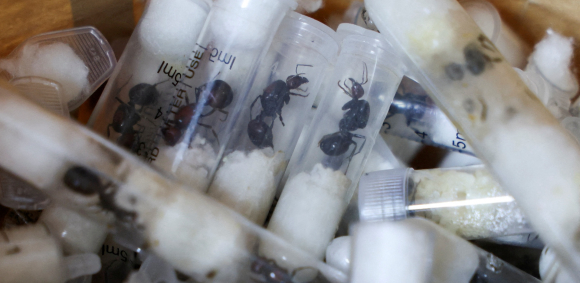
Outside Nairobi, entomologist Dr. Dino Martins points to sprawling underground nests scattered across the East African landscape, describing the ants as among the region’s most common and ecologically significant insect species. Yet their rising commercial value abroad has transformed them from overlooked components of local ecosystems into targets of international collectors and traffickers.
These are the ants who’ve now become world-famous because they’re being traded,” Martins said, noting that demand has surged partly because of the species’ distinctive appearance, including its large size and deep red coloration, as well as its complex colony behaviour.
According to researchers, the queen ant is the foundation of each colony, capable of living for several decades and producing every worker ant within the nest. Removing queens from the wild can therefore destroy entire colonies and disrupt local ecological systems that depend on insects for soil aeration, seed dispersal and nutrient cycling.
Kenyan authorities say the growing trade amounts to a form of biopiracy, where biological resources are extracted and commercialized without adequate regulation or benefit-sharing mechanisms. Wildlife officials are increasingly concerned that traffickers are exploiting gaps in monitoring systems traditionally focused on larger mammals and high-profile endangered species.
Read more: https://dialogue.earth/en/nature/trafficking-of-lesser-known-wildlife-species-on-the-rise-in-africa/
The emergence of illegal insect trafficking reflects broader changes in global wildlife markets, where demand for rare or unusual species is increasingly being driven by online platforms, niche collectors and exotic pet communities. Conservation experts note that while insects have historically received limited policy attention compared with elephants, rhinos or big cats, they remain essential to ecosystem stability, food systems and biodiversity resilience.
According to ecological researchers, ants play a particularly important role in maintaining healthy ecosystems across African savannahs and dryland environments. Harvester ants contribute to seed distribution, organic matter breakdown and soil fertility, functions that indirectly support agriculture and vegetation health in fragile ecosystems already under pressure from climate change and land degradation.
The financial incentives behind the trade also highlight the growing commercialization of biodiversity in global markets. Rare insects, reptiles and plants are increasingly traded through informal digital networks, often making enforcement difficult for customs agencies and conservation authorities. Analysts warn that wildlife trafficking is evolving beyond traditional ivory and bushmeat markets into highly specialized cross-border trade involving smaller species that are easier to transport and harder to detect.
For Kenya, the issue intersects with broader debates around biodiversity governance, intellectual property and the economic value of natural ecosystems. African countries host some of the world’s richest biological resources yet often capture limited financial value from their sustainable use while remaining vulnerable to illegal extraction and commercialization by foreign markets.
The case also underscores the challenges facing environmental regulators as biodiversity becomes more financially valuable within global markets linked to pharmaceuticals, biotechnology, conservation research and the exotic pet trade. Experts argue that existing legal frameworks in many African countries were not designed to address highly decentralized online wildlife markets where small species can be traded internationally with limited oversight.
Beyond conservation concerns, the illicit extraction of species from local ecosystems may carry implications for scientific research and ecological monitoring. Entomologists warn that insufficient understanding of insect population dynamics in Africa makes it difficult to assess the long-term ecological consequences of large-scale collection from the wild.
Kenya has positioned itself as a regional leader in wildlife conservation and biodiversity protection, with tourism and ecosystem services remaining important contributors to the economy. The emergence of ant trafficking therefore highlights the increasingly complex nature of environmental crime in a digital economy where even common species can rapidly acquire international commercial value.
For conservation authorities, the challenge is no longer limited to protecting iconic wildlife species. It increasingly involves safeguarding ecological systems that underpin agriculture, tourism, climate resilience and natural capital across the continent. As demand for rare biological resources expands globally, African governments may face growing pressure to strengthen surveillance systems, update wildlife protection laws and develop more sophisticated approaches to regulating emerging forms of biodiversity exploitation.


