


Ivory Coast is facing sharp increases in sheep prices ahead of Eid al-Adha as regional export restrictions, insecurity and disrupted trade routes across the Sahel constrain livestock supplies into West Africa’s largest francophone economy. In Abidjan’s livestock markets, traders and consumers preparing for the annual Muslim festival have reported significantly lower animal availability compared with previous years, highlighting the growing economic spillover of regional instability on food systems and household purchasing power.
The shortages come as Ivory Coast, which depends heavily on imported livestock to meet domestic demand during the Tabaski festival, struggles to secure supplies from neighbouring Burkina Faso, Mali, and Niger. According to official estimates, around 75 percent of the country’s annual Eid livestock demand is typically sourced from Sahelian countries, equivalent to roughly 350,000 sheep and cattle.
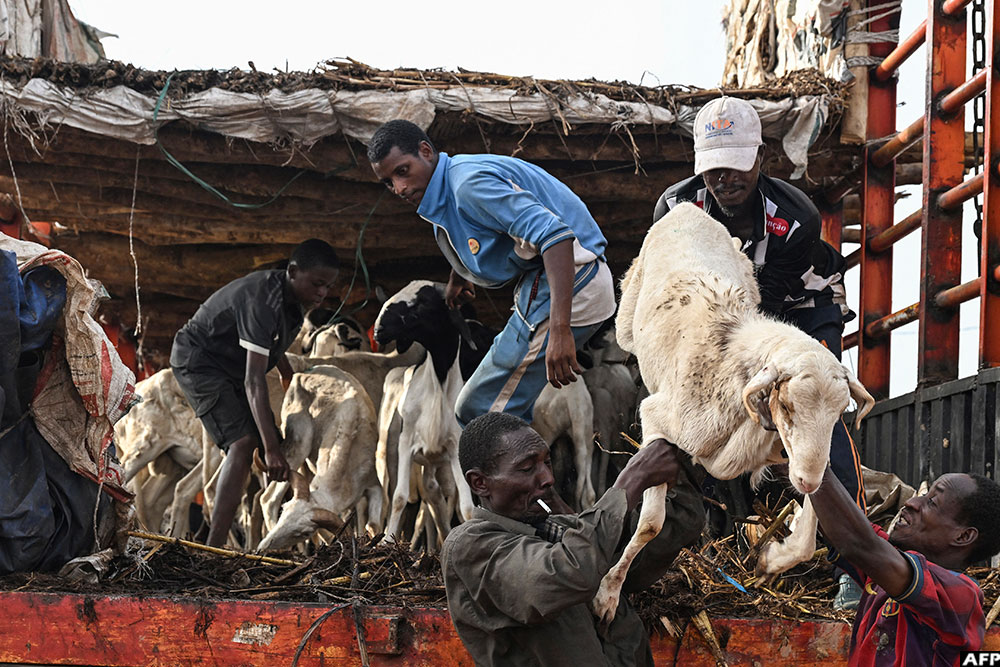 This year, however, regional supply chains have come under pressure from a combination of security disruptions and protectionist measures. Burkina Faso suspended livestock exports earlier this month to safeguard its domestic market, following similar restrictions introduced by Niger in March. In Mali, transport corridors linking production areas to coastal markets have become increasingly insecure following attacks and road blockades by armed groups linked to Al-Qaeda affiliates operating across the Sahel.
The resulting disruption has sharply reduced livestock flows into Ivory Coast at a time of peak seasonal demand. Traders in Abidjan said many purchased animals remain stranded near border areas or in northern Mali, unable to move safely through transport corridors that are critical to regional commerce.
The crisis reflects the broader economic fragmentation increasingly affecting West Africa as insecurity, political tensions and border controls reshape long-established regional trade networks. Livestock exports represent a major source of rural income across Sahel economies, while Coastal countries such as Ivory Coast rely on cross-border trade to stabilize food supplies and consumer prices.
At Abidjan’s Adjame livestock market, the impact has translated directly into higher prices for consumers already facing broader cost-of-living pressures. Traders said sheep prices that averaged around 200,000 CFA francs last year are now exceeding 250,000 CFA francs for comparable animals, with some large rams priced substantially higher. The increases are significant in a country where the monthly minimum wage stands at 75,000 CFA francs.
Read also: https://www.africanews.com/amp/2026/05/24/eid-shoppers-hit-by-soaring-sheep-prices-in-ivory-coast/
According to traders, supply volumes this season are roughly half of those recorded during the previous Eid period. The shortage has intensified bargaining across markets, while many households are reportedly reducing budgets or delaying purchases in search of cheaper alternatives.
The disruption also exposes the vulnerability of West African food systems to geopolitical and security shocks. Regional trade integration under the Economic Community of West African States (ECOWAS) has historically enabled the movement of agricultural products, livestock and staple goods across borders, helping balance seasonal shortages between Sahelian producers and coastal consumer markets.
However, recent political ruptures following military takeovers in Mali, Burkina Faso, and Niger have complicated regional coordination. Border restrictions strained diplomatic relations and deteriorating transport security have increasingly disrupted agricultural and commercial flows that support millions of livelihoods across the region.
The pressure on livestock markets also carries wider inflationary implications. Food prices remain a politically sensitive issue across West Africa, where governments are already managing fiscal strain linked to fuel subsidies, currency pressures and rising public debt. In countries heavily reliant on imported agricultural commodities, disruptions to regional supply chains can quickly feed into broader inflationary risks.
Authorities in Ivory Coast have sought to reassure consumers by stating that nearly 165,000 sheep were already available on the market ahead of the festival, representing close to half of estimated national demand. The government has also reiterated plans to strengthen domestic livestock production to reduce dependence on external suppliers.
Yet structural challenges remain significant. Local sheep breeds are generally smaller than those imported from the Sahel, making them less attractive for major religious celebrations where larger animals are culturally preferred. Expanding domestic production would likely require longer-term investment in animal health systems, grazing infrastructure, breeding programmes and rural supply chains.
The situation also illustrates how insecurity in the Sahel is increasingly affecting economies beyond immediate conflict zones. Coastal West African states including Ivory Coast, Benin, Ghana and Togo are facing rising economic exposure to instability spreading southward through disrupted trade routes, refugee flows and mounting security expenditures.
 For policymakers, the Eid livestock shortages underscore the growing importance of regional economic resilience and agricultural self-sufficiency within West Africa’s broader development agenda. While emergency trade measures may stabilise domestic markets in the short term, repeated disruptions risk weakening regional integration frameworks that have historically underpinned food security and economic interdependence across the region.
As consumers across Ivory Coast continue searching for affordable livestock ahead of Eid celebrations, the shortages offer a visible reminder of how conflict, trade policy and infrastructure insecurity are increasingly shaping daily economic realities across West Africa.


