


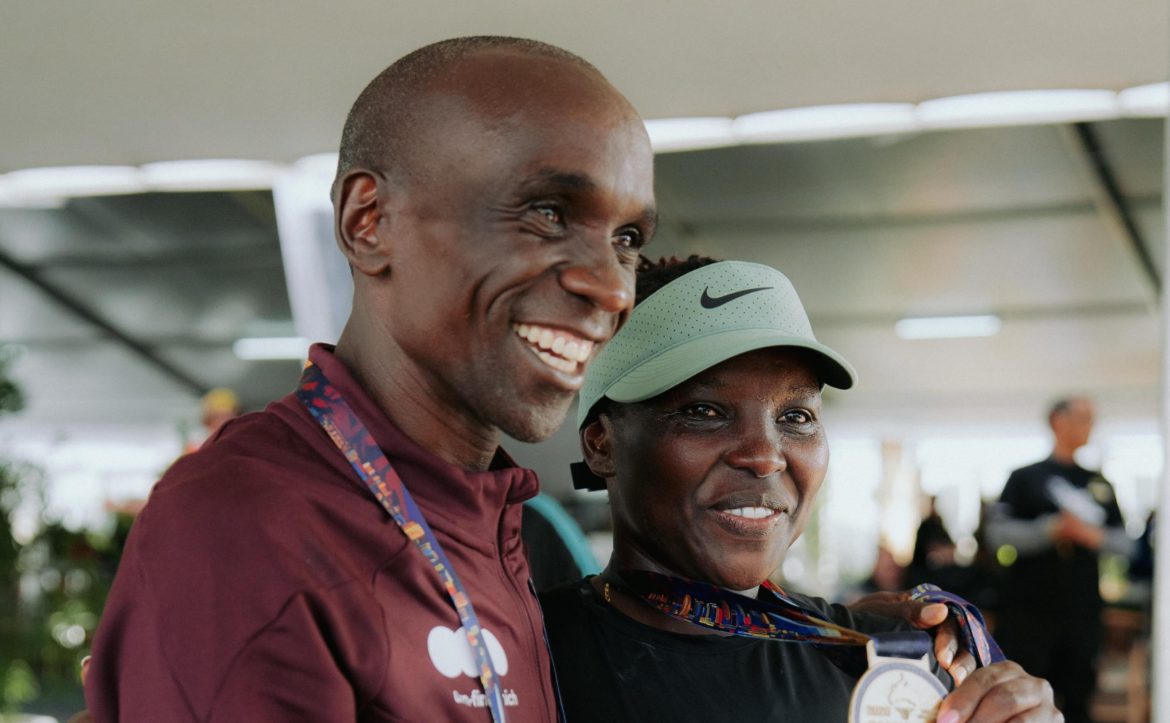
Kenyan marathon legend Eliud Kipchoge will take on a different kind of challenge at the 2026 Cape Town Marathon on May 24, when the two-time Olympic champion lines up alongside his wife, Grace Sugut Kipchoge, for her first-ever marathon appearance in a race increasingly viewed as central to Africa’s ambitions of expanding its global sports economy and event tourism industry.
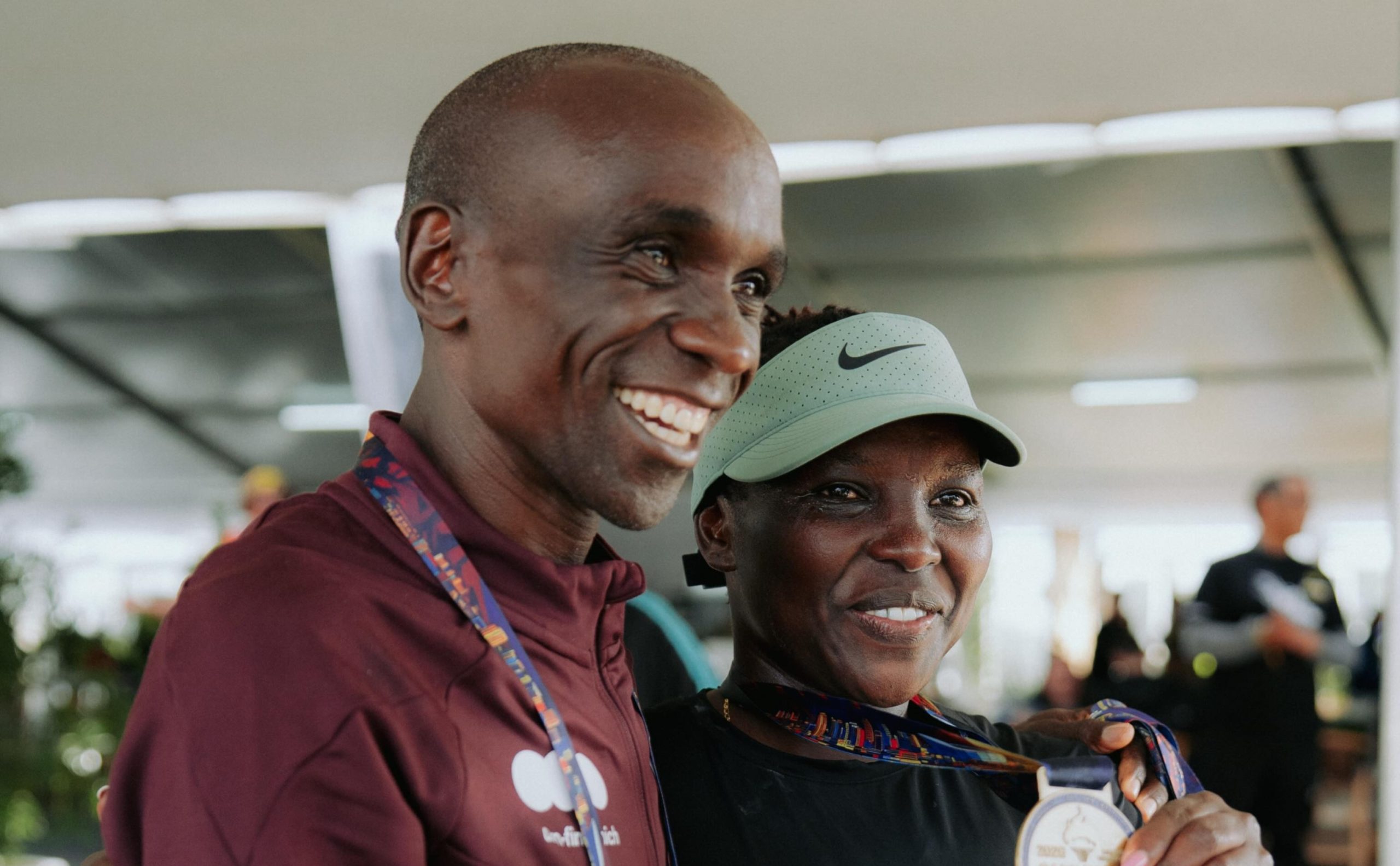 For much of his career, Kipchoge has defined elite marathon running through solitary dominance at the front of the world’s biggest races, winning multiple London and Berlin Marathon titles and becoming the first athlete to complete a marathon in under two hours during the INEOS 1:59 Challenge in Vienna. In Cape Town, however, the 41-year-old Kenyan will shift focus from records and podium finishes toward a more personal milestone as he shares the 42-kilometre race experience with his wife for the first time.
According to comments published by SportPesa blog, Kipchoge said he had advised Grace to embrace the physical and emotional demands of the race rather than focus solely on performance. “My advice is for her to line up at the starting line and enjoy the whole race, feel that pain all through the race and get through the finishing line,” he said. “She will be accomplished, and she will not be the same.”
The moment adds a human dimension to a marathon already attracting heightened international attention as organizers continue efforts to secure recognition as Africa’s first Abbott World Marathon Major. The Cape Town Marathon has steadily expanded its global profile over recent years, positioning itself as both a high-performance sporting event and a broader economic platform linked to tourism, hospitality, aviation and urban branding.
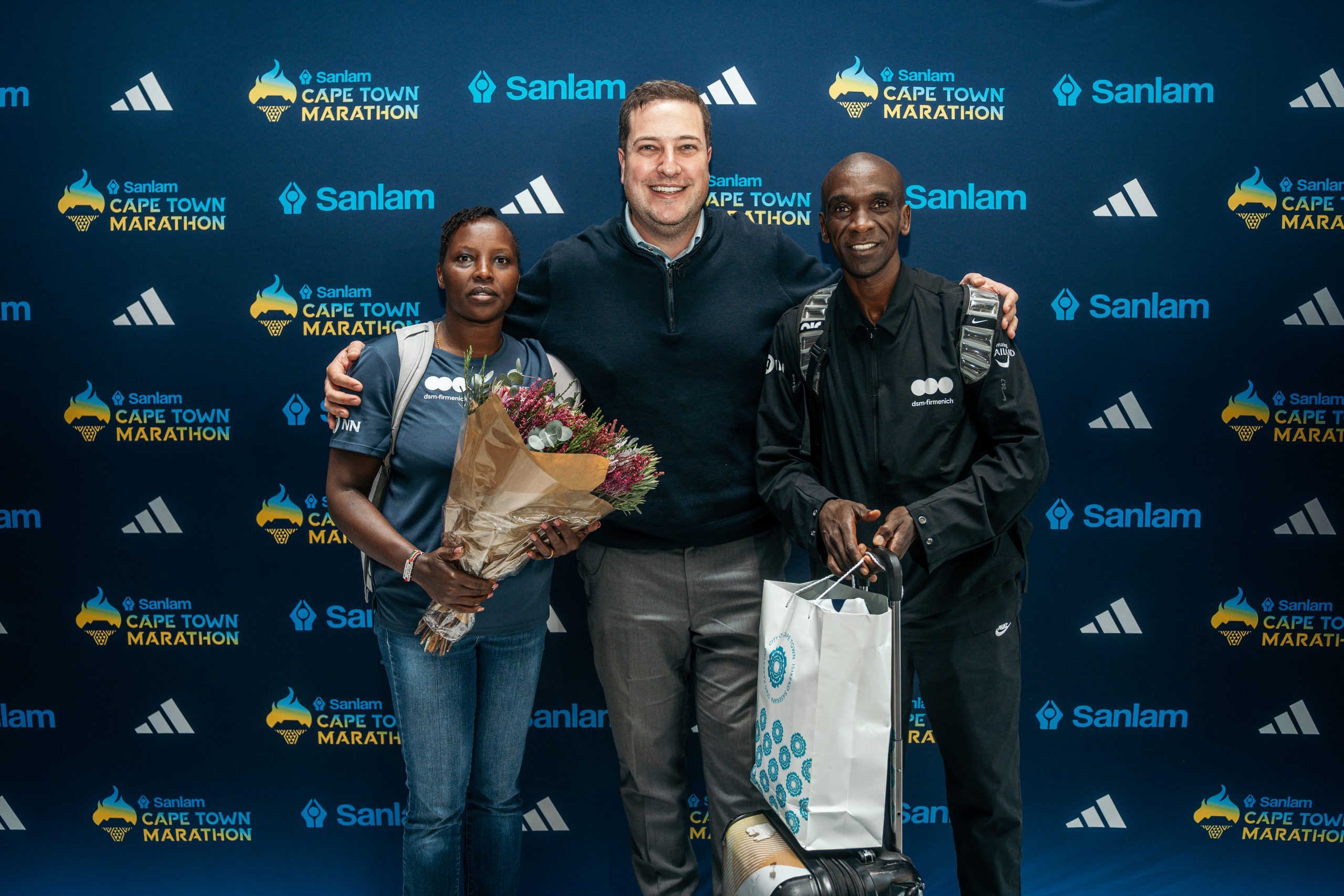 Organizers expect approximately 27,000 runners to participate in the marathon itself, alongside another 17,500 entrants across associated events including trail races and community peace runs. The scale reflects the growing commercial significance of endurance sports across Africa, where governments and private investors increasingly view international sporting events as catalysts for infrastructure development, visitor spending and global visibility.
According to race organizers, the 2026 field will include 13 male athletes and eight female athletes who have previously run faster than the current course records, underlining Cape Town’s ambitions to compete with established marathon destinations in Europe, Asia and North America. Ethiopian runner Adane Gebre Kebede and South African veteran Stephen Mokoka are expected among the elite contenders.
The race also reinforces East Africa’s continued dominance in global distance running, a sector that has become both a source of national prestige and an economic contributor through sponsorships, international training camps and sports tourism. Kenya and Ethiopia remain central to the global marathon ecosystem, supplying many of the world’s leading elite athletes while attracting international investment into training facilities and sports development programmes.
For South Africa, the continued expansion of the Cape Town Marathon reflects broader attempts to leverage sports and tourism as drivers of economic recovery and urban growth amid persistent unemployment and fiscal pressure. Large-scale sporting events generate temporary employment opportunities across transport, accommodation, retail and security sectors, while also supporting longer-term branding strategies aimed at increasing international visitor arrivals.
The event comes as African cities increasingly compete to host globally recognised sporting and cultural events as part of wider economic diversification efforts. Analysts note that successful international races can stimulate investment in transport systems, hospitality infrastructure and destination marketing while strengthening local service industries.
 Kipchoge’s participation carries symbolic weight beyond athletics itself. Over the past decade, he has become one of Africa’s most recognisable sporting figures, representing a model of discipline, longevity and international competitiveness that has elevated the global commercial value of African distance running.
Yet in Cape Town, attention is likely to focus less on time records and more on the personal significance of the race. After years spent redefining the limits of marathon performance, Kipchoge will arrive in South Africa not primarily as a world record holder, but as a husband sharing the demands of elite endurance sport with his closest companion.
For organizers seeking to position Cape Town among the world’s premier marathon destinations, that narrative may prove as globally resonant as the race itself.


