


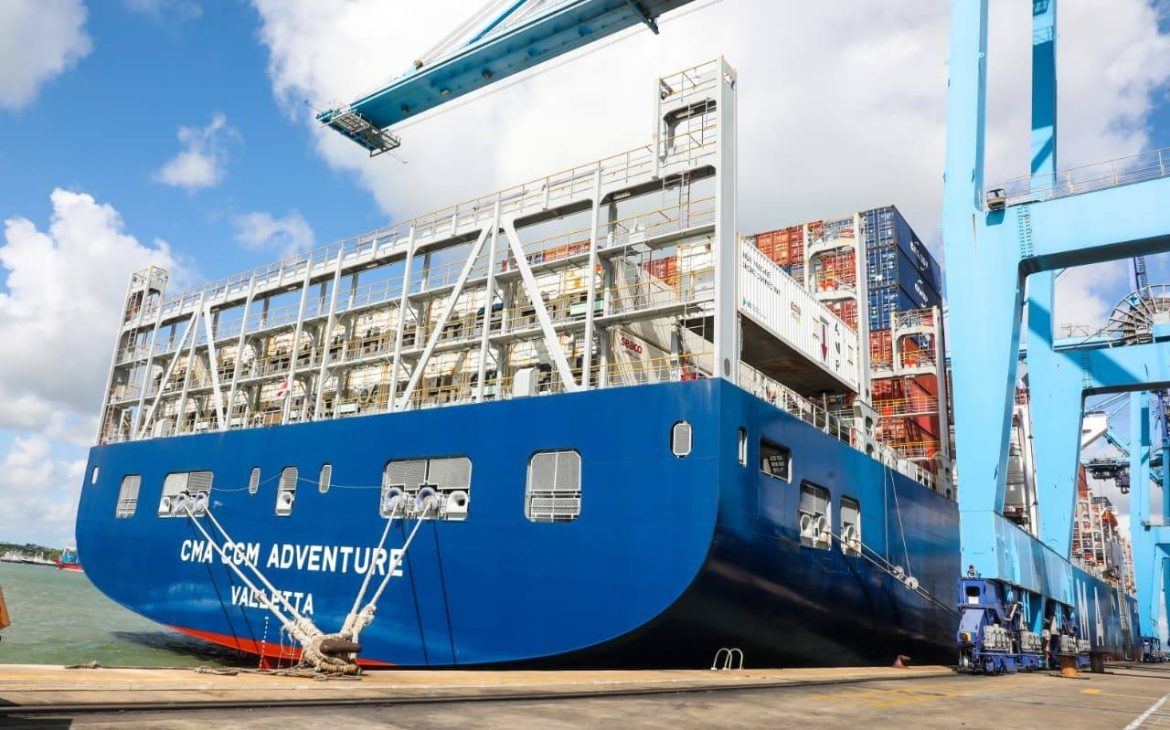
The Kenya Ports Authority (Kenya Ports Authority) has described the arrival of the CMA CGM Adventure at the Port of Mombasa as a significant milestone in Kenya’s transition toward greener maritime operations, after the vessel became the first large liquefied natural gas-powered container ship to dock at the country’s main seaport.
The vessel’s maiden call at Mombasa reflects broader changes taking place across the global shipping industry, where operators are increasingly adopting lower-emission technologies in response to tightening climate regulations, investor pressure and rising demand from cargo owners for cleaner supply chains.
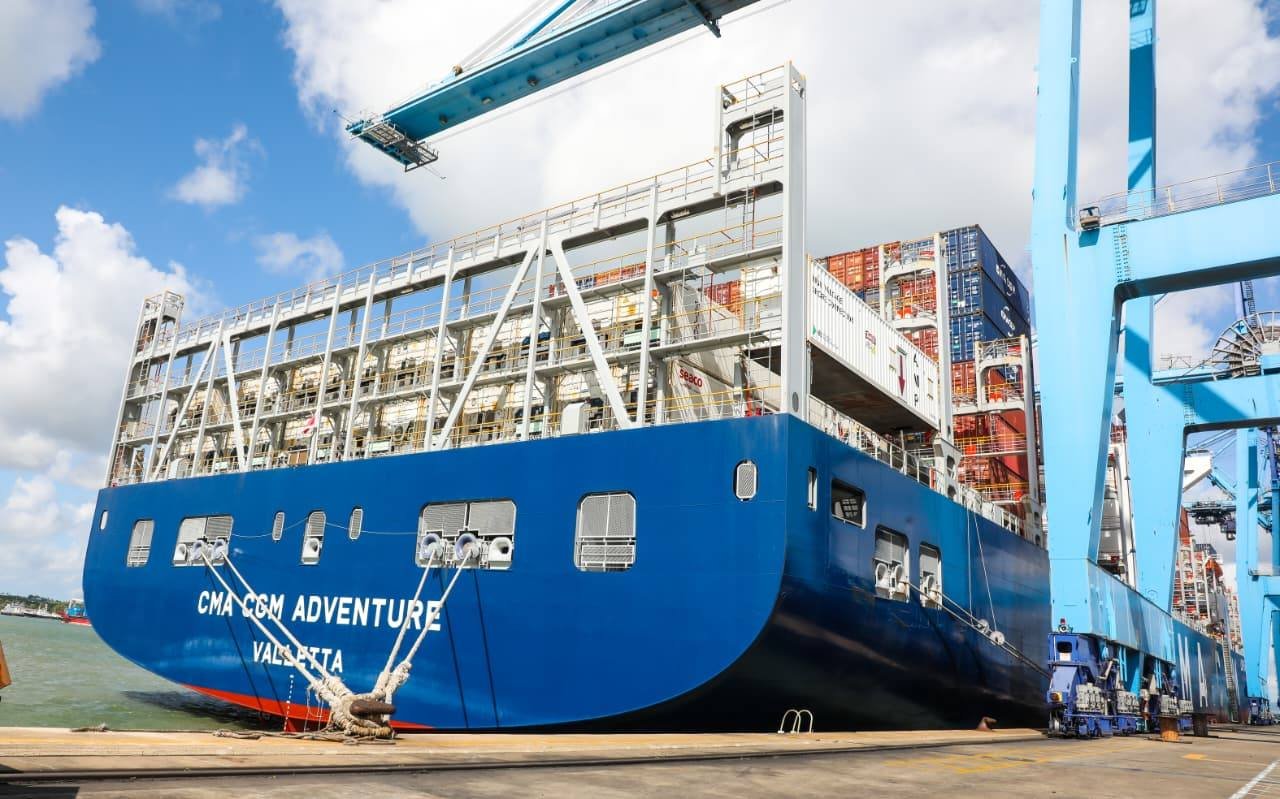
In a statement, the Kenya Ports Authority said the CMA CGM Adventure represents a new generation of environmentally sustainable cargo vessels designed to reduce greenhouse gas emissions associated with maritime transport. Unlike conventional ships powered primarily by heavy fuel oil, the vessel operates mainly on Liquefied Natural Gas (LNG), a fuel increasingly promoted within the shipping sector as a transitional alternative capable of lowering carbon dioxide, sulphur oxide and particulate emissions.
“Instead of heavy fuel oil, this vessel sails on chilled gas and does not leave behind the usual cloud of exhaust. For the Port of Mombasa, this vessel’s maiden voyage was more than ceremonial, it was symbolic,” KPA stated.
The arrival was marked through the traditional reception accorded to first-time ship calls at the port, with KPA Managing Director Captain William Ruto describing the docking as part of a broader restructuring of global maritime logistics. According to the authority, shipping companies worldwide are accelerating investment in cleaner fleets as regulators tighten emissions standards and global trade increasingly incorporates sustainability considerations into procurement and logistics decisions.
The maritime transport sector accounts for nearly 3 percent of global greenhouse gas emissions, according to estimates by the International Maritime Organization (International Maritime Organization), placing growing pressure on ports and shipping companies to decarbonise operations. International shipping remains central to global trade, carrying roughly 80 percent of world merchandise volumes, making the sector’s energy transition critical to wider climate objectives.
For African ports, the transition presents both operational opportunities and infrastructure challenges. Many ports across the continent continue to face congestion, aging equipment and limited investment capacity, even as international shipping standards evolve rapidly. Ports that fail to modernise risk reduced competitiveness as global logistics companies increasingly prioritise low-emission corridors and climate-compliant supply chains.
KPA said the Port of Mombasa is positioning itself to align with these changes through implementation of its Green Ports Policy, which seeks to integrate sustainability principles into port infrastructure and operations. Among the measures currently being implemented are the expansion of solar energy systems across port facilities, deployment of hybrid cargo-handling equipment and the planned introduction of shore power technology that would allow docked vessels to switch off onboard engines and connect directly to electricity supplied from land.
The authority also highlighted ongoing mangrove restoration projects along Kenya’s coastline, describing them as part of efforts to strengthen natural carbon sinks linked to maritime sustainability. Coastal ecosystems such as mangroves play a significant role in carbon sequestration while also protecting shorelines from erosion and climate-related impacts, making them increasingly important within port climate adaptation strategies.
According to shipping company CMA CGM Group (CMA CGM Group), the CMA CGM Adventure was built in late 2024 and measures 268 metres in length with a beam of 43 metres. The vessel has a carrying capacity of 7,378 Twenty-foot Equivalent Units (TEUs) and incorporates advanced fuel efficiency and emissions-reduction technologies intended to improve operational performance while reducing environmental impact.
The docking also highlights Mombasa’s strategic role within East African trade networks. As the region’s largest and busiest seaport, Mombasa serves as a gateway not only for Kenya but also for several landlocked economies including Uganda, Rwanda, South Sudan and parts of the Democratic Republic of Congo. The ability to accommodate next-generation vessels is therefore increasingly tied to regional trade competitiveness and supply chain reliability.
Kenya’s broader push toward greener logistics infrastructure comes as African economies face rising pressure to balance industrial growth and expanding trade volumes with climate commitments under the Paris Agreement. While LNG is viewed by parts of the shipping industry as a lower-emission transition fuel, environmental groups and some climate analysts argue that it remains a fossil fuel and may offer only temporary emissions reductions unless paired with longer-term investments in zero-carbon fuels such as green hydrogen, ammonia or methanol.
Nevertheless, for many developing economies, the immediate challenge lies in ensuring ports and transport infrastructure remain compatible with rapidly changing global shipping standards. Investments in cleaner maritime technologies are increasingly becoming linked not only to climate policy but also to trade access, insurance costs and the long-term competitiveness of export-oriented economies.
https://www.aecweek-registration.com/2026/?repid=
KPA said the vessel’s arrival signals growing confidence in the Port of Mombasa’s operational capacity and its readiness to support emerging trends in sustainable global trade. As shipping lines continue modernising fleets and decarbonisation targets become stricter, ports across Africa are expected to face mounting pressure to invest in cleaner energy systems, digital logistics infrastructure and climate-resilient operations.
The arrival of the CMA CGM Adventure therefore represents more than a ceremonial port call. It reflects the accelerating intersection between climate policy, maritime transport and trade competitiveness, areas that are becoming increasingly central to Africa’s economic transition and integration into evolving global supply chains.


