


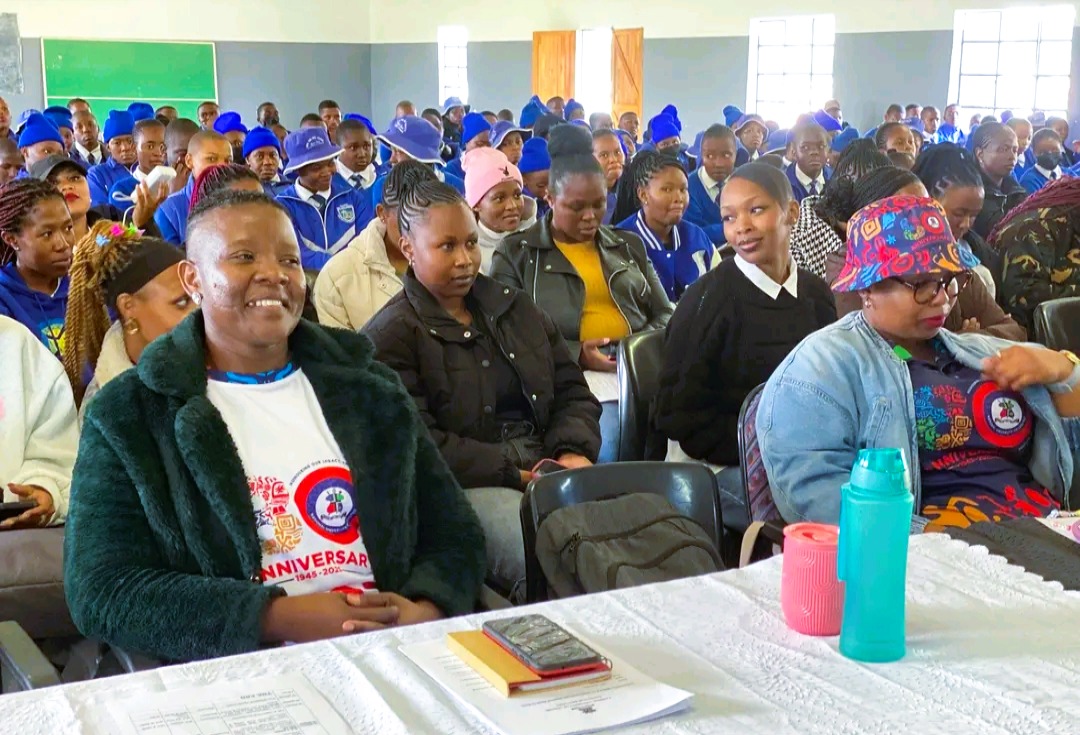
To strengthen pathways into higher education and support long-term workforce development, the National University of Lesotho (NUL) has expanded its career guidance outreach programme to Mafeteng District, engaging secondary school learners in April 2026 as part of broader efforts to align education outcomes with the country’s economic and social development priorities.
The initiative, led by NUL’s Faculty of Education, brought together academic staff and guidance professionals to provide structured information on university admissions, academic programmes and career planning for students approaching the completion of secondary education. The programme aims to improve awareness of higher education opportunities while helping learners make informed decisions about future study and employment pathways.
 According to university representatives, limited exposure to tertiary education systems remains a challenge for many learners, particularly those outside major urban centres. As a result, students often face difficulties navigating university admission processes or identifying academic disciplines that align with their interests and labour market opportunities. The outreach programme seeks to address these gaps through direct engagement with learners at school level.
The initiative reflects a growing recognition across Africa that educational attainment alone is not sufficient to meet evolving labour market demands. Increasingly, governments, universities and development institutions are focusing on career guidance, skills development and employability support as critical components of human capital investment. These interventions are becoming particularly important in countries with youthful populations where employment creation and workforce readiness remain pressing policy priorities.
For Lesotho, strengthening transitions between secondary and tertiary education carries significant economic implications. The country continues to face challenges related to youth unemployment, skills mismatches and limited diversification of economic opportunities. Expanding access to information about higher education and professional careers can contribute to a more productive workforce capable of supporting national development objectives across sectors such as education, healthcare, technology, agriculture and public administration.
According to development practitioners, career guidance programmes can play an important role in improving educational outcomes by increasing learner motivation, reducing uncertainty around future opportunities and helping students connect academic performance with long-term career prospects. Such interventions are often viewed as cost-effective investments that can improve progression rates into tertiary institutions while supporting more efficient utilisation of educational resources.
The outreach programme also highlights the evolving role of universities within African development ecosystems. Beyond their traditional functions of teaching and research, higher education institutions are increasingly expected to contribute directly to community development, skills formation and knowledge transfer. By extending engagement beyond campus boundaries, universities can strengthen links between education systems and local development needs while fostering greater social inclusion.
From a sustainability perspective, investments in education and human capital development remain among the most significant drivers of long-term socio-economic resilience. Countries with stronger education systems generally demonstrate higher productivity, improved institutional capacity and greater ability to adapt to technological, economic and environmental change. These factors are increasingly relevant as African economies seek to navigate complex transitions linked to digitalisation, climate adaptation and demographic growth.
The programme aligns with broader continental priorities outlined under the African Union’s Agenda 2063, which identifies education, skills development and youth empowerment as central pillars of Africa’s transformation agenda. Building a well-educated and skilled population is widely regarded as essential for strengthening competitiveness, accelerating innovation and supporting inclusive economic growth across the continent.
 For Lesotho, the expansion of career guidance outreach may appear modest in scale, but it reflects a wider policy emphasis on preparing young people for participation in a changing economy. As governments across Africa seek to maximise the demographic dividend presented by a growing youth population, initiatives that improve access to information, educational opportunities and career planning are likely to remain an important component of long-term development strategies.
While the immediate objective is to assist learners in Mafeteng with academic decision-making, the broader significance lies in strengthening the foundations of human capital development. In a continent where future economic competitiveness will increasingly depend on knowledge, skills and innovation, programmes that connect young people to educational and professional opportunities carry implications that extend far beyond the classroom.


