


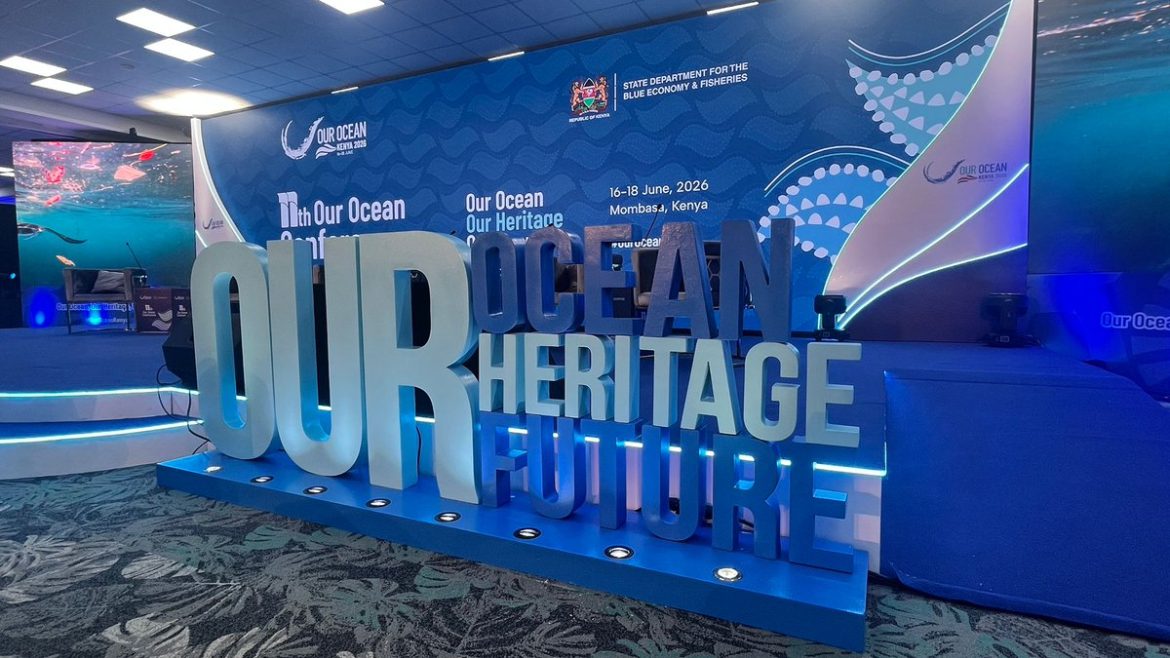
For many of coastal communities, the ocean remains a source of identity, food, livelihoods, and resilience. This week, that same ocean becomes the focus of global attention as Kenya hosts the 11th Our Ocean Conference (OOC11). It will be the first time the summit has been held on African soil. Bringing together heads of state, policymakers, scientists, investors, civil society organizations, and private sector leaders from around the world, the conference comes at a critical moment for both Africa and the planet.
Oceans cover more than 70 percent of the Earth’s surface, regulate global climate systems, absorb vast amounts of carbon dioxide, and provide livelihoods for more than three billion people worldwide. Oceans today are under unprecedented pressure. The rising sea temperatures, marine pollution, overfishing, biodiversity loss, habitat destruction, and climate change are posing a threat to the health of marine ecosystems upon which millions depend.
The continent’s 38 coastal and island nations collectively manage some of the world’s most valuable marine ecosystems. The Western Indian Ocean contains globally significant coral reefs, mangrove forests, and fisheries that support food security, employment, tourism, and trade. These ecosystems are economic assets with their value extending into agriculture, energy, transport, climate resilience, and public health.
In spite of this immense natural wealth, the African Development Bank posits that Africa captures only a fraction of the benefits generated by its marine resources. Illegal, unreported, and unregulated fishing continues to deprive African economies of billions of dollars annually while undermining local livelihoods and food systems. Coastal communities bear the environmental costs of resource extraction and receive limited economic returns. Climate change further compounds these vulnerabilities through coastal erosion, sea-level rise, stronger storms, and declining fish stocks.
Against this backdrop, the theme of this year’s conference Our Ocean, Our Heritage, Our Future carries particular significance. It reflects a growing recognition that the future of ocean governance cannot be separated from questions of equity, sustainability, and local ownership. Over the past decades, discussions about marine conservation and ocean management have largely been shaped by global institutions and developed economies. Hosting the conference in Kenya signals that Africa is no longer simply a participant in global ocean conversations, but increasingly helping to lead them.
Since its launch in 2014, the Our Ocean Conference has emerged as one of the most influential platforms for advancing ocean action. The conference has mobilized thousands of commitments from governments, businesses, foundations, and civil society organizations, generating, more than US$160 billion toward marine conservation, sustainable fisheries, pollution reduction, climate resilience, maritime security, and sustainable blue economy development. Unlike many international forums that produce broad declarations, the Our Ocean Conference is designed around measurable commitments and accountability.
Africa possesses enormous blue economy potential. Sustainable fisheries can strengthen food security and create jobs. Responsible aquaculture can support growing populations while reducing pressure on wild fish stocks. Marine tourism can generate income while incentivizing conservation. Coastal ecosystem restoration can strengthen climate resilience while creating new livelihood opportunities. Emerging sectors such as offshore renewable energy, and blue carbon markets offer additional pathways for sustainable growth.
Read also:http:Global leaders announce $6.4 Billion for ocean action at First African Our Ocean Conference
Realizing these opportunities, will require a different development model—one that prioritizes long-term sustainability over short-term extraction. Mangrove ecosystems provide a compelling example. Along Africa’s coastlines, mangroves serve as natural barriers against storm surges and coastal erosion while acting as nurseries for fish populations and some of the world’s most efficient carbon sinks. In Kenya, communities are increasingly demonstrating how mangrove restoration can enhance biodiversity, strengthen climate resilience, and generate local income. Such nature-based solutions represent the type of integrated development approach that Africa must embrace if it is to build resilient coastal economies.
It is imperative that small-scale fishermen must be placed at the center of ocean governance as they form the backbone of many coastal economies. Sustainable marine management cannot succeed through top-down regulation alone. It will require meaningful participation from the communities whose livelihoods depend on healthy oceans. Secure fishing rights, access to markets, improved infrastructure, financial inclusion, and stronger community institutions are all essential components of sustainable ocean development.
One of the most important discussions taking place alongside the conference concerns how to mobilize capital for sustainable blue economy investments. While significant funding has flowed into large-scale maritime infrastructure and port development, far less has reached community-led conservation initiatives, small-scale fisheries, coastal adaptation projects, and ecosystem restoration efforts. Closing this financing gap will require innovative instruments, including blended finance mechanisms, blue bonds, and impact investment vehicles capable of aligning environmental outcomes with economic returns. The challenge goes beyond attracting more capital; it is ensuring that capital flows toward activities that generate shared prosperity while protecting natural assets.
An ocean depleted of fish cannot sustain coastal economies. Coral reefs damaged by warming waters cannot support fisheries or tourism industries. Mangrove forests lost to degradation cannot protect communities from rising seas. Long-term economic prosperity depends on maintaining the ecological systems upon which economic activity ultimately relies.
Africa’s development future will therefore be shaped, in part, by how effectively it manages its natural capital. The Mombasa summit offers an opportunity to demonstrate a vision of development that is inclusive, climate-resilient, and environmentally sustainable. It provides a platform for African governments, businesses, researchers, and communities to showcase solutions that recognize the interconnected nature of economic growth, environmental stewardship, and social wellbeing.
https://www.aecweek-registration.com/2026/
The true legacy of OOC11 will not be measured by the number of commitments announced this week but by whether those commitments translate into healthier marine ecosystems, stronger coastal economies, and improved livelihoods for future generations.
If the conversations taking place on Kenya’s coast lead to tangible action, the conference may come to be remembered as more than another international gathering. It may mark the moment when Africa firmly positioned itself at the forefront of building a sustainable blue economy; one that protects its marine heritage while creating opportunity, resilience, and prosperity for generations to come.
In that sense, the theme of the conference is a call to action. Our ocean is indeed our heritage. The choices made today will determine whether it remains our future.


