


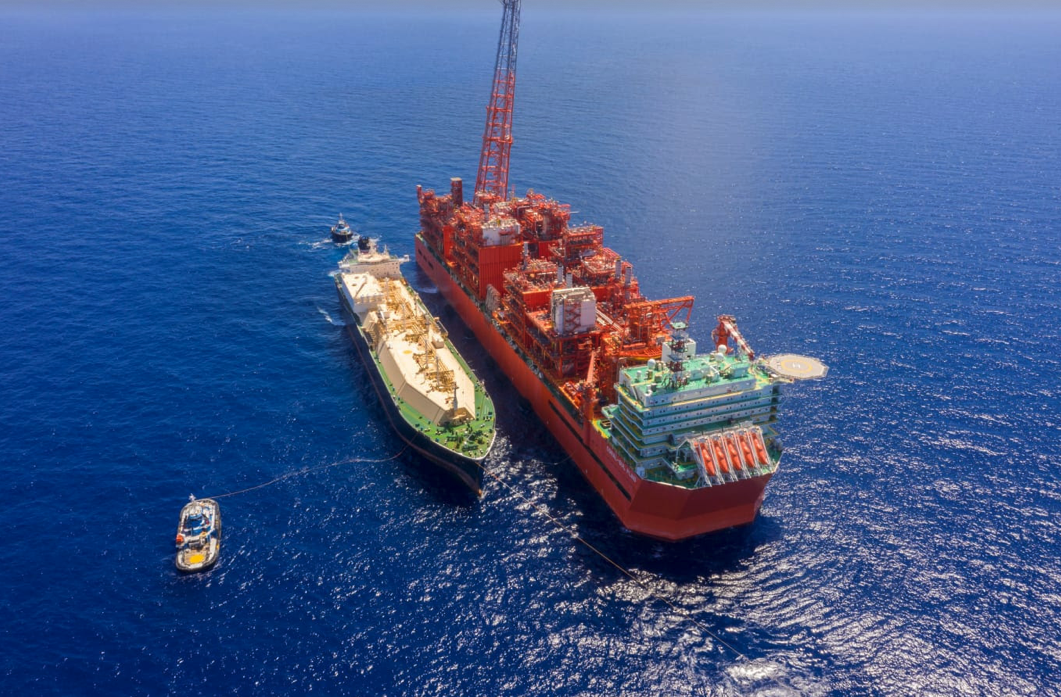
Italian energy major Eni has launched a competitive tender for what could become the world’s largest floating liquefied natural gas (FLNG) facility, marking another significant step in Mozambique’s emergence as one of Africa’s most strategic natural gas producers. The proposed project, located in the Rovuma Basin offshore northern Mozambique, is expected to begin production by 2031 and would substantially increase the country’s liquefied natural gas export capacity at a time of rising global demand for diversified energy supplies.
The tender, issued through Mozambique Rovuma Venture (MRV), the joint venture operated by Eni, covers the engineering, procurement, construction, installation and commissioning of a third floating LNG vessel. According to information published by Club of Mozambique, the planned facility will have a nominal production capacity of six million metric tonnes of liquefied natural gas annually, making it significantly larger than Shell’s Prelude FLNG in Australia, currently the world’s largest operational floating LNG installation with a capacity of 3.6 million metric tonnes per year. Companies interested in participating in the tender have been asked to submit expressions of interest before the end of June 2026. Eni has specified that bidders must demonstrate a verified track record of delivering comparable offshore LNG infrastructure over the past decade, reflecting the technical complexity and scale of the proposed development.
The project represents the latest phase of Eni’s long-term investment strategy in Mozambique’s offshore gas sector and builds upon two existing floating LNG developments in the Rovuma Basin. Coral Sul FLNG, Africa’s first floating liquefied natural gas production facility, commenced commercial operations in 2022 and currently produces approximately 3.5 million metric tonnes of LNG annually. The success of Coral Sul has strengthened confidence in Mozambique’s offshore gas potential despite broader challenges facing the country’s energy sector. According to figures cited by Green Building Africa, Coral Sul contributed approximately 70% of Mozambique’s gross domestic product growth in 2024, underlining the increasingly important role that natural gas exports are playing in the country’s economic performance.
Its sister project, Coral Norte FLNG, reached a final investment decision in October 2025 with an estimated investment value of US$7.2 billion. Construction is currently underway, with commercial production expected to begin in 2028. According to Eni, Coral Norte is projected to generate approximately US$23 billion in tax revenues for Mozambique over its estimated 25-year operational life, providing a significant source of public revenue for infrastructure, education, healthcare and broader economic development if managed effectively. Should the proposed third vessel proceed as planned, Eni’s combined offshore liquefaction capacity in Mozambique would rise to approximately 13 million metric tonnes of LNG annually. This figure excludes major onshore LNG developments being advanced separately by TotalEnergies and ExxonMobil, highlighting the scale of Mozambique’s rapidly expanding role within the global natural gas market.
The Rovuma Basin remains one of the world’s largest undeveloped offshore natural gas provinces. According to estimates from the U.S. Energy Information Administration (EIA), the basin contains between 160 trillion and 200 trillion cubic feet of recoverable natural gas resources, placing Mozambique among Africa’s most significant gas-producing nations alongside Algeria, Nigeria and Egypt. The latest investment also reflects renewed momentum across Mozambique’s LNG industry following several years of uncertainty. TotalEnergies recently resumed construction activities on its Mozambique LNG project after work had been suspended in 2021 because of security concerns linked to insurgent violence in Cabo Delgado Province. The French energy company is now targeting first LNG production in 2029.
Meanwhile, ExxonMobil continues preparations for its Rovuma LNG development and is awaiting a final investment decision on a project designed to produce approximately 18 million metric tonnes of LNG annually. Together with Eni’s offshore developments, these investments could transform Mozambique into one of the world’s largest LNG exporting countries over the next decade. The expansion comes at a time when global LNG markets are undergoing structural changes driven by energy security concerns, geopolitical uncertainty and the gradual transition away from coal in several major economies. Following disruptions to global gas markets in recent years, buyers across Europe and Asia have increasingly sought to diversify LNG supply sources, creating new commercial opportunities for emerging producers including Mozambique.
For Africa, Mozambique’s expanding LNG sector carries broader economic significance beyond national export earnings. Large-scale gas developments have the potential to strengthen regional infrastructure investment, create skilled employment, expand local supplier industries and improve fiscal revenues that can finance broader development priorities. According to the African Development Bank, responsible natural resource management remains central to translating extractive industries into inclusive economic growth across the continent. However, the expansion of LNG production also raises important governance and sustainability considerations. Energy economists have consistently argued that maximising the developmental impact of natural gas projects requires transparent revenue management, strong institutional oversight and policies that ensure local content participation while avoiding excessive dependence on commodity exports.
Climate considerations are also becoming increasingly relevant. Although natural gas is widely regarded as a lower-emission alternative to coal and heavy fuel oil for electricity generation, it remains a fossil fuel. International energy markets are therefore increasingly evaluating LNG investments within the broader context of global decarbonisation pathways and long-term net-zero commitments. For Mozambique, balancing these competing priorities will be critical. The country continues to face significant development needs, including limited electricity access in rural communities, infrastructure deficits and widespread poverty despite possessing some of Africa’s largest natural gas reserves. Policymakers therefore face the challenge of ensuring that LNG revenues support economic diversification rather than reinforcing dependence on extractive industries alone.
https://www.aecweek-registration.com/2026/
The proposed third FLNG facility nevertheless reinforces investor confidence in Mozambique’s offshore gas sector and demonstrates the continued attractiveness of floating LNG technology. Compared with conventional onshore LNG plants, floating facilities can reduce construction timelines, minimise onshore environmental footprints and enable the commercial development of offshore gas fields that may otherwise remain economically unviable.
As global competition for LNG market share intensifies, Mozambique’s growing portfolio of offshore and onshore projects positions the country as a strategically important supplier in international energy markets. If current investment timelines are maintained, the combination of Coral Sul, Coral Norte, the proposed third FLNG vessel, TotalEnergies’ Mozambique LNG and ExxonMobil’s Rovuma LNG project could establish the country as one of Africa’s largest LNG exporters while significantly reshaping its fiscal outlook and long-term economic trajectory.


