


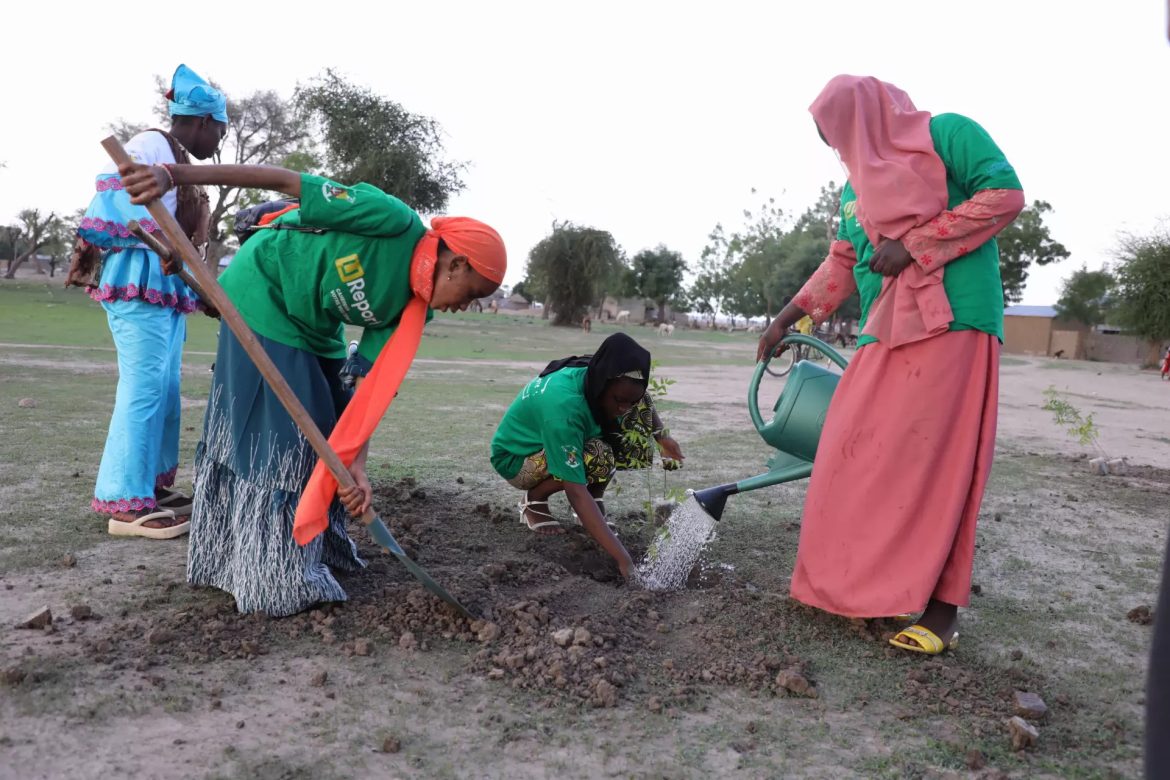
As climate change increasingly threatens children’s health, education and future livelihoods across Africa, UNICEF Cameroon has launched an ambitious climate action strategy that places children at the centre of the country’s adaptation and resilience agenda. The Climate, Energy, Environment and Children Strategy 2024–2026 seeks to strengthen climate-resilient public services, empower young people as climate actors and reduce the organisation’s own environmental footprint, responding to mounting evidence that children are among the most vulnerable to climate-related shocks despite contributing least to global greenhouse gas emissions.
The strategy comes at a critical moment for Cameroon, where increasingly frequent floods, prolonged droughts, coastal erosion, biodiversity loss and deforestation are placing growing pressure on communities, public infrastructure and economic development. According to UNICEF’s Children’s Climate Risk Index (CCRI), Cameroon ranks among the ten countries globally where children face the highest exposure to climate and environmental hazards, underscoring the urgency of integrating child-focused resilience into national development planning.
For Africa, the initiative represents more than a humanitarian intervention. It illustrates the growing recognition that climate adaptation is becoming an essential component of economic planning, public investment and social protection. As governments seek to safeguard development gains while responding to increasingly severe climate impacts, protecting children has emerged as a strategic investment in future human capital, institutional resilience and long-term economic productivity.
According to UNICEF, climate change is expected to increase both the frequency and intensity of disasters across Cameroon’s diverse ecological zones. Updated climate projections indicate that some regions could experience between five and ten flooding events annually depending on rainfall intensity, while prolonged droughts continue to affect northern Sahelian areas. Rising temperatures, shifting rainfall patterns and environmental degradation are simultaneously placing greater pressure on agriculture, water resources, healthcare systems and education infrastructure.
These environmental pressures carry significant economic implications. Floods damage roads, schools, hospitals and water systems, increasing public expenditure on reconstruction while disrupting local economies. Agricultural losses reduce rural incomes and food availability, contributing to higher food prices and greater vulnerability among low-income households. According to the World Bank, climate change could push millions more Africans into poverty by 2030 if adaptation investments fail to keep pace with rising climate risks.
UNICEF’s response is structured around three interconnected pillars Protect, Empower and Reduce which align with the organisation’s global Sustainability and Climate Change Action Plan while responding directly to Cameroon’s national priorities.
The first pillar, Protect, focuses on strengthening climate-resilient essential services that support children’s wellbeing. UNICEF intends to work closely with the Government of Cameroon to integrate climate considerations into public policy, disaster preparedness and infrastructure planning. Planned interventions include expanding renewable energy solutions for schools and healthcare facilities, improving climate-resilient water and sanitation systems, strengthening early warning mechanisms and supporting evidence-based policymaking that better reflects children’s vulnerability to climate shocks.
These investments reflect a broader shift taking place across Africa, where governments are increasingly recognising that resilience infrastructure extends beyond flood barriers and irrigation systems. Climate-resilient schools, healthcare facilities and social protection programmes are becoming equally important components of national adaptation strategies because they help preserve human development during increasingly frequent environmental disruptions.
UNICEF is also deepening collaboration with key national institutions, including Cameroon’s Ministry of Environment and Sustainable Development and the National Climate Change Observatory. By strengthening coordination between government agencies, development partners, civil society organisations and the private sector, the strategy seeks to mobilise technical expertise, climate finance and institutional capacity required for long-term resilience building.
The second pillar places particular emphasis on empowering children and young people as active participants in climate action rather than viewing them solely as beneficiaries of adaptation programmes.
UNICEF plans to expand climate education through schools, community organisations and digital learning platforms while encouraging youth participation in environmental advocacy, innovation and policymaking. The organisation believes that equipping young people with green skills, environmental awareness and leadership opportunities will strengthen both community resilience and future workforce competitiveness as green sectors continue expanding across Africa.
This emphasis reflects wider continental trends. According to the African Development Bank, Africa possesses the world’s youngest population, creating significant opportunities for employment in renewable energy, sustainable agriculture, circular economy industries and climate adaptation services. Developing climate-related skills therefore supports both environmental objectives and economic transformation.
The third pillar focuses internally on reducing UNICEF’s operational environmental footprint. Measures include improving energy efficiency across offices, expanding solar energy use where feasible, strengthening waste management and recycling systems, promoting sustainable procurement practices and reducing paper and water consumption. A dedicated Green Team has been established to oversee implementation and encourage environmentally responsible operations throughout the organisation.
As part of broader public engagement efforts, UNICEF has introduced Terra, a lioness mascot inspired by Cameroon’s national colours and designed through a competition involving children and young people. Terra will support environmental education through comics, educational materials and public awareness campaigns intended to encourage greater climate literacy among younger audiences.
The strategy also reflects increasing international recognition that climate adaptation must become more inclusive if countries are to achieve the Sustainable Development Goals and the objectives of the Paris Agreement. Children are disproportionately affected by climate-induced disruptions to education, healthcare, nutrition and access to clean water, making investments in child-centred resilience increasingly relevant for national development planning.
Across Africa, governments are adopting similar approaches by integrating climate resilience into education systems, healthcare infrastructure and social protection programmes. According to the African Union’s Climate Change and Resilient Development Strategy and Action Plan, protecting vulnerable populations while strengthening adaptive capacity remains central to achieving sustainable economic growth under changing climatic conditions.
Climate finance is expected to play an increasingly important role in supporting these ambitions. The African Development Bank estimates that Africa requires tens of billions of dollars annually for climate adaptation, yet current financing remains well below estimated needs. Strengthening partnerships between governments, multilateral institutions, philanthropic organisations and the private sector will therefore be essential to scaling resilient public services across the continent.
For Cameroon, UNICEF’s strategy demonstrates how climate adaptation can extend beyond environmental conservation to encompass education, healthcare, water security, institutional governance and economic resilience. By integrating children’s needs into national adaptation planning, the programme seeks to protect development gains while preparing future generations for an increasingly climate-constrained world.
As climate risks continue to intensify across Africa, initiatives such as UNICEF Cameroon’s Climate, Energy, Environment and Children Strategy illustrate a broader evolution in development planning. Rather than treating climate adaptation as a standalone environmental agenda, governments and development institutions are increasingly embedding resilience within the systems that underpin human capital, public services and economic stability. For African countries confronting overlapping climate, demographic and development pressures, child-centred adaptation strategies are likely to become an increasingly important component of sustainable and inclusive growth.


