


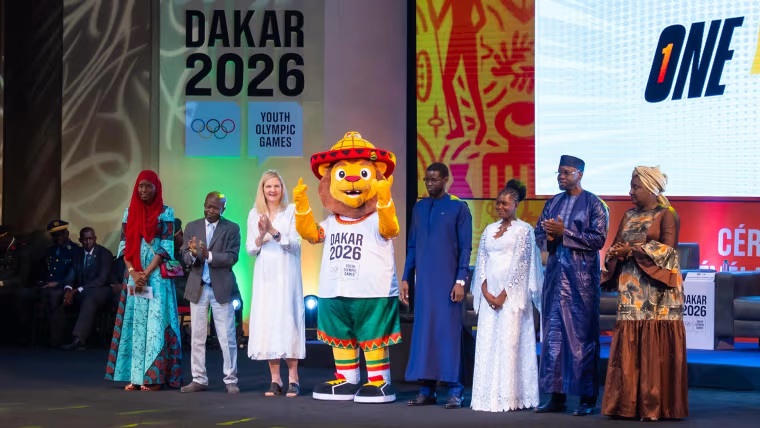
Senegal is positioning the Dakar 2026 Youth Olympic Games as a test of whether major sporting events in Africa can deliver measurable environmental benefits alongside sporting outcomes, with the government, United Nations Development Programme (UNDP) and Global Environment Facility (GEF) launching a “Plastic-Free YOG” initiative to reduce waste and strengthen sustainable practices ahead of the Games. The programme, launched in Dakar on July 28, 2026, will target single-use plastics, waste collection and sorting, public awareness and community participation as Senegal prepares to host the Youth Olympic Games from October 31 to November 13.
The event will be the first Olympic sporting event to be held on African soil, giving the environmental programme significance beyond the venues themselves. Around 2,700 young athletes are expected to participate, with competitions taking place across Dakar, Diamniadio and Saly. The geographical spread means that waste-management measures will need to operate across multiple urban and coastal environments rather than being confined to individual competition sites.
The “Plastic-Free YOG” initiative is being implemented under the broader SOLUPLAST project, which supports sustainable solutions to plastic pollution in Senegal. The programme brings together government institutions, the Dakar 2026 Youth Olympic Games Organising Committee, development partners, local authorities, private companies and civil society organisations. Its objective is to use the Games as a platform for reducing plastic pollution while testing practices that could remain in place after the event.
The programme began with a community clean-up along sections of Dakar’s coastline, including Dalifort, Hann Bel-Air and the Kheer Ya and des Marinas beaches. Volunteers, young people, residents and institutional partners participated in collecting plastic waste, providing an early demonstration of the campaign’s emphasis on community mobilisation rather than venue-based waste management alone.
That distinction is important for Dakar. Plastic pollution is not simply an environmental issue; it can affect urban drainage, coastal ecosystems, tourism, public infrastructure and the livelihoods of communities dependent on coastal resources. Plastic waste entering drainage systems can contribute to blockages and flooding, while unmanaged waste reaching the ocean can impose costs on fisheries and coastal economies.
The initiative therefore places waste reduction within a wider circular-economy context. Reducing unnecessary plastic consumption, improving collection and sorting and increasing awareness of reuse and recycling can help retain materials within productive economic systems rather than allowing them to become waste. For Senegal, the challenge will be translating the temporary visibility of an international sporting event into longer-term changes in waste-management behaviour and infrastructure. Large sporting events can generate significant volumes of packaging, food waste and other materials within a concentrated period. Managing those flows effectively requires coordination between organisers, municipalities, waste operators, businesses and spectators.
The Dakar 2026 programme seeks to address that challenge before the Games begin by strengthening public awareness and waste-management preparations. The objective is not simply to collect waste generated during the event but to encourage behaviours that can continue in communities after the competition ends. That approach is consistent with a broader understanding of sustainable event management. International sporting events can create economic activity and infrastructure investment, but they can also generate temporary increases in resource consumption, transport demand and waste. The sustainability performance of an event therefore increasingly depends on what happens before and after the competition, including whether systems developed for the event strengthen existing public infrastructure.
Dakar 2026’s sustainability agenda extends beyond plastics. In March 2026, the organising committee signed an agreement with the International Labour Organization aimed at promoting decent work, social sustainability and respect for human rights during preparations for the Games. The combination of environmental and social measures indicates an effort to position the event within a broader sustainable-development framework. The environmental programme also reflects the growing role of major events as platforms for policy experimentation. A high-profile event creates a defined timeframe, concentrated stakeholder participation and substantial public visibility. These conditions can allow governments to test waste-reduction systems, public-awareness campaigns and private-sector partnerships that could subsequently be expanded to other urban settings.
For African cities, the potential relevance is considerable. Cities across the continent are experiencing rapid population growth, increasing consumption and mounting pressure on municipal waste systems. According to the World Bank, Africa’s waste volumes are expected to increase sharply as urbanisation and population growth continue. Yet collection, disposal and recycling capacity remains uneven across many cities. This creates both an infrastructure challenge and an economic opportunity. Better waste management can reduce public-health and environmental costs while supporting businesses involved in collection, recycling, reuse and material recovery. A successful event-based model could therefore demonstrate how environmental objectives can be connected with local enterprise development and employment.
The coastal dimension is particularly relevant for Dakar. Senegal’s capital is closely connected to the Atlantic Ocean, and its beaches and coastal ecosystems support tourism, fisheries and urban livelihoods. Plastic pollution can undermine these economic activities while increasing the cost of maintaining public spaces.
The “Plastic-Free YOG” initiative consequently has implications beyond the environmental footprint of the Games. If it improves collection systems, strengthens coordination between municipalities and waste operators, and changes consumer behaviour, the benefits could extend into areas such as tourism, public health and coastal resilience. The programme also illustrates the importance of financing partnerships in environmental management. The involvement of the GEF and UNDP provides technical and financial support, while the Senegalese government remains central to implementation. Such arrangements can help governments test new approaches while building institutional capacity to manage environmental challenges over the longer term.
However, the sustainability legacy of Dakar 2026 will depend on what happens after the Games. A temporary reduction in single-use plastics or a successful clean-up campaign would have limited long-term significance if waste collection and recycling systems return to previous levels once the event concludes. The more meaningful measure will therefore be institutional continuity. If waste-sorting practices, community mobilisation, private-sector partnerships and public-awareness initiatives become integrated into municipal and national waste-management systems, the Games could leave a more durable environmental legacy.
There is also a potential learning opportunity for other African countries. As the continent hosts more international sporting and cultural events, organisers will increasingly face questions about resource consumption, waste, transport, energy use and social impact. Dakar’s experience could provide practical lessons on how environmental requirements can be incorporated into event planning from the beginning rather than addressed as an afterthought. The approach is consistent with the African Union’s broader development objectives under Agenda 2063, including the ambition of building environmentally sustainable and climate-resilient economies and communities. While plastic pollution is a specific environmental challenge, improving resource efficiency and waste management contributes to wider urban resilience and sustainable consumption.
The significance of Dakar 2026 will therefore extend beyond the medals awarded between October 31 and November 13. As Africa’s first Olympic sporting event, it will also provide a highly visible test of how the continent can combine international events with environmental management, social responsibility and local development.
The “Plastic-Free YOG” initiative has established an ambitious framework. Its lasting value, however, will be determined by implementation: whether waste is reduced at source, whether collection and sorting systems work across host communities, whether businesses participate meaningfully and whether the behaviours promoted during the Games continue after the final events.
For Senegal, the opportunity is to turn a two-week international sporting event into a longer-term investment in cleaner cities, stronger waste systems and more responsible consumption. For other African cities, Dakar 2026 could offer a useful case study in whether the global visibility of sport can be converted into practical environmental and economic gains long after the competition has ended.


