


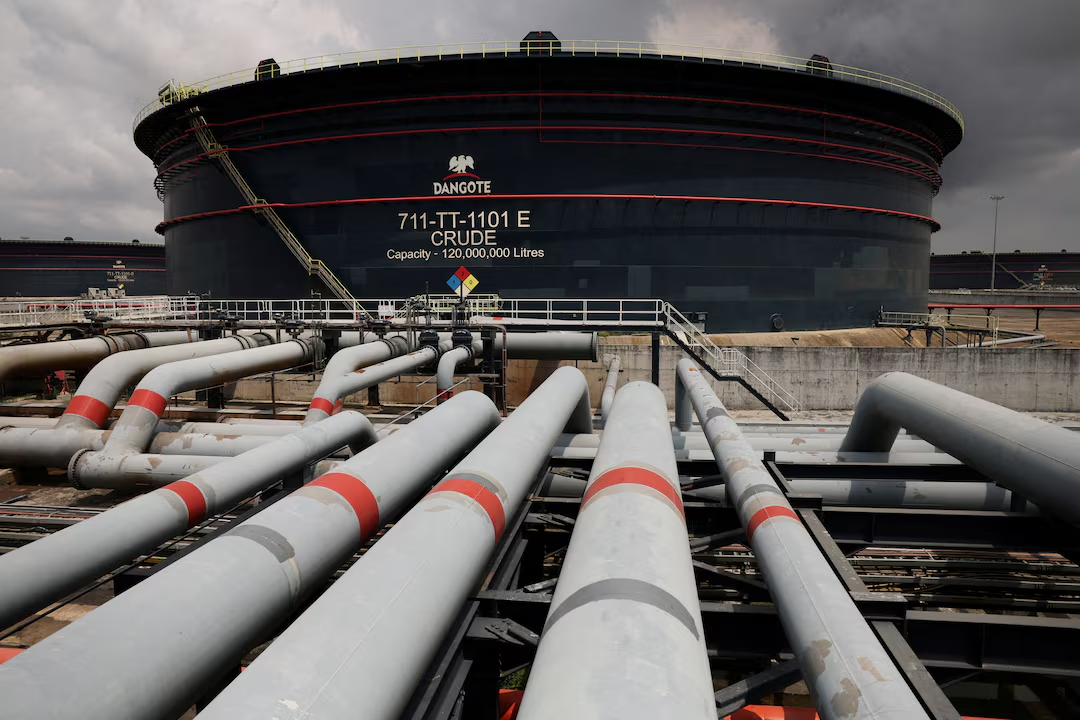
Nigerian industrialist Aliko Dangote plans to begin construction of a $16 billion, 700,000-barrel-per-day oil refinery in Lamu, Kenya, in October 2026, advancing a project that could reshape refined fuel supply across East Africa and deepen the region’s integration of energy, transport and trade infrastructure.
Dangote said construction would begin after the project breaks ground in October, with completion expected in less than four years. The estimated cost has been reduced from about $17 billion, with the company citing lessons from its Lagos refinery, a faster execution schedule and lower financing costs. The Lamu facility is expected to serve Kenya as well as Uganda, Tanzania, South Sudan and other markets that remain heavily dependent on imported petroleum products.
The proposed refinery would become East Africa’s largest refining facility and the second major refinery developed by Dangote on the continent after the company’s 650,000-barrel-per-day plant in Lagos. The Nigerian facility has become an important source of refined petroleum products for Nigeria and international markets since commencing operations, while Dangote is pursuing an expansion that would eventually take its capacity to 1.4 million barrels per day.
For Kenya, the Lamu investment would represent a major shift in the country’s downstream petroleum infrastructure. The country has had no operating crude oil refinery since the closure of the Mombasa refinery, leaving domestic fuel consumption largely dependent on imported refined products. A large-scale refinery in Lamu could therefore change the structure of fuel supply by positioning Kenya as a potential regional refining and distribution centre rather than solely an importer.
The location is central to that proposition. Lamu is linked to the Lamu Port-South Sudan-Ethiopia Transport Corridor, commonly known as LAPSSET, which is intended to connect Kenya’s northern coast with inland markets in East and Central Africa. The combination of a deep-water port, planned transport infrastructure and proximity to regional fuel markets provides the refinery with a logistical rationale beyond the Kenyan market.
The project comes as East African governments face continued exposure to international oil prices, freight costs and disruptions in global energy supply chains. Kenya’s government has already intervened in the domestic fuel market during periods of heightened international volatility, including measures to cushion consumers from higher petroleum prices in 2026.
The scale of the proposed facility could also influence regional trade flows. Kenya currently serves as a major petroleum import and distribution hub for neighbouring landlocked economies, particularly Uganda and South Sudan. If the Lamu refinery reaches its planned capacity, part of that regional demand could potentially be supplied through locally processed products, reducing the distance between refining capacity and final consumers.
That outcome, however, would depend on the refinery’s ability to secure crude supplies, financing, transport infrastructure and commercially competitive operations. The proposed financing structure is expected to rely on 30% equity and 70% debt, making access to long-term financing a significant consideration before full construction begins. Dangote’s broader refining expansion strategy is also increasingly connected to capital-market activity, with the company preparing a major initial public offering for its Nigerian refinery business. Reuters reported in August that the Nigerian refinery is targeting about $5 billion through an IPO, with proceeds expected to support expansion and the planned Kenyan facility.
Preparatory work at the Lamu site is already underway, including soil testing, design and engineering work. Dangote Industries confirmed Lamu as the location in July after months of consideration of potential sites in Kenya and Tanzania. The company has said the Kenyan site was selected on commercial and technical grounds, while its proximity to regional markets provides an additional strategic advantage.
The Kenyan government has positioned the project as a potentially significant source of investment and employment. Government estimates cited in reporting put the potential employment impact at about 60,000 direct and indirect jobs across construction, engineering, logistics and related activities. The wider economic effect would depend on how effectively Kenyan firms and workers are integrated into the refinery’s supply chains rather than the size of the investment alone.
The project also fits within Kenya’s wider ambition to strengthen infrastructure around its northern transport corridor. LAPSSET has long been presented as a mechanism for opening up northern Kenya and improving connections to Ethiopia and South Sudan, although progress on elements of the corridor has faced delays and implementation challenges. For the refinery to operate at scale, the supporting port, road, pipeline, storage and distribution systems will need to develop in parallel.
Environmental and social considerations will also remain important as the project moves towards construction. Lamu is a sensitive coastal environment with established communities and economic activities, including fishing and tourism. Earlier LAPSSET-related developments have faced scrutiny over consultation and community impacts, including a 2018 court ruling that identified shortcomings in consultations with affected communities. The refinery will therefore need to navigate environmental approvals, land and community considerations and the broader regulatory requirements associated with a large petroleum-processing facility.

Kenya’s current energy leadership includes Energy and Petroleum Cabinet Secretary James Opiyo Wandayi and Principal Secretary Alex Kamau Wachira, while the transport infrastructure supporting the project falls within the wider responsibilities of the transport authorities. The Kenya Ports Authority, which manages the country’s principal ports, is also a critical institution in the logistics chain, with Captain William K. Ruto serving as managing director.
The regional dimension is equally significant. Uganda is developing its own oil production capacity, while Tanzania has continued to expand its energy infrastructure. The proposed Lamu refinery could therefore emerge within a regional petroleum market undergoing structural change, with crude production, pipelines, ports, storage facilities and refining capacity increasingly influencing the movement of energy products across borders.
For East Africa, the central question will be whether the refinery can translate its exceptional scale into reliable and competitively priced petroleum products while supporting wider industrial development. Refining capacity alone does not guarantee lower fuel prices; crude procurement costs, financing charges, logistics, taxes, regulation and distribution margins will determine the final economics.
The investment also illustrates the changing geography of Africa’s energy infrastructure. Rather than concentrating refining capacity only in established oil-producing economies, large processing projects are increasingly being considered around strategic transport corridors and major consumer markets. In that context, Lamu’s significance extends beyond Kenya’s petroleum sector to the broader question of whether East Africa can build regional infrastructure capable of retaining more value from the energy products it consumes.
If construction begins as planned in October, the milestone will move the Lamu refinery from a major investment proposal into its next phase of execution. For Kenya and its neighbours, the project’s longer-term significance will ultimately depend not only on whether the 700,000-barrel-per-day facility is completed, but on whether it strengthens regional fuel security, creates durable industrial linkages and integrates effectively with the infrastructure and economies surrounding the LAPSSET corridor.


