


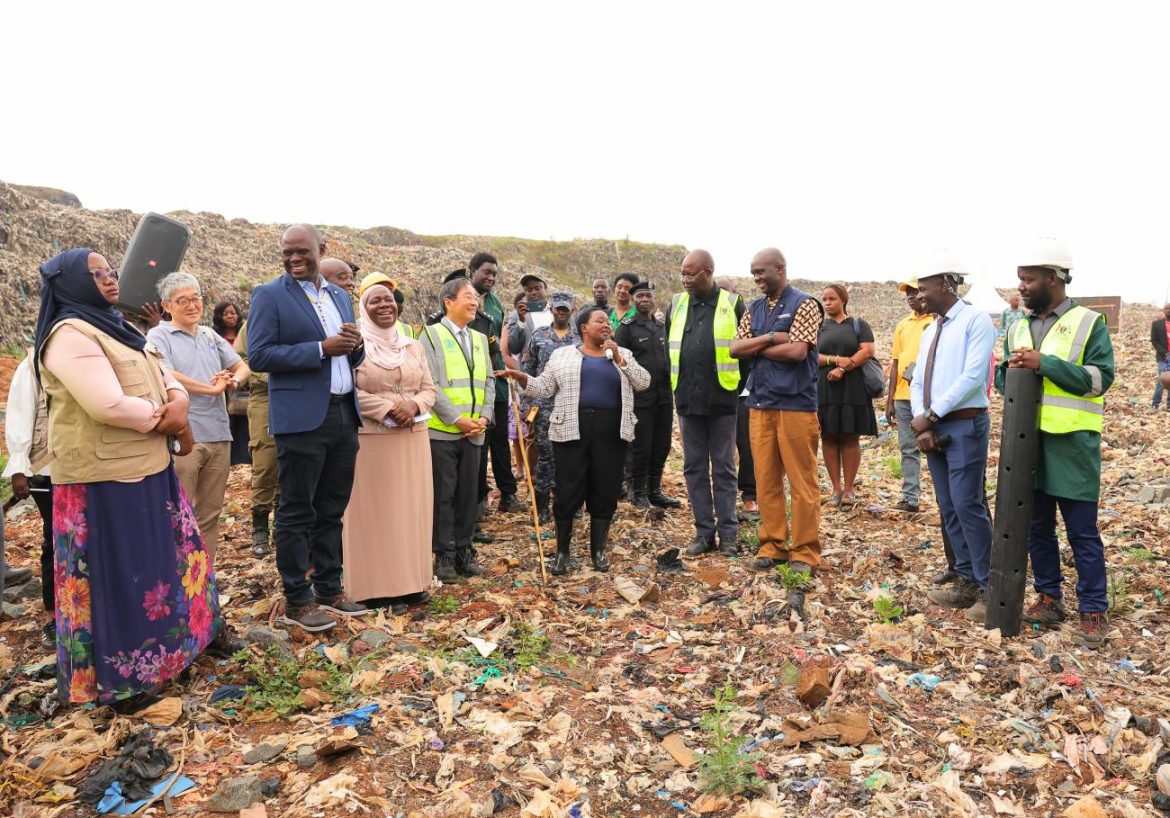
Uganda has handed over the rehabilitated Kiteezi Landfill to the Kampala Capital City Authority (KCCA), marking a major step in the country’s effort to address the environmental and public safety risks exposed by the deadly collapse of the Kampala waste facility in August 2024. The handover, conducted by Prime Minister Rt. Hon. Robinah Nabbanja on August 5, 2026, places responsibility for the rehabilitated site back with the city authority as Kampala seeks to strengthen waste management, environmental protection and resilience in the face of rapid urban growth.
The development comes two years after the Kiteezi landfill disaster, when unstable waste slopes collapsed and triggered a landslide that killed 35 people and destroyed property in surrounding communities. According to the United Nations in Uganda, waste had accumulated to heights of about 36 metres across a 35-acre site, creating highly unstable conditions that required urgent intervention.
The collapse exposed a wider challenge facing rapidly expanding African cities: the infrastructure required to manage growing volumes of urban waste has often failed to keep pace with population growth, land-use pressures and environmental risks. For Kampala, the Kiteezi disaster transformed waste management from a sanitation issue into a broader question of urban resilience, public health, climate risk and infrastructure governance.
Rehabilitation works have focused on stabilising the landfill and reducing the risks associated with the accumulation and decomposition of waste. KCCA has reported that the intervention included cutting down steep waste cliffs, terracing high-risk sections, stabilising the garbage mass and installing systems for collecting leachate and ventilating landfill gases. Leachate, the contaminated liquid produced when water moves through waste, can pollute soil and water resources if it is not properly collected and treated.
Methane management has been another important element of the rehabilitation. The United Nations reported in March that vertical pipes made using recycled plastic bottles had been installed to extract methane and allow oxygen to circulate through waste layers. The approach is designed to reduce greenhouse gas emissions while lowering the risk of fires associated with the accumulation of landfill gases.
The rehabilitation has been supported through international cooperation. KCCA and UN-Habitat secured a US$1 million grant from the Government of Japan for the emergency rehabilitation programme. The project targets high-risk areas of the landfill and includes the decommissioning of about seven acres, representing roughly 250,000 cubic metres of waste, using the Fukuoka method.
The Fukuoka method, developed in Japan, uses improved aeration and drainage to accelerate the stabilisation of waste and reduce environmental risks. The Japanese government describes the semi-aerobic approach as a system that allows air to enter through leachate collection pipes, helping microorganisms decompose waste more efficiently while reducing methane emissions.
By March 2026, approximately 84% of the rehabilitation programme had been completed, according to the United Nations in Uganda. At the time, remaining work included additional infrastructure for wastewater management and other measures aimed at completing the stabilisation of the site.
The completion and handover of the rehabilitation programme nevertheless represent only one stage in Kampala’s wider waste-management challenge. Stabilising an existing landfill can reduce immediate risks, but it does not address the underlying growth in waste generation. Long-term resilience will depend on improving waste collection, promoting segregation at source, expanding recycling and resource recovery, reducing the amount of waste sent to disposal sites and ensuring that future facilities are properly designed, operated and monitored.
KCCA has been pursuing a broader waste-management strategy that includes development of the Buyala Waste Management Facility in Mpigi District. The authority has said the facility is intended to support longer-term waste management and resource recovery as Kampala seeks alternatives to continued dependence on Kiteezi. In April 2026, KCCA said additional investment would be required to strengthen waste-management infrastructure, including equipment and leachate-treatment capacity.
The Kiteezi case also illustrates the growing connection between waste management and climate resilience in African cities. Landfills can create multiple environmental risks, including methane emissions, fires, leachate contamination, unstable slopes and exposure of neighbouring communities to hazardous conditions. Addressing these risks therefore requires cities to view waste infrastructure as part of their wider climate adaptation and urban-development systems rather than as a standalone sanitation service.
The intervention also offers an example of how circular-economy approaches can be incorporated into environmental rehabilitation. The use of recycled plastic bottles in methane-extraction infrastructure demonstrates how waste materials can be redirected into practical environmental applications. The United Nations has also highlighted livelihood opportunities associated with recycling activities around the rehabilitation programme.
For Uganda, the next challenge will be maintaining the rehabilitated infrastructure and preventing a recurrence of the conditions that contributed to the 2024 disaster. This will require sustained technical monitoring, reliable financing, effective regulation and stronger coordination between national government, KCCA, communities and development partners.
It will also require changes beyond the landfill itself. Households, businesses and institutions will need to reduce waste generation, separate recyclable materials and improve disposal practices. KCCA has already called for greater waste segregation, recycling and reduction of plastic waste as part of efforts to strengthen Kampala’s waste-management system.

The Kiteezi experience carries implications well beyond Kampala. Across Africa, cities are urbanising rapidly while waste generation continues to increase, placing pressure on already constrained collection, treatment and disposal systems. Without investment in resilient infrastructure and circular waste systems, unmanaged waste can increasingly become a source of environmental degradation, climate emissions and public-health risks.
The handover therefore represents more than the completion of a rehabilitation project. It is a test of whether Kampala can translate a major environmental disaster into lasting improvements in urban governance and infrastructure management. The success of the intervention will ultimately be measured not only by the stability of the rehabilitated landfill, but by whether the city can build a waste system that reduces dependence on landfills, recovers valuable resources and protects communities from future environmental disasters.
Uganda’s Kiteezi rehabilitation demonstrates the value of partnerships between governments, cities, international development institutions and technical partners. The cooperation between KCCA, the Government of Uganda, UN-Habitat and Japan provides a model of how international technical assistance can support locally led responses to complex urban environmental challenges.
For other African cities facing similar pressures, the central lesson is clear: waste management must be treated as critical urban infrastructure. Investments in safe disposal, recycling, resource recovery, methane management and leachate treatment can simultaneously improve public health, strengthen climate resilience, reduce pollution and create opportunities for green economic activity.
As KCCA assumes responsibility for the rehabilitated Kiteezi facility, the focus now shifts from emergency recovery to long-term stewardship. The durability of the gains achieved at Kiteezi will depend on the strength of the systems put in place to manage Kampala’s waste in the years ahead.


