


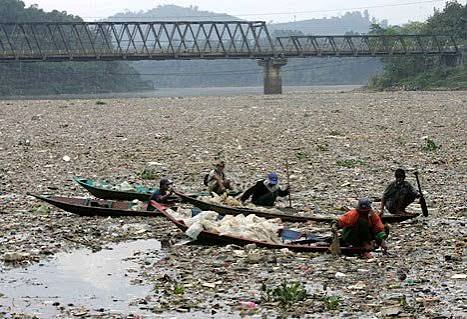
Zambia’s environmental authorities have ordered Konkola Copper Mines (KCM) to stop effluent discharges, remove visible tailings and assess damaged infrastructure after a pollution incident affected the Chingola and Mushishima streams and the Kafue River on 28 September, raising renewed concerns over mining operations, water security and environmental oversight in the country’s Copperbelt. In a statement issued on 1 October, the Zambia Environmental Management Agency (ZEMA) said the incident followed a reported leak at the Nchanga Mine Tailings Leach Plant and an overflow from a Pollution Control Dam.
According to ZEMA, inspectors from the agency, Mulonga Water Supply and Sanitation Company and KCM confirmed that pollutants had entered the affected waterways. The company had repaired the leak and contained the dam overflow by the time of inspection. However, preliminary laboratory tests found elevated turbidity and conductivity where the Mushishima Stream meets the Kafue River. The agency said the pH level was within acceptable limits, while further analysis for heavy metals and acidity remained pending.

The distinction between preliminary findings and confirmed contamination levels is important. Turbidity and conductivity can indicate changes in water quality, but they do not by themselves establish the concentration of specific toxic substances or the full extent of ecological damage. The additional laboratory results will be important in determining the risks to aquatic ecosystems, downstream water users and other activities dependent on the river.
Under the Environmental Management Act, Zambia’s Ministry of Green Economy and Environment issued an Environmental Restoration Order directing KCM to cease effluent discharge from the Tailings Leach Plant, remove visible tailings from affected areas and assess the integrity of pollution-control dams, tailings pipelines, decant systems and related infrastructure. The order also requires a full environmental impact assessment of the incident, followed by cleanup and remediation of affected environments and water bodies.
The government has separately issued a Cost Order requiring KCM to pay for laboratory analysis and related costs under the polluter-pays principle. According to ZEMA, the company is also expected to cover the costs of continued weekly water monitoring. The ministry said it was consulting stakeholders on appropriate penalties under the law, meaning that the final sanctions had not been established in the statement.
The response places operational controls and regulatory enforcement at the centre of the incident. Tailings infrastructure and pollution-control systems are designed to manage mining waste and prevent contaminated material from reaching surrounding land and water. When pipes leak or containment systems overflow, the consequences can extend beyond a mine’s boundary, potentially affecting water treatment, household supply, farming and aquatic habitats. The requirement for integrity assessments across related infrastructure also suggests that authorities want the investigation to look beyond the immediate failure.
For communities in Zambia’s Copperbelt, the quality and reliability of water supplies are directly connected to public health, household costs and economic activity. ZEMA said affected communities had been supplied with water through Mulonga Water Supply and Sanitation Company. That intervention provides an immediate response, but its adequacy over time will depend on the results of ongoing monitoring, the duration of any restrictions and whether the affected water sources can be safely used again.
The Kafue River is particularly significant because it supports multiple users and economic activities in Zambia. Water quality along the river system matters not only for communities near mining operations but also for downstream users, including agriculture, industry and water utilities. A pollution incident can therefore create costs that extend well beyond the operator, particularly if water treatment becomes more difficult or alternative supplies must be maintained.
The case also comes against a broader backdrop of environmental risks associated with mining-intensive economies. Copper is important to electricity networks, renewable energy systems, electric vehicles and other technologies associated with the global energy transition. Demand for the metal creates opportunities for Zambia, one of Africa’s major copper producers, to earn export revenues, attract investment and expand industrial activity. Yet the economic value of mineral production depends in part on the ability of governments and companies to manage waste, protect water resources and maintain public confidence in mining regulation.
For Zambia, the policy challenge is not simply to expand copper output, but to ensure that production does not impose unmanaged costs on communities and public infrastructure. Where environmental damage affects shared water sources, the costs of monitoring, treatment and remediation can fall across institutions and users unless responsibility is clearly assigned and enforced. Requiring the operator to fund testing and cleanup is one mechanism for preventing those costs from being transferred to the public, although its effectiveness depends on enforcement and verified remediation.
The incident also raises questions about preventive maintenance and environmental risk management. The reported leak and dam overflow point to the importance of routine inspections, infrastructure integrity testing, emergency response procedures and reliable monitoring systems. ZEMA’s order requires assessments of multiple components of the mine’s pollution-control infrastructure, which could help establish whether the incident was isolated or reflects wider weaknesses. The findings have not yet been published, and it would be premature to draw conclusions about the underlying cause beyond the reported failure.
For investors and lenders, environmental compliance is increasingly relevant to the operational and financial risks of mining assets. Pollution incidents can lead to remediation expenditure, regulatory penalties, disruption, reputational damage and potential disputes with affected communities. Clear disclosure and timely corrective action can help establish whether a company is managing these risks effectively, while uncertainty over contamination and cleanup can complicate assessments of long-term operating costs.
The next phase will depend on the outstanding laboratory results, the scope of the environmental assessment and the effectiveness of remediation. Continued monitoring by ZEMA, the Minerals Regulation Commission, the Water Resources Management Authority and other agencies will be important in establishing whether water quality recovers and whether the affected infrastructure meets required standards. The government has said it will provide further updates.

The Kafue incident underscores a wider issue for African resource-producing economies: mineral revenues and investment must be assessed alongside the quality of environmental governance that supports them. As demand for copper grows, Zambia’s ability to enforce pollution controls, hold operators responsible and protect shared water resources will remain central to the long-term economic value of its mining sector.


