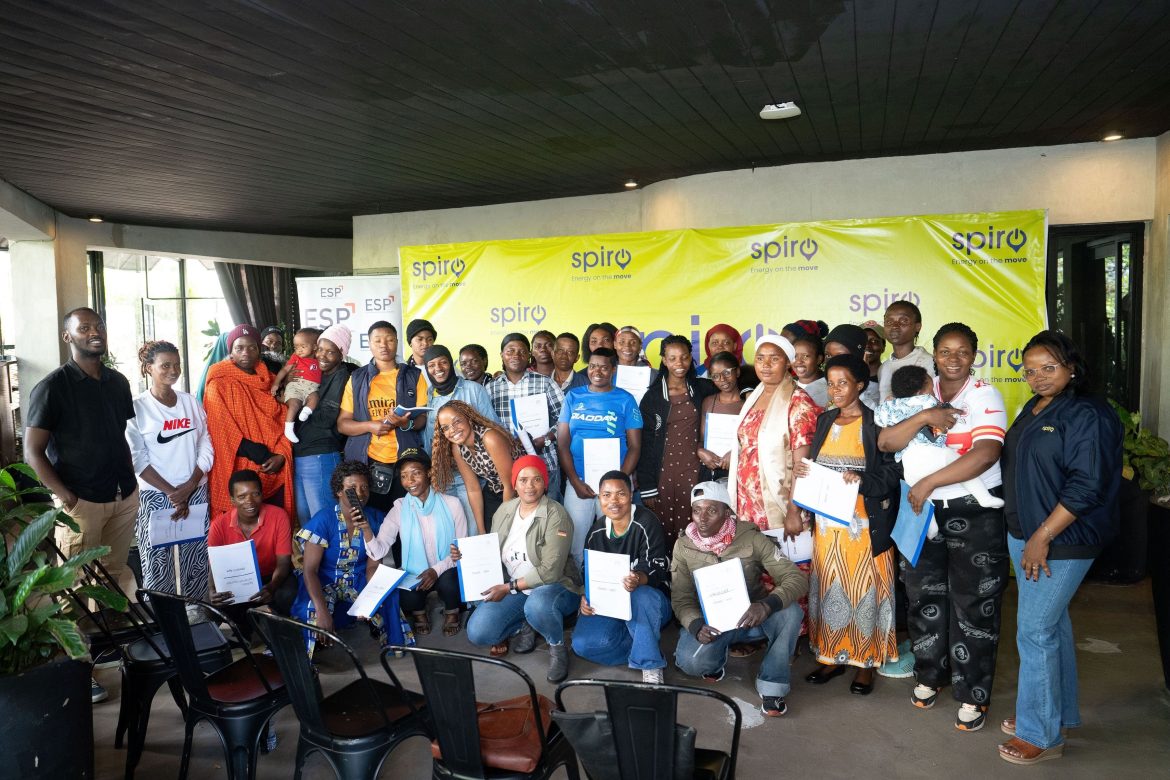
Spiro and Entrepreneurial Solutions Partners (ESP) have launched a women-focused electric mobility programme in Rwanda, beginning with 50 participants in October 2026 and targeting 500 women in the initial pilot before expanding to 5,000 entrepreneurs across Africa by 2030. The initiative combines motorcycle riding and road safety training, entrepreneurship development, access to financing and commercial opportunities in an effort to widen women’s participation in the continent’s growing electric mobility sector.
Announced in Kigali on 28 October, the Women in E-Mobility programme seeks to help women become professional electric motorcycle riders, establish transport-related businesses and generate sustainable incomes. Spiro will provide access to electric motorcycles and its battery-swapping network, while ESP will contribute entrepreneurship training, financial literacy, digital skills and business development support.
The programme comes as women remain significantly underrepresented in transport employment across Africa, despite the sector’s importance to urban mobility, delivery services, logistics and informal enterprise. In Rwanda, women account for approximately 4% of transport workers, according to figures cited by the programme’s organisers. The initiative aims to address some of the barriers that prevent women from entering motorcycle-based businesses, including access to vehicles, financing, technical training and reliable customer networks.

A 2025 study published in Research in Transportation Business & Management found that 47.7% of 306 women surveyed in Kigali expressed interest in working as motorcycle taxi drivers. The research, conducted by Marc Hasselwander, Emilie Martin, Liberata Mukamana, Viktoriya Kolarova, Naomi Mwaura and Tim Schwanen, also identified safety and security concerns, family responsibilities and limited access to financial resources as barriers to participation. The findings suggest that interest in the occupation exists, but that interest alone may not translate into business entry without practical support.
Spiro’s programme is structured around several of these constraints. Participants will receive practical riding and road safety instruction, alongside training intended to help them manage money, use digital tools and operate small businesses. Affordable financing arrangements, including lease-to-own options, are expected to help participants acquire electric motorcycles without necessarily paying the full purchase price upfront.
Access to a vehicle, however, is only one component of establishing a viable transport business. Riders also need sufficient customer demand, manageable operating costs, reliable vehicle support and a means of financing routine expenses. By connecting participants with ride-hailing, delivery and logistics platforms, Spiro and ESP intend to help women access commercial opportunities rather than leaving them to find customers independently.
Anant Badjatya, group chief executive officer of Spiro, said the programme was intended to ensure women could participate in the economic opportunities emerging from electric mobility. He said the partners wanted to provide women with the tools to become professional drivers, build businesses and generate income as the sector expands.
Eric Kacou, co-founder and chief executive of ESP, said access to a motorcycle needed to be accompanied by skills, financing, customers and ongoing business support. The partnership brings together Spiro’s vehicles, energy infrastructure and mobility ecosystem with ESP’s experience in entrepreneurship development.
The battery-swapping network is an important part of the model. Instead of relying exclusively on charging a vehicle’s battery for each operating cycle, riders can exchange a depleted battery for a charged one at a compatible swapping station. This can reduce the time spent waiting for charging and allow drivers to return to work more quickly, although the practical benefit depends on station availability, operating hours, network coverage and the cost of each swap.
For women entering motorcycle transport, the economics of ownership and operation will be central to the programme’s results. Lease-to-own financing may reduce the initial capital barrier, but participants will still need to earn enough to cover instalments, battery-swapping costs, maintenance, insurance and other business expenses. Their net income will depend on customer demand, working hours, platform commissions and the terms of their financing agreements.
These considerations make business training and market access important complements to vehicle provision. A rider who receives a motorcycle but lacks sufficient customers or faces repayment obligations that exceed earnings may struggle to maintain the business. Monitoring income, operating costs, loan repayment and business survival will therefore be important in determining whether the programme delivers durable economic opportunities rather than short-term participation.
Rwanda was selected as the starting market because of its developing electric mobility ecosystem and Spiro’s existing local operations, which include motorcycle assembly and battery-swapping infrastructure. The country has also attracted attention for efforts to expand cleaner transport options, including electric motorcycles. The programme’s initial phase is expected to help the partners assess participants’ progress, income generation and business performance before deciding how to extend the model.
The partners plan to expand the initiative into other African markets where Spiro operates between 2027 and 2030. Reaching 5,000 women across multiple countries will require more than replicating training sessions. The expansion will depend on financing availability, local regulatory requirements, the density of battery-swapping networks, access to customers and the suitability of each market for electric motorcycle operations.
Spiro and ESP are seeking to engage development finance institutions, impact investors, governments and commercial partners to support the expansion. Such partnerships could help fund training, financing facilities and the infrastructure needed to bring more women into the sector. The announcement does not specify the total funding required, the financing commitments secured or the detailed country-by-country rollout schedule.
The programme also links gender inclusion with the environmental objectives of electric mobility. Electric motorcycles can reduce tailpipe emissions in urban areas compared with petrol-powered motorcycles, while their overall climate benefits depend on factors including electricity generation, battery production, vehicle use and end-of-life battery management. Spiro’s wider sustainability reporting has included lifecycle assessments of its electric motorcycles, but the emissions impact of this specific women-focused programme will depend on the number of vehicles deployed and the journeys they replace.

For Rwanda and other African markets, the initiative presents a test of whether the transition to cleaner transport can broaden access to economic opportunities in an industry historically dominated by men. Increasing women’s participation could diversify the workforce in passenger transport and delivery services, while creating pathways into small-business ownership. Achieving that outcome will require attention to road safety, access to finance, working conditions and the social barriers identified in research on women’s participation in motorcycle transport.
The programme’s longer-term value will ultimately depend on measurable outcomes: how many women complete training, begin operating businesses, maintain positive earnings and continue working in the sector. Tracking these results alongside vehicle utilisation, customer access and environmental performance would help establish whether the model can be replicated across different African markets.
With 50 women beginning training and the first Rwandan pilot targeting 500 participants, Spiro and ESP have started testing a model that combines electric mobility infrastructure with entrepreneurship support. Their ambition to reach 5,000 women by 2030 will depend on whether the programme can translate access to vehicles and training into viable businesses, sustained incomes and a more inclusive electric mobility economy.