


Two Kenyan businesses that link commercial growth to the protection and restoration of natural ecosystems have been selected for the first cohort of the Nature-First Innovation Lab (NFIL), a 12-month accelerator designed to help African enterprises prepare for investment, as financiers increasingly assess the economic risks and opportunities associated with nature loss.
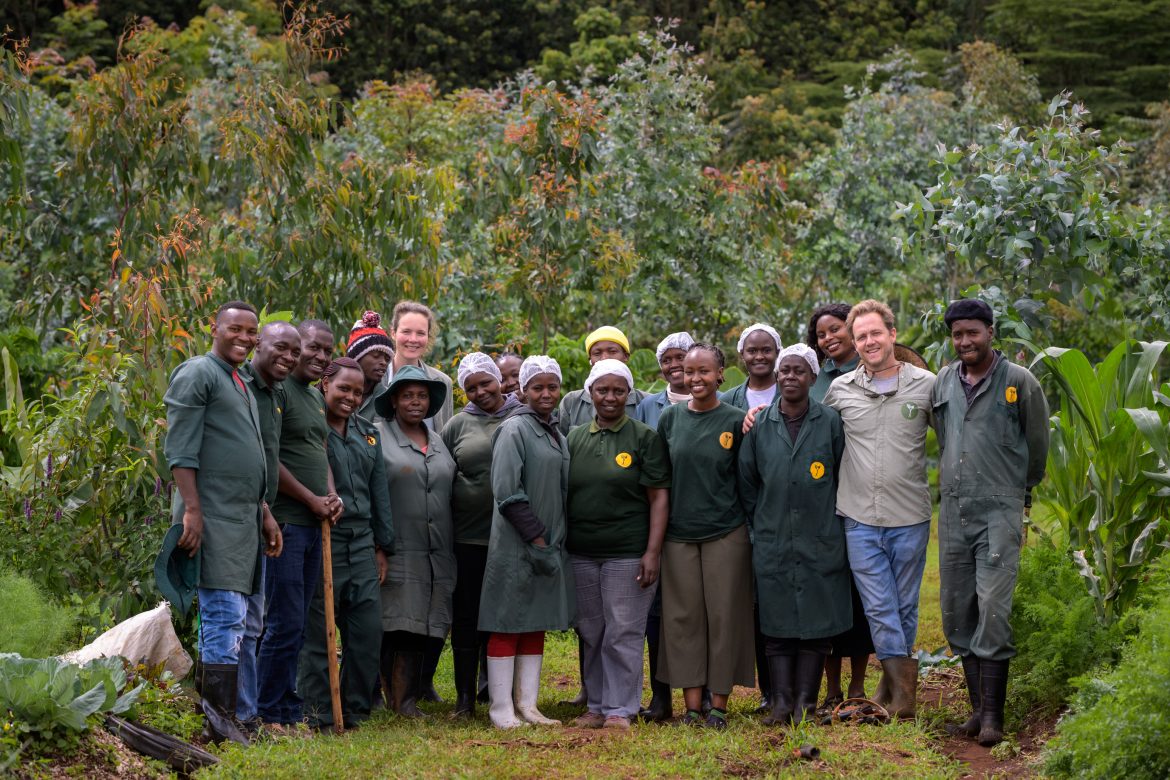
Acacia EPZ, a Kenyan exporter of gum arabic sourced from acacia woodlands, and ForestFoods, an agroforestry enterprise operating around Limuru, Naivasha and Naro Moru, are among five African businesses selected for the programme. The initiative is run by FSD Africa in partnership with Systemiq and the African Natural Capital Alliance (ANCA), with support from UK International Development and the Norwegian Agency for Development Cooperation (Norad).
The five enterprises have a collective fundraising target of approximately US$10 million. The figure represents the businesses’ intended fundraising ambition rather than capital already raised. Through grants, financial planning, governance support, nature-impact measurement and introductions to investors, NFIL aims to help the companies strengthen their business models and demonstrate their readiness for commercial financing.

The selection comes as African businesses operating at the intersection of agriculture, forestry and conservation face a persistent financing challenge. Although many depend directly on healthy ecosystems for their products and revenues, investors may lack the information, risk assessment tools and established investment structures needed to assess their commercial potential.
According to research by FSD Africa and McKinsey Sustainability, an estimated 62% of Africa’s gross domestic product depends on nature. This exposure makes ecosystem degradation an economic concern for businesses, financial institutions and governments, particularly where agricultural production, natural-resource supply chains and rural employment depend on functioning landscapes.
Yet the commercial value of protecting nature does not automatically translate into access to capital. Businesses may have established products and paying customers but still lack the financial documentation, governance systems, impact data or investment structures required to attract larger investors. NFIL is intended to address this gap between early-stage grant support and the requirements of commercial finance.
“A growing number of African enterprises reach technical feasibility and then stall because revenues aren’t sufficiently anchored, governance is not investment-grade, and documentation is incomplete,” said Dorothy Maseke, Head of the ANCA Secretariat and Lead for Nature Finance and the Taskforce on Nature-related Financial Disclosures (TNFD) at FSD Africa.
She said the programme was designed to address the gap between what grants and philanthropy could support and the point at which commercial capital became available. The selected enterprises, she added, were already generating revenue and needed assistance to become investment-ready.
For Acacia EPZ, the opportunity is tied to the supply of gum arabic, a natural ingredient used in soft drinks, confectionery and medicines. Founded in 2015 by Sam Ombogo Nyamboga, the company works with collectors whose livelihoods depend on healthy acacia woodlands. More than 70% of its collectors are women, according to the programme announcement.
The company is positioning itself as a traceable, conflict-free source of gum arabic at a time when conflict in Sudan has disrupted a major supply source for international buyers. Its business model connects access to global markets with the continued availability of the trees from which the ingredient is harvested.
Acacia EPZ’s revenues have grown by 56% over two years, according to the programme organisers. The company’s selection therefore reflects an attempt to build on existing commercial activity rather than finance an untested concept.
“Keeping Kenya’s acacia woodlands standing and building genuine incomes for the families who harvest from them are the same task, not competing ones,” Nyamboga said, describing the company’s approach as a way to combine forest conservation with reliable incomes for harvesting communities.
The commercial challenge will be to expand sourcing and market access while maintaining traceability, sustainable harvesting practices and fair returns for collectors. Demand for conflict-free supply can create an opening for Kenyan exporters, but sustained growth will depend on the reliability of supply, quality standards, buyer relationships and the ability to demonstrate that sourcing practices do not undermine the ecosystems on which production depends.
ForestFoods represents a different approach to the same investment question. The enterprise uses syntropic agroforestry, a method that integrates trees, crops and other elements of farming systems to improve ecological functioning while producing food and other marketable goods.
Its operations and partnerships include locations around Limuru, Naivasha and Naro Moru, while a new site is being developed at Shimba Hills. The company aims to demonstrate that regenerative food production can support commercial activity while improving the condition of agricultural landscapes.
ForestFoods’ co-founder and chief executive, Sven Verwiel, said the accelerator would help strengthen the business model connecting farms and growers with processing, training and reliable markets. The company hopes to secure the investment and partnerships needed to expand its operations and regenerative food systems.
For agroforestry businesses, scaling involves more than establishing productive farms. It can require investment in processing facilities, distribution, farmer training, supply-chain coordination and market development. Returns may also depend on the time required for trees and perennial crops to mature, making cash-flow planning and access to suitable financing particularly important.
The other three businesses selected for the first cohort operate across different nature-dependent value chains. Forested works with smallholder farmers in Ethiopia, Kenya and Uganda to supply regenerative ingredients, including honey, beeswax, shea butter and oils, to international beauty brands. Tanzania’s NovFeed converts organic waste into fish feed and fertiliser, linking waste management with agricultural and aquaculture production. Ghana’s Savanna Agri Chains sources and exports shea butter and baobab products, working with more than 1,000 women harvesters across 22 districts in Northern Ghana.
Their business models differ, but all depend on maintaining or restoring the natural resources that underpin production. This gives the programme a focus on regenerative supply chains, where commercial activity and environmental performance are closely connected.
NFIL will provide grants and transaction support tailored to each enterprise, including assistance with financial structuring, governance, impact measurement and investor readiness. It will also facilitate engagement with potential investors. The programme does not take equity in participating businesses, positioning its support around strengthening companies’ capacity to secure financing rather than acquiring ownership stakes.
The approach reflects a broader challenge in nature finance: demonstrating that environmental benefits can be supported by commercially viable business models. Investors need to understand how revenues will be generated, how risks will be managed and how claims about environmental performance can be measured and verified. Enterprises, meanwhile, need financing that accommodates their operating realities, including the time required to restore ecosystems and establish dependable supply chains.
A 2025 analysis by Boston Consulting Group estimated that regenerating the world’s 30 most valuable landscapes could represent a US$310 billion opportunity for commercial investors. The estimate concerns a broad global investment opportunity and is not a projection of the amount available to the five NFIL businesses. It nevertheless illustrates the potential scale of investment associated with regenerative agriculture and landscape restoration when financing, market access and implementation are aligned.

For African enterprises, converting that wider opportunity into actual investment will depend on building a credible pipeline of businesses with sound financial management, reliable markets and measurable nature-related outcomes. It will also require investors to assess the commercial implications of ecosystem degradation and restoration rather than treating nature as separate from business performance.
The success of NFIL will ultimately be measured by whether the participating companies strengthen their operations, attract suitable investment and expand without compromising the ecological and social foundations of their business models. The collective US$10 million fundraising target offers a benchmark for their ambition, but the more significant test will be the capital secured, the quality of the resulting growth and the benefits delivered to producers and communities.
For Kenya, Acacia EPZ and ForestFoods illustrate two ways businesses can connect nature conservation with income generation: through the sustainable sourcing of forest products and through food production systems designed to regenerate land. Their selection signals an effort to move such models beyond proof of concept and towards investment at a scale that can support more resilient supply chains and rural livelihoods.


