


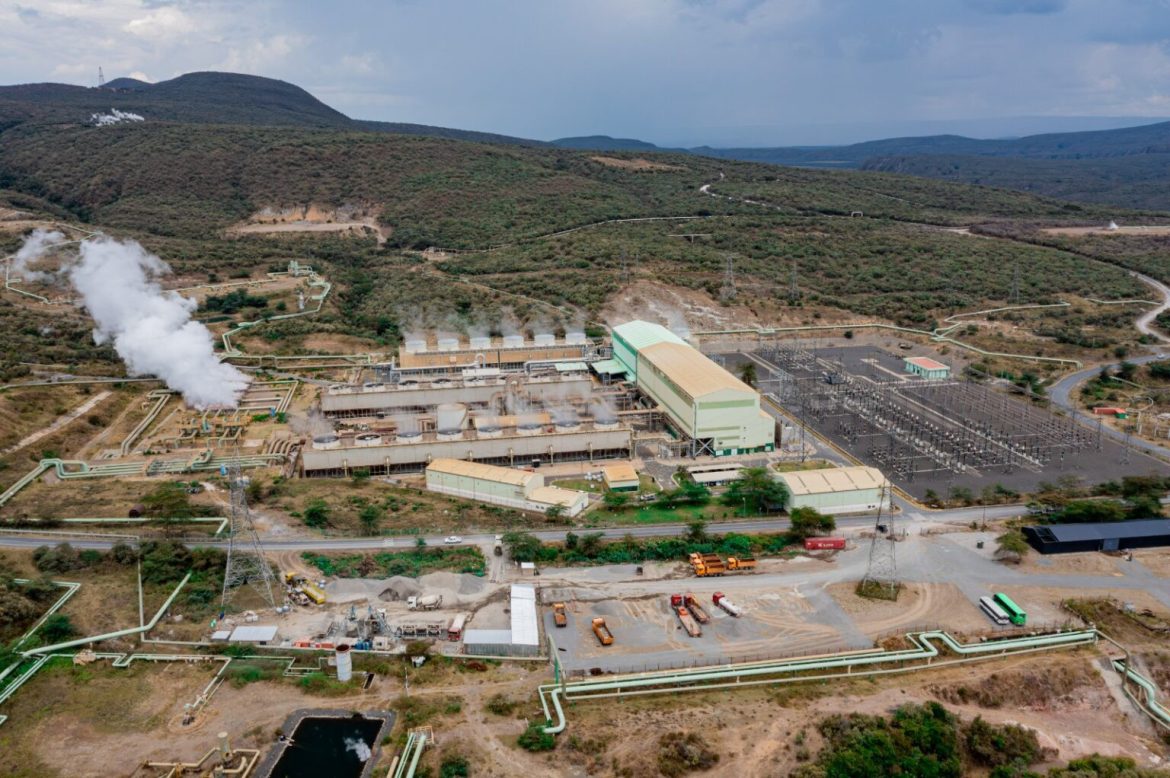
Kenya Electricity Generating Company (KenGen) has completed a KSh15.6 billion rehabilitation of the Olkaria I geothermal power station, increasing its generation capacity from 45 megawatts (MW) to 60.5MW as the utility prepares to return the refurbished facility to the national electricity grid.
The upgrade marks the renewal of Kenya’s oldest geothermal power station, which was commissioned in 1981 and taken out of operation for approximately three years to allow for extensive refurbishment. The additional 15.5MW is expected to strengthen domestic electricity supply as Kenya experiences rising demand and increases its reliance on regional electricity imports to supplement local generation.
KenGen Managing Director Peter Njenga announced the completion during the company’s annual general meeting in Nairobi, where he said the facility was undergoing reliability tests ahead of its official commissioning, expected before the end of 2026. The rehabilitation involved replacing ageing generating equipment and upgrading infrastructure associated with the plant’s three generating units. The project was undertaken with the involvement of China’s SEPCOIII Electric Power Construction Co. Ltd and Japan’s Toshiba Energy Systems and Solutions Corporation, which supplied the steam turbines and generators.

Engineering works also covered the steam-gathering system and the installation of a new gas-insulated substation. The upgrades were intended to improve the efficiency and output of the existing geothermal resource, extending the operational capability of a facility whose original generating units entered service between 1981 and 1985.
The refurbishment represents part of KenGen’s broader strategy of maintaining existing generation infrastructure while investing in additional capacity. Rather than relying exclusively on new power projects, the rehabilitation allows the company to recover and improve output from an established geothermal resource, with implications for the availability of domestic electricity.
KenGen reported capital expenditure of KSh15.5 billion in the financial year ended June 2026, alongside electricity generation of 8,975 gigawatt-hours (GWh) supplied to the national grid. The completion of Olkaria I adds to these efforts to maintain generation capacity as electricity consumption increases across the country.
Kenya’s peak electricity demand reached 2,549MW in 2026, up from 2,149MW in 2023, the year Olkaria I was taken out of operation for rehabilitation. The increase reflects the growing requirements placed on the country’s generation and transmission systems as households, businesses and industries depend on a more reliable electricity supply.
At the same time, Kenya has increased electricity imports from neighbouring countries to supplement domestic generation. Imports reached 1.91 billion kilowatt-hours (kWh) in the financial year ended June 2026, representing a 60.5 per cent increase from the 1.19 billion kWh recorded in the year ended June 2024.
The return of Olkaria I is expected to restore generation capacity that was unavailable during the rehabilitation period while providing additional output through its upgraded generating units. Although the 15.5MW increase is relatively modest against national peak demand, the additional geothermal capacity contributes to the wider effort to strengthen domestic supply and manage the country’s dependence on imported electricity.
Geothermal power remains central to Kenya’s electricity mix. KenGen’s reported figures show that geothermal plants supplied 6.42 billion kWh, equivalent to 40.9 per cent of the electricity supplied to Kenya Power in the financial year ended June 2026. Hydropower contributed 3.55 billion kWh, or 22.65 per cent, while wind generation accounted for 1.93 billion kWh.
The importance of geothermal generation extends beyond its contribution to total electricity output. Unlike wind and solar power, whose availability depends on weather and sunlight conditions, geothermal facilities can provide consistent generation when properly maintained and operated. This makes them an important source of baseload electricity, supporting grid stability alongside other renewable energy technologies.
Kenya Power Managing Director Joseph Siror has previously identified dependable generation as an important requirement for the national grid, particularly as the country integrates more variable renewable energy sources. Olkaria I was among the facilities identified as contributing to the country’s baseload electricity supply.
The rehabilitation also comes as KenGen pursues a broader expansion programme covering geothermal, solar, hydropower and battery storage. The company’s investment strategy reflects the need to increase generation while strengthening the flexibility and reliability of the electricity system as demand continues to rise.
However, the economics of electricity generation remain an important consideration in determining how different sources contribute to the national supply mix. Figures reported for June 2025 placed geothermal electricity at an average cost of US$0.0729 (KSh9.47) per kWh. Imported hydropower was reported at US$0.0685 (KSh8.90) per kWh, while locally generated hydropower averaged US$0.0251 (KSh3.26) per kWh.
These figures illustrate the differences in reported generation costs across supply sources, although the wider economics of electricity also depend on factors such as transmission, power purchase agreements, financing and system reliability. For geothermal investments, the ability to maintain facilities over long operating periods and maximise output from existing resources remains relevant to their contribution to Kenya’s electricity security.
The regulatory framework for Olkaria I’s return has also advanced. The Energy and Petroleum Regulatory Authority (EPRA) has approved a 25-year Power Purchase Agreement (PPA) for the refurbished facility, establishing the contractual basis for the purchase of electricity generated by the plant.
EPRA Director General Edward Kinyua said KenGen submitted its application for the agreement in February and that the regulator had approved it. He added that reliability tests were underway, with the plant expected to return to operation the following month.  The approval provides an important step towards integrating the refurbished facility into the national electricity supply system. However, its contribution will ultimately depend on the successful completion of testing, commissioning and the consistent operation of the upgraded generating units.
For Kenya, the rehabilitation of Olkaria I demonstrates the role that existing energy infrastructure can play in meeting future electricity requirements. As the country expands its renewable energy capacity, maintaining older generation assets and improving their performance will remain an important part of electricity planning.
The additional 15.5MW will not independently resolve the pressures associated with rising demand or growing electricity imports. Nevertheless, restoring the facility to service strengthens the domestic geothermal portfolio and provides another source of dependable generation. The longer-term value of the investment will depend on the plant’s operational reliability and KenGen’s ability to sustain output from the Olkaria geothermal resource.


