


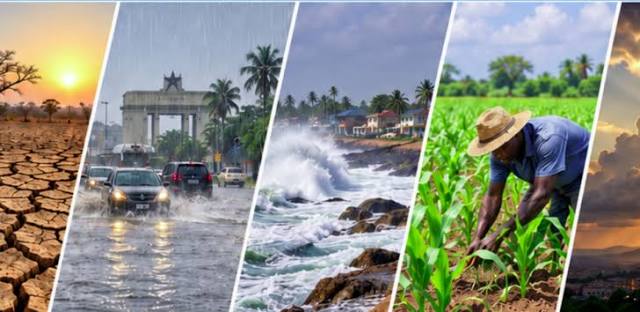
Ghana is preparing for a hotter and potentially drier season after the Ghana Meteorological Agency (GMet) warned that there is approximately a 96% probability of a very strong El Niño developing between November 2026 and January 2027, raising the risk of water shortages, weaker agricultural production and reduced hydropower generation through 2027. The forecast, outlined in a technical brief revised on 27 October, places the country on alert as authorities assess the potential effects on food supplies, electricity costs and rural livelihoods.
According to Graphic Online, the meteorological agency expects the event to persist into early 2027, with its strongest phase likely between October 2026 and January 2027. From November through April, many parts of Ghana could experience hotter and drier conditions, increasing the likelihood of water stress, bushfires and dust. Heat stress is expected to be particularly significant in Northern Ghana between February and April, when agricultural communities are already exposed to seasonal rainfall variability.

GMet has cautioned that El Niño does not produce uniform weather conditions across the country. Its effects depend partly on conditions in the tropical Atlantic, meaning that the intensity and distribution of rainfall anomalies can vary between regions. The agency also noted that some of Ghana’s most damaging climate events have occurred outside El Niño years. This distinction is important for preparedness because the forecast indicates an elevated risk rather than certainty that every part of the country will experience drought.
Ghana has already experienced contrasting weather extremes in 2026. Heavy rainfall caused widespread flooding in parts of the south in June, while prolonged dry spells affected farming communities in the North. The possibility of further rainfall disruption places additional pressure on authorities responsible for managing water resources, agricultural production and electricity supply, particularly as the country enters the dry season.
The electricity sector faces one of the most immediate risks. Hydropower remains a significant component of Ghana’s generation mix, with the Akosombo and Kpong dams together accounting for 1,180 megawatts of the Volta River Authority’s (VRA) installed capacity of 2,547 megawatts. Lower rainfall and reduced inflows into the Volta Lake could constrain hydroelectric output, potentially increasing reliance on thermal power stations that operate on natural gas, light crude oil or diesel.
The level of water already stored in Lake Volta will therefore be central to the country’s ability to manage the coming dry season. The VRA reported an Akosombo lake level of 266.62 feet on 22 October, compared with 255.23 feet recorded on 21 May by an independent reservoir transparency assessment. While the October reading indicates a higher lake level than the May figure, it does not provide a complete picture of available water reserves or the amount of electricity that can be generated over the coming months.
The independent assessment gave Ghana a D+ grade for reservoir transparency, noting that the VRA publishes a headline lake level figure without consistently providing storage volumes, fill percentages or inflow data. The absence of these indicators makes it harder for investors, electricity consumers and independent analysts to assess the country’s hydropower position and the potential implications of prolonged dry conditions.
Ghana’s experience during the 2015/16 El Niño provides a warning of the consequences when hydrological pressures coincide with weaknesses elsewhere in the electricity system. Water levels at Akosombo fell sharply during that period, constraining hydropower generation and contributing to electricity shortages. The country experienced 159 days of power outages in 2015, according to Al Jazeera, although the disruptions also reflected equipment failures, fuel shortages and distribution challenges.
The economic cost was substantial. Research by the Institute of Statistical, Social and Economic Research at the University of Ghana estimated that power failures were costing the economy between $320 million and $924 million annually, equivalent to approximately 2% to 6% of gross domestic product at the time. The figures illustrate how electricity supply disruptions can affect industrial output, business operations and household incomes, particularly where firms depend on expensive backup generation.
A reduction in hydropower output during the coming dry season could again increase pressure on thermal generation and electricity sector finances. Greater use of fuel-dependent plants would expose the power system to changes in gas and oil prices, transportation costs and fuel availability. If additional generation costs are not fully recovered through electricity tariffs or public sector payments, they could also increase financial pressure on utilities and the government.
Agriculture is another major area of exposure. About 35% of Ghana’s workforce was employed in the sector in 2025, according to modelled International Labour Organization estimates published by the World Bank. Much of the country’s agricultural production remains dependent on rainfall, leaving farmers vulnerable to changes in the timing, duration and distribution of seasonal precipitation.
A prolonged dry period could affect planting decisions, crop yields and livestock production, particularly in northern farming areas where irrigation infrastructure remains limited. Lower agricultural output could also increase pressure on domestic food supplies and household budgets if reduced harvests coincide with higher transportation and production costs.
Food prices entered the current period at a relatively favourable level compared with the previous year, although recent movements indicate that cost pressures remain. According to the Alliance for a Green Revolution in Africa’s Food Security Monitor, as reported by StatsGH, the national average price of white maize rose by 8.9% in August to 3,141 cedis per tonne, but remained 36.3% below its level a year earlier. The extent to which these prices hold will depend partly on the coming harvests, market supply and the cost of moving produce between farming areas and urban markets.
Fuel prices add another layer of exposure. Petrol and diesel prices were respectively 29% and 19% higher in August than in March, according to the same report. Higher fuel costs affect agricultural transport, irrigation and food distribution, while also increasing the cost of operating thermal power plants. If drought reduces crop production and hydropower output simultaneously, households and businesses could face pressure from both food and electricity costs.
For Ghana, these risks extend beyond the immediate dry season. The country’s ability to maintain reliable electricity supply, protect agricultural incomes and manage food-price volatility will influence inflation, industrial competitiveness and public spending. Climate-related disruptions can also create additional fiscal demands through emergency support, agricultural assistance and expenditure on water and energy infrastructure.
The regional implications are also significant. Across West Africa, rainfall variability affects agricultural production, water availability and electricity generation in countries that depend on rain-fed farming and hydropower. A severe dry season in Ghana could therefore form part of a wider regional challenge, particularly where neighbouring countries face similar pressures on food supply and energy systems. However, the effects will differ according to local rainfall patterns, reservoir conditions, agricultural systems and the capacity of national institutions to respond.
The outlook for 2027 remains uncertain. GMet has warned that if El Niño weakens slowly, the country’s subsequent rainy seasons could experience delayed and below normal rainfall. Alternatively, if La Niña develops by the middle of 2027, parts of Northern Ghana could receive above-normal rainfall, increasing the risk of flooding and possible spillage from the Volta reservoir system. The possibility of drought followed by excessive rainfall within the same year creates additional challenges for agricultural planning, dam management and infrastructure preparedness.
The forecast places greater importance on coordination between meteorological services, water managers, electricity producers and agricultural authorities. Timely climate information can help farmers adjust planting schedules, while improved reservoir monitoring would give electricity planners a clearer basis for managing hydropower and thermal generation. Investments in irrigation, water storage, efficient water use and diversified electricity generation could also reduce exposure to future rainfall shocks.
For African economies, Ghana’s situation illustrates how climate variability can move rapidly through interconnected systems. A change in rainfall patterns can affect crop production, electricity costs, industrial activity and government finances at the same time. As climate risks become increasingly relevant to infrastructure planning and economic management, the capacity to translate seasonal forecasts into operational decisions will be as important as the accuracy of the forecasts themselves.

GMet’s warning provides Ghana with an opportunity to prepare before the most exposed months of the dry season. Whether the projected risks translate into significant economic disruption will depend on water reserves, fuel availability, agricultural preparedness and the speed with which public institutions respond. The challenge is to manage the coming season without allowing climate pressures to deepen existing vulnerabilities in the country’s food and electricity systems.


