


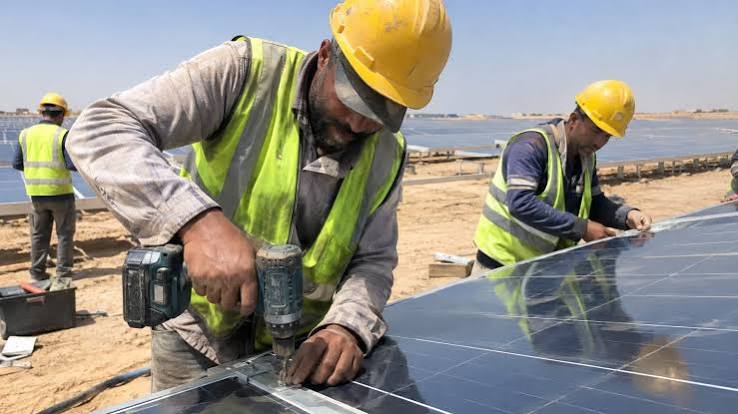
Egypt’s renewable energy sector has secured a major financing commitment for the development of the Nefer Minya Solar PV Project, with Infinity Power and HAU Energy obtaining a debt package of up to $566 million to build a 1.2-gigawatt solar plant and a 600-megawatt-hour battery storage facility in Minya Governorate. Announced in October 2026, the financing includes up to $265 million arranged by the European Bank for Reconstruction and Development (EBRD), as Egypt seeks to expand renewable electricity generation, strengthen grid reliability and reduce its exposure to fossil fuel supply pressures.
The project is expected to become the largest solar power plant in Egypt and Africa once completed. Its combination of large scale solar generation and battery storage is designed to address one of the constraints facing renewable energy expansion: the difference between when electricity is generated and when it is needed. Solar plants produce most of their electricity during daylight hours, while demand often remains high after sunset. The battery system will store part of the daytime output for use during evening peak periods, helping to improve the availability of renewable electricity and support grid stability.
According to the EBRD, its financing contribution comprises a $160 million loan from its own resources, a $75 million loan mobilised from the Bank of Jordan and up to $30 million in concessional financing from the Clean Technology Fund under its Global Energy Storage Programme. The wider financing package also involves German development finance institution DEG, the Dutch Entrepreneurial Development Bank (FMO) and France’s Proparco, although their individual contributions have not been disclosed.
The project is being developed by Nefer Menya for Renewable Energy, a special purpose company owned by Infinity Power and HAU Energy. Electricity generated by the facility will be sold to the Egyptian Electricity Transmission Company under a 25-year power purchase agreement. According to the project developers, the plant is expected to generate enough electricity to supply more than 1.4 million homes annually and avoid over 1.5 million tonnes of carbon dioxide emissions each year once operational. These figures are projections and will depend on the plant’s eventual commissioning and operating performance.
The financing reflects the growing role of development finance institutions in mobilising capital for large renewable energy projects in African markets. Such developments typically require substantial upfront investment, long construction periods and contractual arrangements that provide lenders with confidence in future revenue. By combining commercial loans with concessional finance and participation from multiple institutions, the Nefer Minya structure distributes financing requirements across a wider group of lenders while supporting the inclusion of battery storage, which can increase project costs but improve the usefulness of solar generation.
For Egypt, the investment comes as the government pursues a target of generating 42 per cent of its electricity from renewable sources by 2030. The country has been expanding solar and wind capacity while seeking to reduce reliance on natural gas and improve the resilience of its electricity system. Its Nexus of Water, Food and Energy (NWFE) programme, launched at COP27, provides a framework for mobilising private investment in renewable energy while addressing the country’s wider resource and development priorities.
However, expanding generation capacity alone will not resolve the challenges facing Egypt’s power sector. The integration of large volumes of variable renewable electricity requires investment in transmission networks, grid management, storage and system balancing. Battery storage can shift electricity across different periods of the day, but it cannot replace the need for adequate transmission infrastructure or effective electricity market arrangements. The pace at which these supporting systems develop will influence how much of the planned renewable capacity can be reliably delivered to consumers and industry.
The project also has implications for Egypt’s industrial economy. Reliable electricity is essential for manufacturing, processing and other energy-intensive activities, where interruptions and high energy costs can affect production and competitiveness. The availability of additional renewable electricity could support the diversification of industrial power supply and reduce exposure to fluctuations in fossil-fuel markets. The extent of these benefits will depend on how the electricity is integrated into the national system and the terms under which it is supplied.
The financing is also relevant to the wider African renewable energy market, where governments are seeking to attract private capital into infrastructure while managing fiscal constraints and persistent electricity access gaps. Development finance institutions have increasingly used syndicated lending, concessional facilities and private-sector partnerships to support projects that may be difficult to finance through commercial lending alone. These structures can help mobilise investment, but they also require credible project preparation, predictable regulation and transparent allocation of financial and operational risks.
Read also: https://www.africa-energy.com/news-centre/power/renewable-energy
Egypt’s experience illustrates both the opportunities and the conditions required to scale renewable energy across the continent. Countries with substantial solar and wind resources still need bankable power purchase agreements, financially sustainable utilities, reliable transmission systems and access to long-term capital. Without these elements, new generation projects may struggle to translate installed capacity into dependable electricity supply.
The Nefer Minya project therefore represents more than an increase in Egypt’s planned solar capacity. Its combination of renewable generation, battery storage and development finance demonstrates an approach to addressing the technical and financial requirements of a changing electricity system. The next test will be whether the project can move from financing arrangements to timely construction and reliable operation, while delivering the expected electricity and emissions reductions.

For African economies facing rising electricity demand, the broader significance lies in the ability to finance renewable infrastructure that serves both energy security and industrial development. The scale of investment secured for Nefer Minya shows the potential of coordinated public and private financing, but its long-term value will ultimately depend on the quality of grid integration, the affordability of electricity and the project’s contribution to a more reliable power system.


