

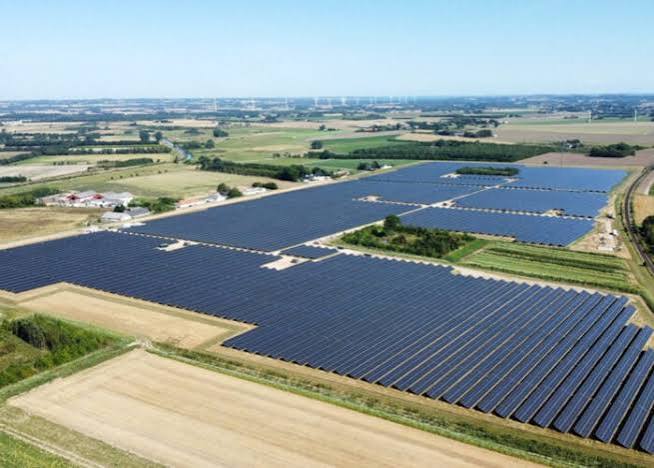
South Africa registered 2,045 megawatts (MW) of new solar photovoltaic capacity between July and September 2026, marking a sharp increase in private electricity generation investment as the country seeks to diversify its power supply, strengthen energy security and reduce dependence on its state-owned utility. Figures released by the National Energy Regulator of South Africa (NERSA) show that 139 solar facilities were registered during the quarter, forming part of a wider portfolio of 144 new generation projects with a combined capacity of 3,129MW and an estimated investment value of R78.16 billion ($4.7 billion).
The registrations, covering the second quarter of South Africa’s 2026/27 financial year, represent a substantial increase from the previous quarter, when 124 renewable energy facilities with a combined capacity of 804MW were registered. Solar photovoltaic projects accounted for 236MW of that earlier capacity, meaning the latest quarter recorded more than an eightfold increase in newly registered solar capacity.

According to NERSA, solar accounted for the largest number of projects, while three wind facilities contributed a further 1,063MW. The remaining registrations comprised a 3MW battery energy storage system and an 18MW co-generation facility. The figures point to an expanding pipeline of privately developed electricity infrastructure, although registration does not necessarily mean that projects have been completed, connected to the grid or begun supplying power.
The scale of investment is significant for an economy where electricity reliability and affordability remain central to industrial competitiveness, business operations and household welfare. South Africa’s electricity crisis has constrained economic activity for years, with power interruptions raising operating costs for manufacturers, mining companies, commercial enterprises and small businesses. Although supply conditions have improved from the most severe periods of load shedding, the country still faces the challenge of securing sufficient generation capacity while modernising the infrastructure needed to deliver electricity reliably.
The latest registrations also illustrate how regulatory reforms have widened opportunities for private electricity generation. Changes to licensing requirements in recent years, including the removal of the previous generation licensing threshold in December 2022, have enabled businesses and independent power producers to develop larger projects without going through the same licensing process previously required. NERSA’s registration framework continues to provide regulatory oversight of qualifying facilities, supporting compliance and the integration of privately generated electricity into the national system.
The regulator processed the 144 applications in an average of nine working days, compared with an average of 10 working days for 181 applications in the previous quarter of the 2025/26 financial year. Faster processing can reduce administrative delays for developers, although the pace at which registered projects reach construction and commercial operation will also depend on financing, equipment procurement, land arrangements and grid connection approvals.
Investment was concentrated in a number of provinces with substantial renewable energy development potential. The Western Cape recorded the highest investment value, with approximately R24.6 billion allocated to projects representing 1,189MW of capacity. Limpopo registered 484MW, backed by an estimated R16.27 billion in investment, while the Free State recorded 543MW and approximately R15.03 billion. Gauteng had the highest number of registrations, with 47 facilities, but their combined capacity was only 25MW, reflecting the different scale and distribution of projects across the country.
The figures also reveal an important distinction between the growth of private generation and the infrastructure through which electricity reaches consumers. Of the 144 registered facilities, 76 will connect to the Eskom network, accounting for 3,079MW of capacity and approximately R77.58 billion in investment. The remaining 68 facilities will connect to municipal distribution networks, adding 50MW and attracting an estimated R584 million. The difference highlights the extent to which the latest investment pipeline is concentrated in projects that will rely on the national grid to transport electricity.
That dependence makes transmission infrastructure one of the central tests facing South Africa’s energy transition. Renewable energy projects are often located far from major centres of electricity demand, while available grid capacity varies across provinces. Without sufficient transmission lines, substations and distribution infrastructure, new generation can face delays in connecting to the system or restrictions on how much electricity it can deliver. Grid congestion can also lead to curtailment, where available renewable electricity cannot be accommodated because of network constraints or operating conditions.
South Africa’s Integrated Resource Plan 2025 identifies substantial new generation and network investment requirements through 2039. The government has also begun opening parts of transmission infrastructure development to private participation through its Independent Transmission Projects Programme. Its first phase includes approximately 1,164 kilometres of new transmission infrastructure, reflecting the scale of investment required to connect future generation capacity and support a more competitive electricity market.
The government’s approach to the next phase of energy procurement also underscores the need to balance new renewable generation with system flexibility. In October, the Department of Electricity and Energy confirmed that its proposed first determination under the Integrated Resource Plan would prioritise 4,600MW of battery energy storage and 5,000MW of gas-to-power capacity. The decision reflects concerns about curtailment and the need for electricity that can be stored or dispatched when demand rises or renewable generation falls. Battery storage can help manage fluctuations in solar and wind output, but it must be supported by appropriate grid infrastructure and commercially viable arrangements.
For South Africa, the implications extend beyond the electricity sector. More reliable power can support manufacturing, mineral processing, digital infrastructure and other energy-intensive industries, while reducing the exposure of businesses to interruptions and the cost of alternative power supplies. Greater private participation may also diversify investment sources and reduce the pressure on public institutions to finance all new generation capacity. However, the benefits will depend on whether electricity market reforms translate into competitive supply arrangements and whether network investment keeps pace with new generation.
Municipal electricity distributors face a separate set of challenges. Although 68 of the newly registered facilities will connect to municipal networks, their combined capacity is relatively small compared with the projects connecting to Eskom. Municipalities will need adequate technical capacity, clear connection rules and sustainable revenue models as distributed generation expands. This is particularly important where commercial and industrial customers increasingly seek to procure electricity directly from independent producers, potentially changing the revenue base of municipal distributors that have traditionally relied on electricity sales to fund network operations and other services.
The development also carries implications for Africa’s wider energy transition. South Africa’s experience demonstrates how regulatory reform and private capital can accelerate the development of new generation capacity, but it also highlights the importance of planning for transmission, storage, distribution and affordability alongside renewable energy procurement. Across the continent, countries seeking to expand electricity access and support industrial development face similar questions about how to attract investment while ensuring that new infrastructure can be integrated into existing power systems.

For South Africa, the 2,045MW of newly registered solar capacity marks a significant expansion of the project pipeline, but the more consequential measure will be how much of that capacity reaches operation and contributes to electricity supply. The estimated R78.16 billion in investment represents a substantial commitment to new generation infrastructure. Its economic value will ultimately depend on timely construction, grid access, reliable operation and the ability of the electricity market to deliver the benefits to businesses and households.