


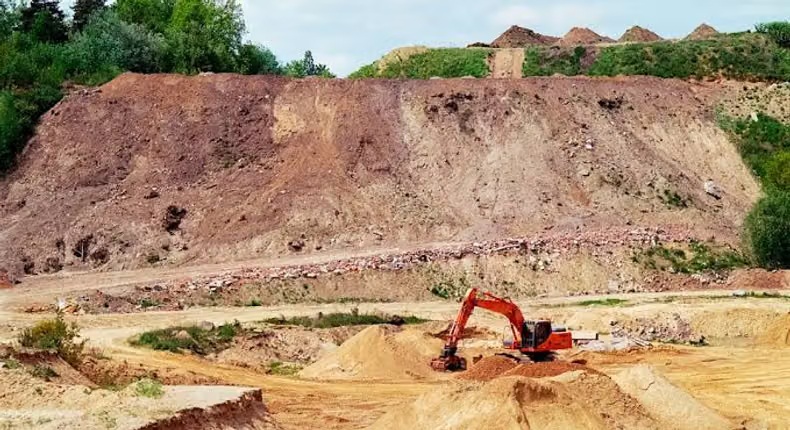
Kenya has selected a US-led consortium to develop the country’s strategically important Mrima Hill rare earth and niobium deposit in Kwale County, while a Chinese joint venture has been chosen for separate copper and chromite projects, highlighting the growing competition for Africa’s critical mineral resources and Kenya’s effort to attract investment while keeping more mineral value within the country.
The Ministry of Mining, Blue Economy and Maritime Affairs issued notices of intention to award the Mrima Hill project to the Frontier Minerals Consortium, comprising Frontier Minerals, ReElement Technologies, American Resources Corporation and Canada-listed Bunker Hill Mining. The same tender process selected China’s Fangda Special Steel Technology and Sinohydro Corporation for the Kamacabi copper project in Tharaka Nithi County and the Kang’ura chromite project in Samburu County
The awards come as governments and companies seek greater control over critical mineral supply chains, particularly those involving rare earth elements used in electronics, permanent magnets and defence-related technologies. According to the International Energy Agency, China accounted for 94% of global sintered permanent-magnet production in 2024, underscoring the strategic importance of developing alternative sources and processing capacity.

For Kenya, Mrima Hill is potentially significant because preliminary assessments indicate the deposit contains substantial quantities of rare earth minerals and niobium, a metal used in aerospace manufacturing. The Kenyan government has previously put the potential value of the rare earth resource at tens of billions of dollars, although the scale and commercial value of any eventual production will depend on further exploration, feasibility work, financing and processing economics.
The project also illustrates the broader shift in Africa’s mining sector from simply attracting capital to seeking greater domestic economic value from mineral resources. Kenya has said local processing and refining will be an important part of the development model, while the Frontier Minerals consortium has indicated that it intends to establish processing and refining capacity in the country. No investment figure or production timetable has yet been announced.
That distinction matters for Kenya’s economic returns. Exporting unprocessed ore would limit the domestic share of the value chain, while processing could create additional opportunities for skilled employment, industrial services, technology transfer, tax revenues and supporting infrastructure. The extent of those benefits, however, will depend on whether Kenya can secure commercially viable processing facilities, reliable power and transport infrastructure, and a regulatory framework capable of supporting long-term investment.
The tender outcomes also show that the competition for Africa’s critical minerals is not simply a contest between the United States and China. Chinese companies withdrew from the Mrima Hill competition, while Chinese firms secured the separate copper and chromite projects. Other US, Australian and Kenyan-British-backed groups had also competed for the rare earth project.
The next stage could prove as important as the tender itself. The notices issued by the ministry do not constitute mining licences or permission to begin operations. Successful bidders must engage host communities, obtain the required consents and apply for prospecting licences through Kenya’s mining regulatory system before activities can proceed.
Mrima Hill presents particular governance challenges because the proposed development overlaps with a forested area regarded as sacred by sections of the Digo community. Residents and farmers have raised concerns about land, livelihoods, consultation and the protection of cultural sites. The government has said community engagement and statutory approvals must form part of the next stage of the process.

Those issues have direct economic implications. Delays arising from disputes over land, environmental approvals or community consent can increase project costs and postpone potential government revenues, while inadequate consultation can undermine confidence in the regulatory process. For communities in mining regions, the distribution of benefits and management of land and environmental risks will therefore be central to whether large-scale mineral development translates into durable local economic gains.
For Kenya, the immediate significance of the Mrima Hill award is therefore less about an imminent mining boom than the opportunity to establish whether a critical-minerals project can combine foreign investment with domestic processing, public revenue, community participation and environmental safeguards. As competition for Africa’s mineral resources intensifies, the terms under which projects are developed will determine how much of their economic value remains in the countries where the minerals are found.


