


As African nations marked Africa Day 2026 this week, the annual commemoration of the founding of the Organisation of African Unity (OAU) in 1963 evolved beyond a celebration of political independence into a wider debate over economic sovereignty, debt dependency and digital control. Across the continent, policymakers, academics and younger generations increasingly questioned whether formal independence has translated into meaningful economic autonomy, as African economies navigate mounting fiscal pressures, external financing dependence and intensifying competition over digital infrastructure and data governance.
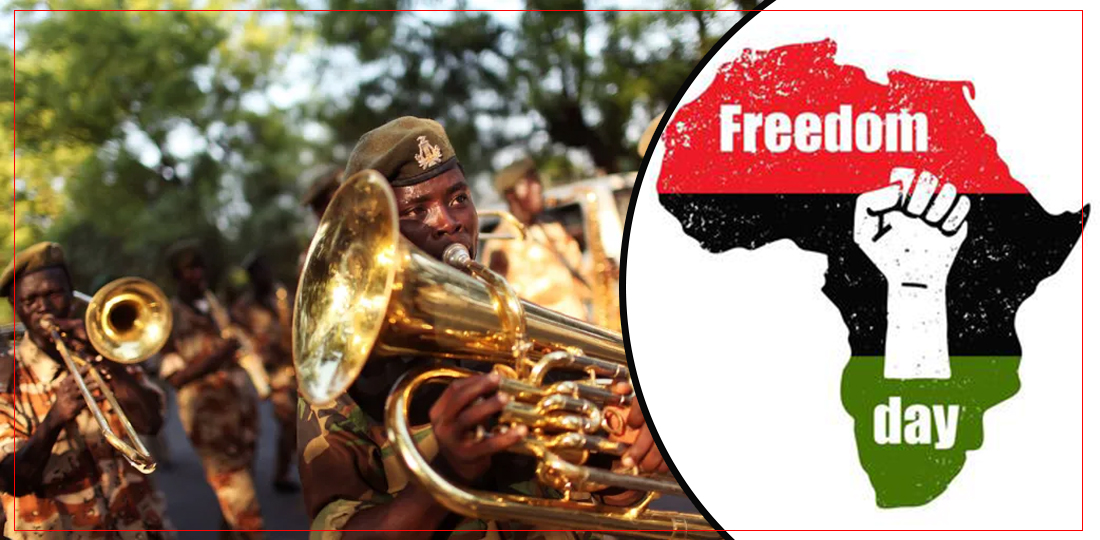 The anniversary, observed each year on May 25, commemorates the establishment of the OAU in Addis Ababa by newly independent African states seeking continental unity and liberation from colonial rule. More than six decades later, however, the definition of liberation itself is being reassessed considering shifting geopolitical and economic realities.
For many Africans who witnessed the independence era, the occasion remains deeply symbolic. We fought for the right to self-govern, and that political liberation can never be taken for granted,” said Mzee Josphat Kimanthi, a retired civil servant in Kenya’s Machakos County. Yet even among that generation, there is growing recognition that political sovereignty has not necessarily produced broad-based economic independence.
Across much of the continent, governments continue to face rising debt burdens, limited fiscal flexibility and growing exposure to external economic shocks. According to multilateral financial institutions, several African economies are spending increasing shares of public revenue on debt servicing, constraining investment in infrastructure, healthcare, education and industrial development.
Analysts say the debate surrounding Africa Day is increasingly reflecting those economic realities. Questions over who controls financing, trade systems, technology platforms and natural resources are becoming central to how sovereignty is understood in contemporary Africa. Professor Paul Mbatia of Multimedia University of Kenya argued that economic production and consumption patterns remain at the core of the challenge. True liberation cannot exist when a continent produces what it does not consume, and consumes what it does not produce,” he said.
The discussion is unfolding against a backdrop of changing global alliances. African governments are balancing relationships with traditional Western partners, China, Gulf States and emerging blocs such as BRICS, each offering investment, financing and strategic cooperation. While those partnerships provide critical capital and infrastructure financing, they also deepen debates over economic leverage, dependency, and policy autonomy.
Digital infrastructure has emerged as another focal point in the conversation over sovereignty. African technology ecosystems have expanded rapidly in recent years, with cities such as Nairobi, Lagos, Kigali and Cape Town positioning themselves as regional innovation hubs. Mobile money platforms, financial technology firms and artificial intelligence applications are reshaping commerce, banking and public services across multiple sectors.
Yet despite that growth, much of the underlying digital architecture remains externally owned or financed. Undersea internet cables, cloud computing infrastructure and major data centeres are often controlled by multinational corporations headquartered outside Africa. According to technology policy analysts, concerns are growing that digital dependence could replicate older patterns of resource extraction and external control.
Digital extraction is the new frontier of neocolonialism,” said Amina Osei, a policy analyst at the African Centre for Digital Governance in Accra. She argued that the ownership of data infrastructure and digital systems increasingly determines economic influence and long-term technological competitiveness.
For younger Africans, the meaning of liberation is also evolving away from the anti-colonial rhetoric that shaped earlier generations. With more than 60 percent of Africa’s population under the age of 25, economic opportunity, employment, governance and affordability now dominate public concerns. Many younger citizens say the language of independence struggles no longer fully reflects their daily experiences of unemployment, rising living costs and institutional frustration.
To be honest, Africa Day feels performative to my peers,” said Lagos-based software developer Chinedu Nwosu. “Liberation for us is not about history; it’s about changing the systems that affect our daily lives.”
That generational shift is increasingly influencing political discourse across the continent. Public frustration over corruption, governance failures, taxation pressures and inequality has fuelled protests and political movements in several African countries in recent years. Analysts note that demands for accountability and institutional reform are now central to how many citizens interpret sovereignty and freedom.
The broader economic implications are substantial. According to development economists, achieving greater economic sovereignty would require significant investment in regional manufacturing, digital infrastructure, industrial value chains and intra-African trade under frameworks such as the African Continental Free Trade Area. Without stronger domestic production capacity and technological ownership, African economies may remain vulnerable to external price shocks, capital outflows and geopolitical competition.
Read also: https://www.aljazeera.com/news/2026/5/25/africa-day-2026-has-the-continent-achieved-true-liberation
At the same time, the debate over liberation is increasingly intersecting with sustainability and development policy. Questions about who benefits from Africa’s critical minerals, renewable energy transition, labour force and digital markets are becoming central to discussions around long-term economic resilience. Governments are under growing pressure to ensure that resource wealth, innovation and demographic growth translate into improved living standards and stronger domestic industries.
 Africa Day 2026 therefore arrives at a moment when the continent’s political independence is largely uncontested, but its economic and technological autonomy remains under active negotiation. For many Africans, liberation is no longer viewed as a completed historical achievement, but as an ongoing process shaped by debt, governance, trade, technology and institutional power.
As governments and citizens reflect on the continent’s trajectory more than six decades after the founding of the OAU, the debate increasingly centres not on whether Africa is politically free, but on whether its economies, resources and digital systems are sufficiently controlled from within to deliver long-term prosperity and strategic independence.


