


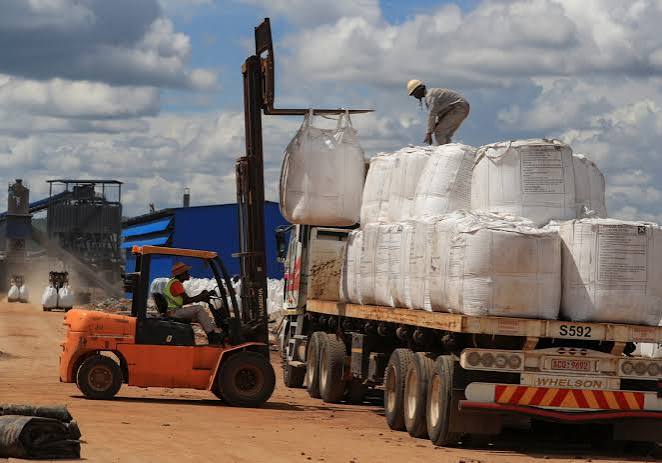
African civil society organisations and community representatives are urging governments to strengthen local mineral processing, improve transparency in mining contracts and ensure host communities benefit more directly from extraction, as rising global demand for clean energy technologies increases the strategic value of the continent’s mineral resources.
The calls were made at the Resource Justice Network Africa Conference 2026 in Nairobi on 19 October, where participants from 31 countries discussed how African economies could capture more value from mineral production while addressing corruption, environmental damage and unequal distribution of mining revenues. The conference, organised by Transparency International Kenya in partnership with the Resource Justice Network, focused on resource governance and the economic consequences of a global energy transition increasingly dependent on critical minerals.

According to reporting by The Star, conference participants argued that African countries should move beyond exporting unprocessed minerals and establish domestic processing facilities, supported by regional industrial cooperation. They also called for stronger enforcement of existing laws and more transparent agreements between governments and mining companies, amid concerns that resource-rich communities often bear environmental and social costs without receiving a commensurate share of the economic returns.
The debate reflects a broader challenge facing African economies. The continent holds significant deposits of minerals used in batteries, electricity networks, electric vehicles and other technologies associated with the transition to cleaner energy. Copper, cobalt, lithium, manganese and graphite have become increasingly important to global supply chains, creating opportunities for African countries to attract investment, expand exports and develop new industrial capabilities.
However, the economic benefits of extraction depend partly on where processing and manufacturing take place. When minerals are exported in raw or minimally processed form, producing countries may capture revenue through royalties, taxes and export earnings but miss opportunities associated with refining, component production, engineering services and industrial employment. Expanding these activities could broaden domestic supply chains and create higher-skilled jobs, although the scale of the benefits will depend on project economics, infrastructure and access to markets.
Joyce Nyamukunda, a member of the Resource Justice Network and the Extractives Industries Global Board who coordinates the network in Zimbabwe, called for African countries to develop processing facilities and regional hubs. Cooperation, she argued, could help countries pool resources and overcome some of the constraints that make it difficult to establish competitive processing industries individually.
The proposal faces substantial economic hurdles. Mineral processing can require large and reliable electricity supplies, significant water resources, specialised technical skills and expensive transport infrastructure. In countries where power shortages and high electricity costs already constrain industrial activity, new processing facilities could struggle to compete with established producers elsewhere. Governments seeking to attract investment will also need predictable regulations, access to finance and clear arrangements governing taxation, land use and environmental compliance.
Regional industrialisation could help spread some of these costs. Shared processing facilities and transport corridors may allow neighbouring countries to combine mineral resources, infrastructure and markets, reducing the need for each economy to build a complete value chain independently. Such cooperation would nevertheless require agreements on financing, cross-border logistics, standards and the distribution of jobs, revenue and other benefits.
Beyond industrial policy, the conference highlighted governance concerns that influence whether mineral wealth translates into wider development gains. Sheila Masinde, Executive Director of Transparency International Kenya, said corruption, illicit financial flows and weak transparency in agreements between governments and mining companies continued to undermine the contribution of natural resources to African economies.
Mining contracts determine how governments and investors share financial risks, taxes, royalties and other obligations. Where agreements are opaque or enforcement is weak, citizens may struggle to establish how much revenue a project generates, what the state receives or whether promised community investments are delivered. Stronger disclosure and oversight can help governments assess the public value of projects and reduce opportunities for revenue leakage.
The distribution of benefits is particularly important in communities near mining operations. Extraction can create employment and business opportunities, but it can also disrupt land use, increase pressure on water supplies and leave communities dealing with pollution, displacement or the loss of agricultural livelihoods. Where compensation and consultation arrangements are inadequate, disputes can undermine trust and delay projects.
Transparent community agreements, accessible grievance mechanisms and effective environmental monitoring can help clarify responsibilities between companies, governments and residents. Their value, however, depends on whether commitments are enforceable and whether communities can participate meaningfully in decisions affecting their land and livelihoods.
The environmental consequences of mineral processing also complicate the case for local value addition. Refining and other industrial activities can consume substantial amounts of electricity and water, while generating emissions and waste that require careful management. If new facilities depend on carbon-intensive power or operate under weak environmental controls, the benefits of additional domestic processing could come with higher environmental costs.
Governments therefore face a dual challenge: developing industries that retain more value locally while ensuring that production meets environmental standards and does not transfer disproportionate costs to nearby communities. Reliable energy systems, water management, pollution controls and capable regulators will be central to determining whether new mineral industries can operate sustainably.
The issue has implications for public finances as well. Mineral revenues can support infrastructure, education, healthcare and other public services, but the long-term contribution depends on effective tax collection, responsible spending and the management of environmental liabilities. Where extraction degrades water sources or agricultural land, governments and communities may ultimately bear costs that are not reflected in the initial value of mineral exports.
The pressure for stronger governance comes as countries compete to attract investment linked to the energy transition. Access to critical minerals has become an economic and strategic priority for manufacturers and governments seeking to diversify supply chains. African producers have an opportunity to negotiate investment that supports domestic industrial development, but securing that outcome will require credible policies, commercially viable projects and institutions capable of enforcing contractual and environmental obligations.
The Nairobi conference is expected to conclude with a joint communiqué outlining shared priorities ahead of the 31st United Nations Climate Change Conference, COP31, in Antalya, Türkiye. The discussions place resource governance and local industrial capacity at the centre of questions about how African countries can benefit from the global shift towards cleaner energy.

For the continent, the measure of success will not be the volume of minerals extracted alone. It will depend on whether investment creates productive industries, expands skilled employment, generates transparent public revenues and improves conditions in mining communities. Without progress on processing capacity and governance, higher demand for critical minerals could increase exports without producing a comparable expansion in domestic economic value or local development benefits.


