


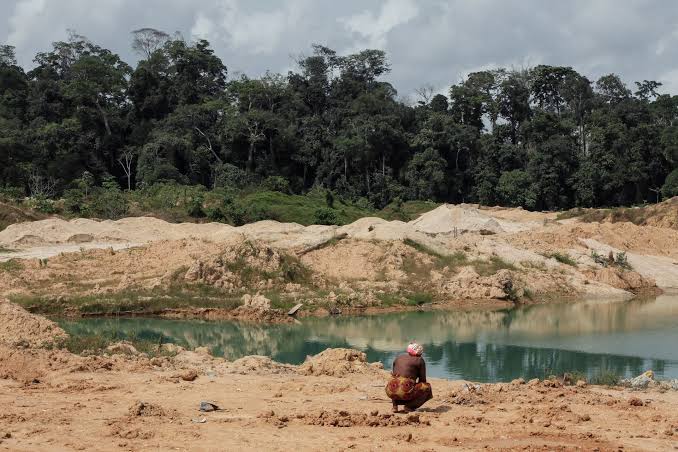
Rising global gold prices are intensifying pressure on forests and water systems in Ghana, where expanding artisanal and small-scale mining is contributing to deforestation, chemical pollution and health risks for communities, according to a Reuters report published on 19 October 2026. The trend highlights a growing challenge for African resource-producing countries: capturing the economic benefits of higher commodity prices while containing the environmental and social costs of extraction.
Gold prices have risen by more than 120% over the past five years, driven by geopolitical tensions and trade disruptions, Reuters reported. Higher prices have strengthened incentives to extract the metal, including in environmentally sensitive areas where illegal mining is difficult to monitor and gold can enter international supply chains after being re-smelted, obscuring its origin.

In Ghana, one of Africa’s leading gold producers, the expansion of mining into forest reserves has placed additional pressure on ecosystems that support biodiversity, regulate water flows and sustain agricultural activity. The environmental consequences extend beyond the immediate mining sites, as the removal of vegetation, excavation of riverbeds and discharge of contaminated waste can affect surrounding landscapes and downstream water users.
The use of mercury and cyanide in gold extraction presents particular risks where chemicals are handled or disposed of without adequate controls. Contamination can affect rivers and other water sources, threaten aquatic ecosystems and increase the burden on communities that depend on local water supplies. Where pollution reaches water used for treatment and distribution, utilities may face higher costs to maintain drinking-water quality, while farmers and other businesses can be affected by declining water availability or quality.
The economic stakes are significant because mining operates alongside agriculture, including cocoa production, which depends on healthy soils, reliable water supplies and stable local ecosystems. Forest degradation and water pollution can undermine these activities, creating costs that may not be reflected in the revenue generated by gold sales. For households dependent on farming or fishing, environmental damage can weaken alternative sources of income even as mining creates short-term employment opportunities.
Ghana’s experience also illustrates the difficulty of regulating artisanal and small-scale mining, a sector that supports livelihoods but includes operations outside formal licensing and environmental controls. Enforcement agencies must distinguish between responsible operators and illegal activities, while addressing the financial networks, equipment suppliers and trading channels that enable unregulated extraction to continue.
According to Reuters, existing efforts to improve responsible gold production have struggled to cover the full supply chain. Industry initiatives such as the World Gold Council’s Responsible Gold Mining Principles and the Gold Bar Integrity programme seek to strengthen standards and traceability, but artisanal and small-scale mining remains a major gap, despite its contribution to forest loss in affected regions.
Traceability is central to the challenge. Once gold from different sources is combined, processed or re-smelted, identifying its original mine can become difficult. This creates risks for buyers, refiners and financial institutions seeking to ensure that their supply chains are not linked to illegal extraction or environmental destruction. Stronger due diligence and credible origin records could help separate legally produced gold from material associated with unlawful mining, but their effectiveness depends on implementation across producing countries and international markets.
For Ghana, the issue intersects with broader efforts to increase public revenue, formalise small-scale mining and strengthen oversight of the extractive sector. Formalisation can improve access to legal markets and make it easier to enforce environmental requirements, collect taxes and monitor production. However, licensing alone will not resolve the problem if miners lack access to finance, appropriate technology, designated mining areas or viable alternatives to environmentally damaging practices.
The challenge is not unique to Ghana. Across parts of West Africa and the Amazon, rising gold prices have encouraged extraction in forested and ecologically sensitive areas, according to the Reuters report. The similarities point to a wider governance problem in which global commodity incentives can outpace the ability of regulators to monitor remote mining locations and track gold through complex trading networks.
Blanket crackdowns can also have unintended consequences if they displace miners without addressing the economic pressures that draw people into informal extraction. A more durable response would combine enforcement against illegal operations and organised financial networks with workable routes into licensed mining, access to safer processing methods, environmental rehabilitation requirements and alternative livelihood opportunities where mining cannot be conducted responsibly.
For African governments, the fiscal implications extend beyond the immediate collection of royalties and taxes. Forest loss, contaminated waterways and degraded agricultural land can generate longer-term costs for water utilities, public health systems, rural livelihoods and environmental restoration. These costs can erode some of the economic gains from higher mineral exports, particularly when enforcement and remediation are financed from public budgets.
The pressure on Ghana’s forests and water systems therefore reflects a wider question about the management of Africa’s mineral wealth. Higher gold prices can increase export earnings and support public finances, but the net development benefit depends on whether production is traceable, environmental rules are enforced and communities share in the returns without bearing disproportionate costs.

As international buyers face growing scrutiny over the origin of gold, the ability of producing countries to demonstrate credible environmental oversight and supply-chain accountability is likely to become increasingly important. For Ghana, translating the value of its gold resources into durable economic gains will require regulatory enforcement to work alongside formalisation, transparent trading systems and measures that protect the natural resources on which other parts of the economy depend.


