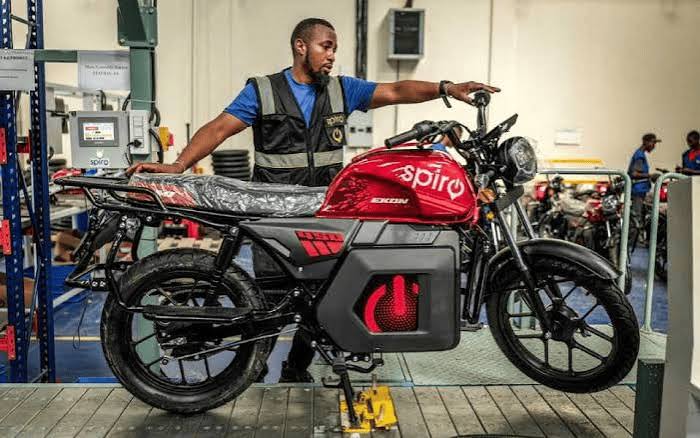
Spiro has officially launched its first 100 electric motorcycles in Ghana, marking a new phase in the expansion of electric mobility across West Africa as the company seeks to reduce transport costs for commercial riders and broaden access to battery-swapping infrastructure.
The launch, held in Accra on 20 October 2026, introduces the Ekon 450 M1 V3 electric motorcycle alongside Spiro’s battery-swapping system. The deployment marks the company’s entry into the Ghanaian market, adding another country to its growing network of electric mobility operations across the continent.
The initial rollout centres on an operating model designed to address two persistent challenges facing commercial motorcycle riders: the cost of fuel and the time required to recharge electric vehicles. Spiro says riders using its motorcycles can save up to US$2 per day compared with petrol-powered alternatives, although actual savings will depend on factors such as daily mileage, electricity costs and vehicle use.

For riders who depend on motorcycles for deliveries, passenger transport and other commercial activities, operating expenses directly affect daily earnings. Petrol price fluctuations, maintenance costs and periods when a motorcycle is unavailable can reduce the income generated from each working day. Electric motorcycles offer an alternative, but their commercial viability depends on whether lower running costs can compensate for the initial cost of acquiring a vehicle and the availability of reliable energy infrastructure.
Spiro’s battery-swapping model is intended to address the downtime associated with conventional charging. Rather than waiting for a battery to recharge, riders can exchange a depleted battery for a charged one at a designated swapping station in approximately two minutes, according to the company. The system is designed to keep commercial motorcycles in operation for longer periods, an important consideration for riders whose earnings depend on the amount of time they spend on the road.
The Ghana launch was conducted under the theme “The First 100: Powering a New Era of Mobility in Ghana”. Activities included the symbolic handover of motorcycles to the first ten riders, followed by a convoy of 100 electric motorcycles through Accra. The event concluded at Accra Mall, where visitors were able to view the Ekon 450 M1 V3, participate in test rides and observe demonstrations of the battery-swapping technology.
Kaushik Burman, CEO-Mobility of Spiro, said Ghana presented an opportunity for electric mobility because of its growing two-wheeler market and demand from commercial riders and delivery fleets. He said the initial deployment was intended to demonstrate how the company’s model could address operating costs and access to charging infrastructure, while establishing the foundation for wider adoption.
Maxwell Dodd, managing director of Spiro Ghana, described the launch as a step towards making cleaner and more affordable transport available to local riders. The company plans to continue engaging prospective customers through test rides and product demonstrations across Greater Accra following the initial rollout.
The scale of adoption will depend on more than the availability of motorcycles. Battery-swapping networks require sufficient station coverage, dependable battery availability and systems that allow riders to exchange batteries without significant detours or delays. If infrastructure is concentrated in limited areas, riders operating beyond those networks may find electric motorcycles less practical for their daily routes.
Affordability will also influence uptake. While lower operating costs may make electric motorcycles attractive over time, riders must consider the upfront purchase price, financing arrangements, battery access fees and the reliability of after-sales support. Flexible payment options and accessible service networks could therefore play an important role in determining whether the technology reaches riders operating on limited daily incomes.
Ghana’s entry into Spiro’s network also reflects a wider shift in Africa’s transport sector, where electric mobility companies are exploring business models suited to the continent’s large commercial motorcycle and delivery markets. Unlike private vehicle owners, commercial riders can accumulate substantial daily mileage, potentially increasing the value of fuel savings and reducing the time needed to realise operating-cost benefits. However, these benefits depend on vehicle performance, battery durability, energy prices and the cost of maintaining the swapping network.

The environmental impact will similarly depend on the energy used to charge batteries, the management of battery life cycles and the systems available for recycling or safely handling batteries at the end of their useful life. Replacing petrol-powered motorcycles with electric alternatives can reduce exhaust emissions at street level, while broader climate benefits depend on the electricity mix and the full lifecycle of the vehicles and batteries.
Spiro’s Ghana launch follows a US$270 million equity funding round and an additional US$18 million in debt financing from the Africa Go Green Fund. The company says it intends to establish a presence in 20 African markets and is preparing to enter Ethiopia, Malawi, Mali and the Democratic Republic of Congo as it expands its electric mobility ecosystem.
The deployment of the first 100 motorcycles provides an initial test of the company’s proposition in Ghana. Its longer-term prospects will depend on whether it can expand battery-swapping access, demonstrate consistent savings for riders and build a service network capable of supporting commercial operations at scale. For Ghana’s transport market, the rollout introduces another option in the transition towards lower-emission mobility, with the next phase likely to be measured by rider adoption, operating performance and the accessibility of the supporting infrastructure.