


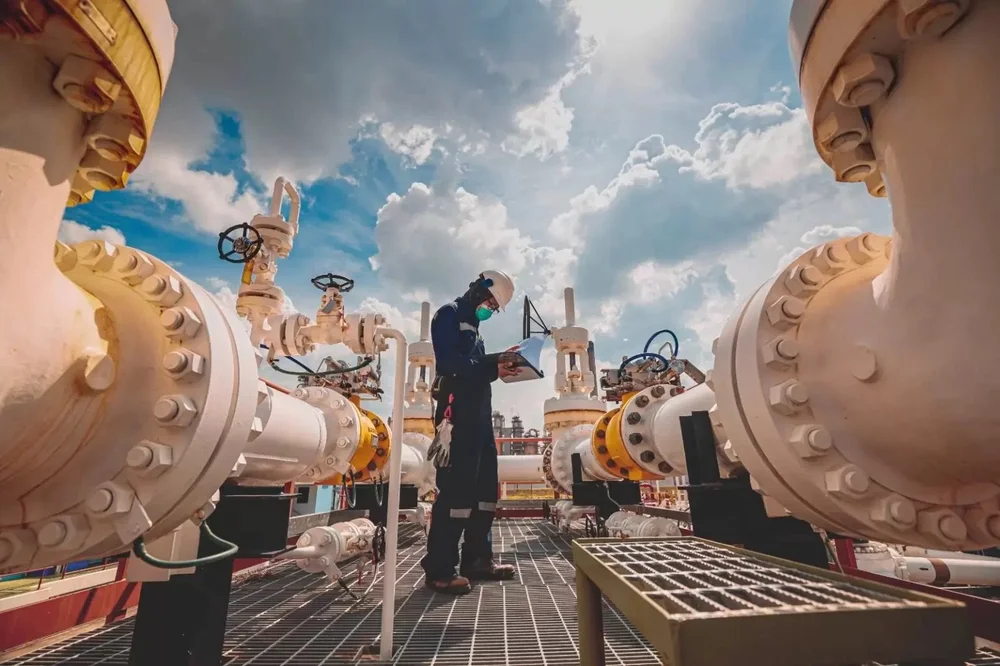
More than 150 oil and gas projects across Africa have been stalled as investment flows into the continent’s energy sector continue to weaken, highlighting growing tensions between development priorities, energy security needs and an increasingly constrained global financing environment. The projects, spread across multiple African producing countries, have been delayed by declining capital commitments, regulatory uncertainties and rising investor caution at a time when millions of Africans still lack access to reliable energy.
 The scale of the investment slowdown was outlined by Adegbite Falade, Chairman of the Independent Petroleum Producers Group (IPPG), during Africa Oil Week 2026 in Accra. According to Falade, the stalled developments represent a significant loss of potential economic activity, government revenue and employment opportunities for countries seeking to accelerate industrialisation and expand energy access.
The delays come despite Africa holding some of the world’s largest undeveloped hydrocarbon resources. The continent possesses an estimated 125 billion barrels of proven oil reserves and roughly 620 trillion cubic feet of proven natural gas reserves, resources that many governments view as central to economic development and revenue generation over the coming decades.
According to industry stakeholders, the financing challenge reflects a broader shift in global capital markets. International investors, lenders and development finance institutions have increasingly tightened support for new fossil fuel projects as climate commitments reshape investment priorities. At the same time, African countries continue to compete for a relatively small share of global energy investment, limiting their ability to finance both conventional and renewable energy infrastructure at the scale required.
Falade noted that Africa attracted only about 2% of global renewable energy investment in the previous year, underscoring concerns that the continent risks being underfunded in both traditional and low-carbon energy sectors. The result is a growing investment gap that affects electricity generation, industrial development and wider economic growth.
For many African economies, the implications extend beyond the energy industry itself. Hydrocarbon projects often underpin public revenues, foreign exchange earnings and infrastructure spending in major producing nations such as Nigeria, Angola, Algeria, Libya and emerging gas economies including Mozambique, Senegal and Tanzania. Delays in project development can therefore affect fiscal balances, constrain export earnings and slow investment across connected sectors ranging from construction and manufacturing to logistics and services.
The investment slowdown also raises questions about Africa’s energy transition pathway. While governments across the continent have adopted policies aimed at expanding renewable energy capacity, natural gas continues to feature prominently in national energy plans as a transition fuel capable of supporting power generation, industrial activity and economic diversification. Several African countries argue that exploiting domestic gas resources remains necessary to address energy poverty and strengthen energy security while gradually expanding cleaner energy systems.
According to Falade, Africa faces a development paradox in which it remains rich in energy resources but continues to experience widespread energy deficits. Millions of households and businesses across the continent still lack dependable access to electricity, limiting productivity, investment and economic opportunity. The continued postponement of large-scale energy projects therefore carries consequences for both economic competitiveness and social development.
The debate is further complicated by Africa’s relatively small contribution to global emissions. Falade argued that the continent accounts for approximately 18% of the global population while contributing less than 4% of worldwide greenhouse gas emissions, reinforcing calls from some policymakers and industry leaders for a transition strategy that reflects Africa’s developmental realities and financing constraints.
Industry groups are calling for measures aimed at restoring investor confidence, including more predictable fiscal regimes, faster regulatory approvals and stronger mechanisms to reduce investment risks. According to the IPPG, improving policy consistency and creating clearer operating environments could help unlock projects that have remained on hold despite strong resource potential.
The discussion comes at a critical moment for African economies seeking to balance climate goals with development objectives. As global competition for investment intensifies, the ability of governments to create stable and attractive investment frameworks is likely to play an increasingly important role in determining whether major energy projects move forward.
 For Africa, the issue is not solely about oil and gas production. It is also about energy access, industrial growth, public revenues and the financing capacity needed to support broader economic transformation. With more than 150 projects currently stalled, the continent faces mounting pressure to secure the capital and policy certainty required to convert resource wealth into long-term development outcomes.


