


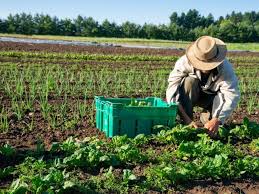
Africa’s agricultural future may depend less on expanding farmland and more on restoring the soil beneath it, as policymakers, agribusinesses and development institutions increasingly recognise degraded soils as a structural economic risk to food security, rural incomes and long-term growth across the continent.
While agriculture remains the backbone of many African economies, supporting employment, exports and livelihoods for millions of households, productivity growth has remained uneven and vulnerable to climate shocks. Analysts and agricultural experts argue that one of the sector’s most persistent constraints is the declining health of soils, which continue to be treated largely as an input medium rather than as a productive economic asset.
For many African smallholder farmers, the economics of farming remain fragile despite sustained investment in land preparation, seeds, fertiliser and labour. Rising input prices, unpredictable weather, post-harvest losses and weak market systems have left many households struggling to generate sufficient returns to reinvest in productivity improvements.
The result is a cycle of low productivity and rising vulnerability that has become increasingly difficult to sustain amid climate pressures and population growth.
Across much of sub-Saharan Africa, soil degradation has intensified through nutrient depletion, erosion, deforestation and unsustainable farming practices. According to the Food and Agriculture Organization of the United Nations, declining soil fertility continues to reduce agricultural productivity in many parts of Africa, where farming systems are heavily dependent on rain-fed production and limited mechanisation.
Agricultural economists argue that the issue is fundamentally structural rather than behavioural. Unlike industrial sectors where declining productivity triggers system redesigns or capital restructuring, African farming systems have often continued operating despite the deterioration of their primary productive asset.
In many cases, fertiliser and other inputs are applied uniformly across highly variable landscapes without addressing underlying biological and physical soil conditions. As soils lose organic matter and microbial activity, crop response to nutrients weakens, reducing efficiency and lowering returns on investment.
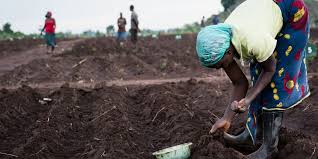
This has renewed focus on the concept of agricultural tipping points, where farming systems shift from low-return survival models into commercially viable enterprises once soil functionality is restored. Researchers say that when soils regain the capacity to retain moisture, cycle nutrients effectively and support biological activity, farms become more resilient to weather variability and productivity stabilises at higher levels.
The implications extend beyond agriculture into broader economic and fiscal stability. In many African countries, food imports continue to rise as local production struggles to keep pace with demand, placing pressure on foreign exchange reserves and public finances. Climate-related crop failures also increase vulnerability to inflation shocks and humanitarian crises.
According to development finance institutions, restoring soil health through integrated land management, targeted nutrient application and regenerative agricultural practices could improve productivity while reducing long-term environmental degradation. Several restoration initiatives across Africa have already demonstrated measurable gains in crop yields, water retention and ecosystem recovery when soil management is aligned with local ecological conditions.
The economics of restoration are increasingly attracting attention from private investors and food companies seeking more reliable agricultural supply chains. Businesses operating across African food systems are under growing pressure to manage climate risk, secure raw material supply and improve resilience against disruptions linked to droughts and extreme weather events.
Industry analysts note that supply chain reliability is closely linked to the condition of agricultural landscapes. Farms operating below productivity thresholds often face unstable output, inconsistent quality and rising production risks. Where soil systems recover and productivity stabilises, farmers are more likely to reinvest, diversify production and adopt higher-value agricultural models.

This has positioned soil health as both an environmental and commercial issue. Companies investing in regenerative agriculture and landscape restoration increasingly view soil management not as a peripheral sustainability exercise, but as part of long-term risk management and value creation strategies.
The emergence of carbon and sustainability-linked markets has also added a financial dimension to soil restoration. Improved soil organic carbon levels may create future opportunities for participation in carbon markets and climate finance mechanisms, although experts caution that governance frameworks and monitoring systems across Africa remain underdeveloped.
At the policy level, governments are under pressure to align agricultural strategies with climate adaptation, water security and land restoration goals. According to the African Union, strengthening food systems will be central to achieving broader economic transformation objectives under the continent’s development agenda.
For Africa, the debate around soil is increasingly becoming a debate about economic resilience. As climate volatility intensifies and food demand rises, the ability of agricultural systems to generate consistent surplus rather than absorb continuous inputs may determine whether rural economies remain trapped in vulnerability or transition toward sustainable growth.
The growing consensus among agricultural and investment stakeholders is that soil can no longer be treated as a passive environmental concern. It is increasingly being viewed as strategic infrastructure underpinning food security, supply chain stability and long-term economic competitiveness across African markets.


