


Global shipping group Maersk and technology firm Altana have announced a partnership to deploy AI-driven “Product Passports” across 12 international ports handling roughly 70% of global trade, a move that could reshape customs enforcement, supply chain verification and export compliance for African economies increasingly integrated into global manufacturing and commodity markets.
The initiative will integrate digital product identity systems into Maersk’s Gemini Cooperation network, a logistics alliance with Hapag-Lloyd launched in February 2025 to improve schedule reliability and operational efficiency across East-West shipping routes. The partnership aims to shift customs management from traditional shipment inspections at borders toward continuous product-level verification across supply chains.
Under the arrangement, goods moving through participating ports will carry Product Passports — digital identity markers containing compliance and traceability of information accessible to customs authorities. The system is designed to allow regulators to assess whether products meet local trade, tariffs and sustainability requirements before cargo reaches port entry points.
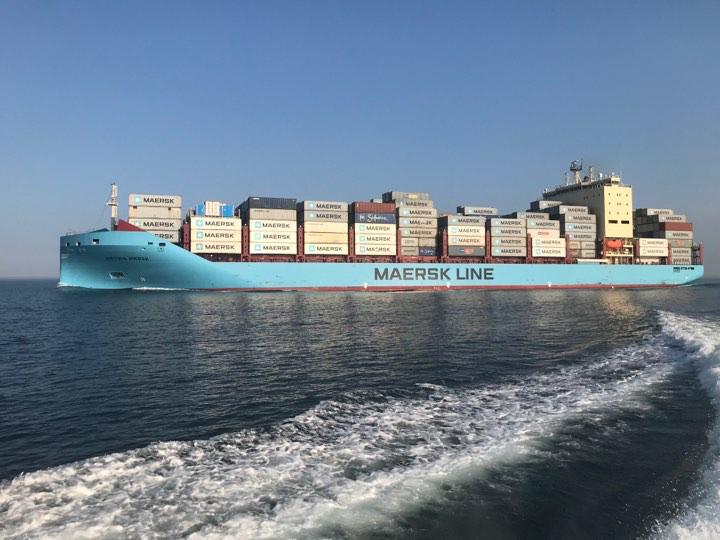
The development reflects a broader transformation in international trade governance as governments tighten oversight of supply chain transparency, emissions reporting, labour standards, and sanctions of compliance. Increasingly, customs systems are moving toward digital verification frameworks capable of tracking products from origin to destination through integrated data networks.
According to Maersk, the Gemini Cooperation currently operates 29 mainliner and 29 shuttle services with schedule reliability exceeding 90%, providing the operational backbone for the digital trade platform. Altana’s AI-powered trade network will serve as the analytical layer of linking businesses, logistics operators and customs authorities.
Lars Karlsson, Global Head of Trade and Customs Consulting at Maersk, described Product Passports as a mechanism for building trusted digital trade corridors in an environment of rising geopolitical and regulatory complexity. Altana Chief Executive Evan Smith said,
Global trade systems increasingly require product-level verification rather than conventional border-focused customs processing.”
The Product Passport system will allow customs authorities to receive digital compliance records directly from logistics operators and importers. Altana’s platform uses artificial intelligence to analyze trade data and generate risk and compliance recommendations for customs agencies while adapting to local regulatory requirements at each port.
A federated data model underpins the system, enabling customs authorities to access shipment information without centralizing sensitive commercial or sovereign data. According to the companies, this structure is intended to reduce cybersecurity and data sovereignty risks while supporting cross-border enforcement cooperation.
For African economies, the initiative may accelerate both opportunities and compliance pressures linked to the digitization of global trade. African exporters in sectors including agriculture, mining, textiles and manufacturing are already confronting stricter international requirements tied to traceability, carbon disclosures and supply chain due diligence.
The European Union’s Digital Product Passport framework, set to expand under the bloc’s Ecodesign for Sustainable Products Regulation, is expected to require detailed product-level environmental and sourcing data for goods entering European markets. Similar systems are emerging in North America and parts of Asia, particularly in industries linked to critical minerals, batteries, food production, and low-carbon manufacturing.
African ports and customs agencies may therefore face growing pressure to modernize digital infrastructure and verification systems to maintain competitiveness within global logistics networks. According to the African Development Bank, inefficiencies in customs procedures and port logistics continue to raise trade costs across the continent, where clearance delays and fragmented regulatory systems remain major barriers to intra-African and international commerce.

Countries including Kenya, South Africa, Morocco and Egypt have already expanded investments in port digitization, cargo tracking and customs automation as part of broader trade facilitation reforms linked to the African Continental Free Trade Area (AfCFTA). Analysts say systems such as Product Passports could eventually support AfCFTA objectives by improving interoperability between customs agencies and reducing fraud, counterfeiting and informal trade leakages.
However, the adoption of digital compliance systems also raises questions around technological readiness, data governance, and financing capacity in lower-income economies. Many African exporters, particularly small and medium-sized enterprises, may struggle to meet increasingly complex traceability requirements without additional investment in digital systems, certification processes and logistics infrastructure.
The integration of AI into customs enforcement may further widen disparities between highly digitized trade corridors and regions with weaker data systems. According to trade policy specialists, companies unable to provide verifiable product-level information could face longer processing times, higher insurance costs or restricted access to premium markets.
At the same time, proponents argue that digitized trade verification could improve supply chain resilience and reduce corruption risks by limiting manual processing and enhancing transparency across customs operations. Automated verification systems may also help governments improve tariff collection efficiency and detect illicit trade flows more effectively.
The Maersk-Altana partnership illustrates how global logistics companies are increasingly positioning themselves not only as transport operators but as providers of integrated digital trade infrastructure. For African economies seeking deeper participation in global value chains, the shift toward AI-enabled customs and compliance systems is likely to influence future trade competitiveness, export financing and infrastructure investment priorities.


