


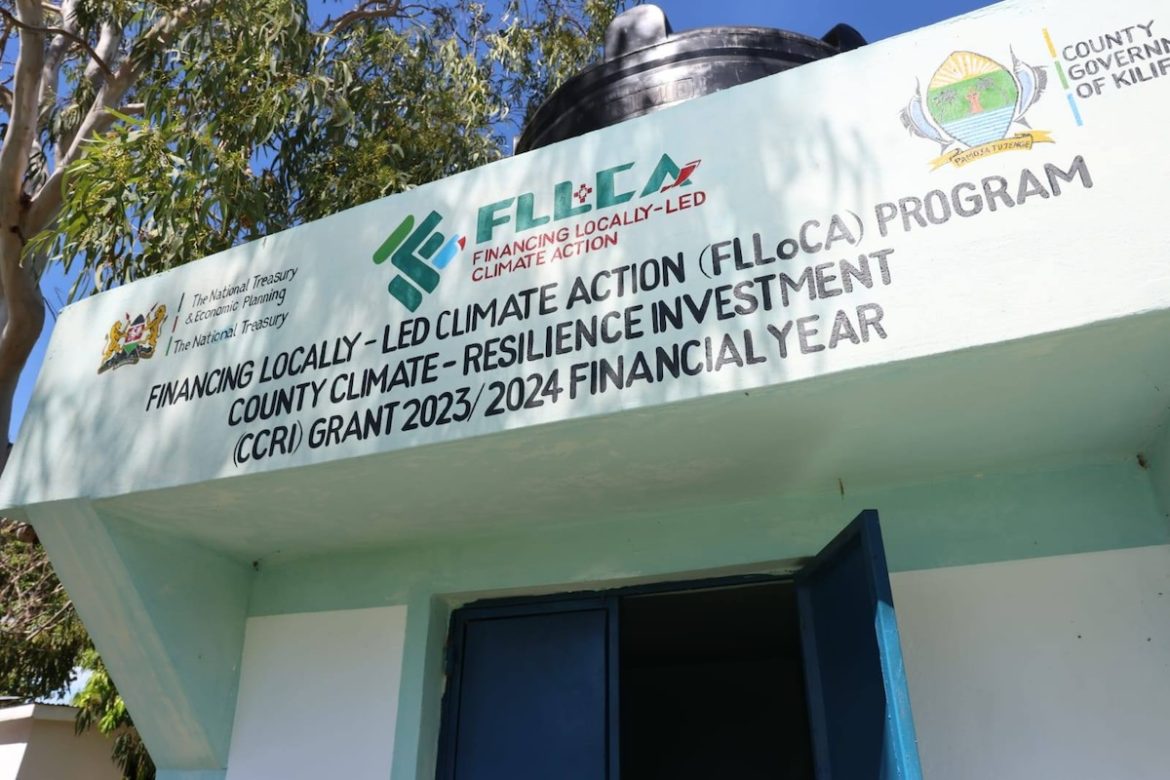
Kenya’s Financing Locally-Led Climate Action (FLLoCA) programme has supported more than 2,400 climate-related projects across the country since its launch in 2022, underscoring a broader shift toward decentralised climate financing as African governments seek to strengthen resilience at the community level while reducing reliance on centrally managed development interventions.
The programme, implemented by the National Treasury and Economic Planning of Kenya with approximately US$295 million in funding support from the World Bank and development partners from Denmark, Sweden and the Netherlands, channels climate finance directly to counties and local communities for investments in agriculture, water, renewable energy and environmental management.
According to Peter Odhengo, the initiative is increasingly unlocking local investment while allowing counties and communities to define climate priorities based on local economic and environmental conditions rather than relying solely on national government direction.
The programme reflects a growing policy shift across Africa toward locally led adaptation frameworks, which development institutions increasingly view as critical to improving the effectiveness of climate finance. Many African countries have historically struggled to access and deploy international climate funding due to centralised governance systems, limited technical capacity and lengthy approval processes.
Under FLLoCA, Kenya’s county governments are assuming a larger role in identifying and implementing resilience projects tied to local development priorities. Officials say this has expanded investment in water systems, climate-smart agriculture and renewable energy infrastructure, particularly in rural and climate-vulnerable areas.
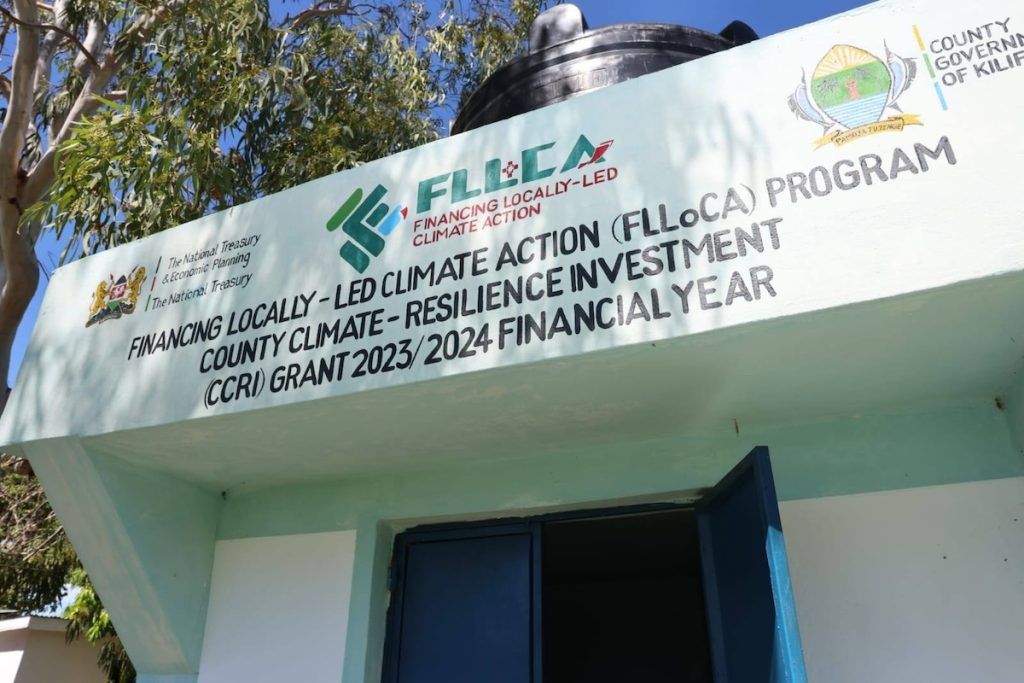
The programme has directly benefited around one million people, with an estimated combined direct and indirect reach of 2.5 million individuals, according to programme data. Women account for 56 per cent of beneficiaries, reflecting efforts to align climate adaptation financing with broader inclusion and livelihood objectives.
Kenya has also reported environmental gains linked to the initiative, including improved conservation and sustainable management across approximately 28,000 hectares of terrestrial and inland water ecosystems. In addition, 1,238 rural wards are currently benefiting from resilience-focused investments spanning agriculture, water and environmental protection.
The programme’s institutional impact has extended beyond project financing into county-level governance reforms. Kenya’s 47 counties have strengthened climate governance systems through the establishment of County Climate Change Funds and Climate Change Units, alongside the integration of climate priorities into local budget frameworks and development plans.
According to programme assessments, counties have also enacted legislation and policy frameworks designed to improve climate finance coordination and accountability, with institutional performance averaging 87 per cent across participating county structures.
The expansion of community participation mechanisms has emerged as another defining feature of the programme. Thousands of local committees are now involved in identifying, planning and overseeing resilience projects, reinforcing efforts to localise climate governance and improve accountability at the grassroots level.
The Kenyan model is being closely watched across Africa as governments and development finance institutions seek more effective ways of deploying adaptation finance. According to the United Nations Environment Programme, Africa faces a widening adaptation financing gap despite being among the regions most exposed to droughts, floods, food insecurity and climate-related infrastructure risks.
Kenya’s approach also reflects wider debates over how climate finance can support local economic development rather than functioning solely as donor-driven grant assistance. Odhengo said the programme was increasingly moving toward investment-oriented models aimed at attracting private capital, generating employment and creating long-term economic value within counties.
However, implementation challenges continue to expose structural weaknesses within devolved climate financing systems. Procurement delays, staffing turnover in county administrations and political interference have slowed project rollout in some regions, while technical capacity gaps remain a constraint for county teams managing increasingly complex climate finance mechanisms.

Rising public expectations are also placing pressure on programme administrators to accelerate delivery as early project successes increase demand for additional investments and wider coverage.
The programme forms part of Kenya’s broader strategy to position itself as a regional climate finance hub. The government is advancing plans for a proposed Kenya Green Investment Bank, which officials say could mobilise up to US$100 billion in climate-related investments over the next decade.
Authorities are also implementing new policy measures under Kenya’s Green Fiscal Incentive Framework and a Cabinet-approved Green Bonds Framework aimed at expanding access to sustainable finance instruments and attracting private sector participation in climate investments.
Read also:Kenya launches new conservancies fund to boost community-led conservation and climate resilience
At the continental level, Kenya plans to use the Africa Green Climate Finance Designated Authorities Network to strengthen cross-border climate finance coordination among African Union member states, while promoting elements of the FLLoCA model as a potential framework for scaling locally led adaptation initiatives across Africa.
For African policymakers, the programme highlights a growing recognition that climate adaptation is increasingly tied to fiscal stability, agricultural productivity, water security and local economic resilience. As climate risks intensify across the continent, the effectiveness of local governance systems and community-level financing mechanisms is expected to become a more central factor in determining how African economies absorb and respond to environmental shocks.


