


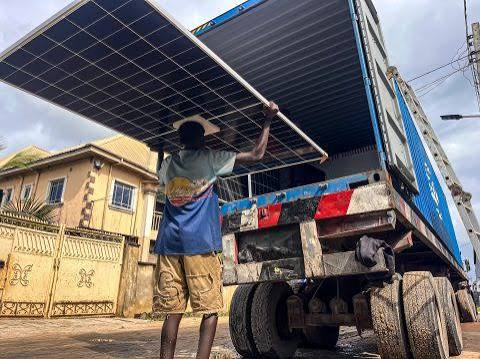
African governments are strengthening policies to manage waste from solar panels, batteries and inverters as renewable energy installations expand, seeking to prevent environmental damage while building recycling industries capable of recovering valuable materials from ageing equipment. The policy push, reported on 26 October 2026, comes as Africa is projected to install a record 17 gigawatts of solar capacity this year, increasing the need for systems to collect, repair, reuse and safely dispose of clean energy technologies.
According to energy think tank Ember, the projected installations would represent the third consecutive year of record solar growth, following increases of 51% in 2025 and 25% in 2024. The expansion reflects rising demand from households and businesses seeking alternatives to unreliable electricity grids, as well as growing investment in distributed solar and battery storage. But the equipment underpinning that transition will eventually need replacement, creating a waste-management challenge that many countries are still preparing to address.

The risks extend beyond the accumulation of discarded equipment. Solar panels, batteries and inverters contain materials that can be recovered for industrial use, but unsafe dismantling and disposal can expose workers and nearby communities to hazardous substances and contaminate soil and water. Without effective collection and recycling systems, countries could face higher environmental management costs while losing materials that might otherwise support local manufacturing and industrial development.
Nigeria is among the countries seeking to establish a clearer framework for managing the waste. The country imported about 400 billion naira ($295 million) worth of solar technologies in 2025, according to Climate Home News. Its draft policy on waste management for off-grid renewable energy equipment has been validated by government institutions, regulators and development partners and is awaiting cabinet approval.
Innocent Barikor, Director General of Nigeria’s National Environmental Standards and Regulations Enforcement Agency (NESREA), said the proposed policy would require producers, distributors and importers to take responsibility for equipment throughout its life cycle. The approach, known as extended producer responsibility, shifts some of the costs of collecting and managing discarded products from local authorities and communities to the businesses placing them on the market.
If implemented effectively, the policy could create more predictable conditions for recycling operators and encourage suppliers to establish take-back systems. Its impact will depend on enforcement, the availability of collection infrastructure and whether producers can access facilities capable of safely processing different technologies. Importers and distributors may also face additional compliance costs, which could influence how equipment is priced and supplied.
Regional coordination is emerging alongside national action. Energy ministers from the Economic Community of West African States (ECOWAS) adopted a framework for battery energy storage systems and related technologies in October, including provisions for the safe management, dismantling, reuse, recycling and disposal of batteries. Common approaches could help countries develop consistent standards and reduce the administrative difficulties associated with moving equipment and recovered materials across borders.
Kenya has already established a regulatory basis for producer responsibility. Its Sustainable Waste Management (Extended Producer Responsibility) Regulations, 2024 require producers and importers of listed products, including batteries and electrical and electronic equipment, to organise or finance the collection, recycling and safe disposal of products after consumers stop using them. The National Environment Management Authority (NEMA) oversees implementation.
The existence of regulations, however, does not automatically guarantee that discarded equipment will be collected or processed safely. Effective implementation requires traceability systems, clear responsibilities for manufacturers and importers, reliable collection points and facilities that meet environmental and worker-safety standards. Where these systems are weak, discarded equipment may enter informal waste channels, where valuable components can be recovered without adequate protection for workers or surrounding communities.
Namibia is exploring another part of the response by developing investment opportunities for waste buy-back centres and innovation hubs. The country has also incorporated plans for modern recycling infrastructure into its Sixth National Development Plan, linking waste reduction with private investment and potential job creation. Such initiatives illustrate how end-of-life equipment could become an industrial resource rather than solely a disposal liability, although their commercial viability will depend on the volume and consistency of materials collected.
The economic case for recovery extends into the supply chains for energy transition minerals. Solar panels, inverters and batteries contain materials including glass, aluminium, copper, cobalt, lithium and nickel. According to the International Energy Agency, recycling could reduce the growth in new mining requirements by 40% for copper and cobalt and by 25% for lithium and nickel by 2050. Those estimates relate to future global material demand, but they also point to an opportunity for African economies that already participate in mineral extraction and are seeking greater value from processing and manufacturing.
Building viable recycling businesses will nevertheless require more than access to discarded equipment. Operators need dependable supply volumes, appropriate technology, trained workers, financing and markets for recovered materials. Some countries may not generate enough waste independently to support specialised processing facilities at scale, particularly while many solar installations remain relatively new. Cross-border arrangements could help aggregate material flows, but only if governments align product standards, transport rules, environmental safeguards and procedures for tracking waste.
The African Continental Free Trade Area could provide a platform for coordinating these markets. Regional standards and compatible producer responsibility systems would make it easier to move equipment and recovered materials between countries while reducing the risk that inconsistent regulations undermine investment. Governments and development finance institutions may also need to help reduce the initial risks of establishing collection networks and processing facilities, particularly where returns depend on long-term supplies and uncertain commodity prices.
For African governments, the issue is increasingly connected to the public cost of the energy transition. Solar power can reduce dependence on costly or unreliable electricity supplies, but the environmental liabilities associated with equipment replacement should not fall disproportionately on municipalities, informal waste workers or communities near disposal sites. Producer-responsibility rules can help allocate those costs, provided authorities have the capacity to monitor compliance and prevent unsafe practices.
The next test will be whether new policies translate into functioning systems for collection, repair, refurbishment and recycling. Nigeria’s proposed policy will need cabinet approval before implementation, while existing regulations in countries such as Kenya require enforcement and investment in supporting infrastructure. Regional frameworks will also need practical mechanisms for sharing data and coordinating standards.

Africa’s solar expansion is creating demand not only for electricity infrastructure but also for the systems needed to manage that infrastructure throughout its life cycle. If governments can establish credible rules and attract investment in recovery and recycling, discarded equipment could supply materials for new industries and reduce some environmental pressures associated with mineral extraction. If implementation falls behind installations, the continent risks accumulating a new waste burden alongside the benefits of cleaner energy.


