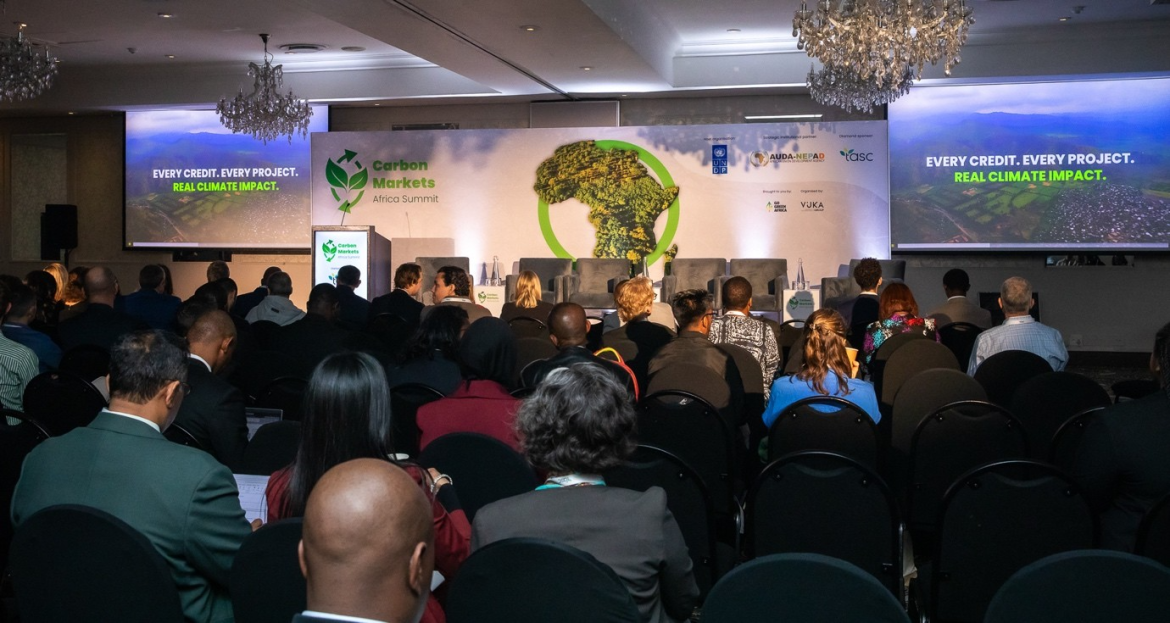
The Carbon Markets Africa Summit (CMAS) 2026 will bring together participants from 24 African countries and 45 countries globally in Kigali, Rwanda, from 13 to 15 October, as governments, investors, carbon-credit buyers and project developers consider how to expand the continent’s role in international carbon markets. The summit is expected to convene more than 100 speakers, over 50 investors, buyers and financiers, representatives of 20 African governments and more than 40 project developers, creating a forum for discussions on market development, project investment and the distribution of economic benefits from climate finance.
The gathering comes as African countries seek to attract capital for projects that reduce or remove greenhouse gas emissions while strengthening their influence over the rules, financing arrangements and commercial relationships that determine how carbon credits are generated and traded. The scale of participation reflects interest from both African institutions and international market actors, although the summit’s practical significance will depend on whether discussions lead to credible project pipelines, financing commitments and sustained buyer relationships.

For Ibrahim Abdullahi Shelleng, Senior Special Assistant to the President of Nigeria on Climate Finance and Stakeholder Engagement, the summit offers an opportunity for African participants to shape the direction of the market rather than simply supply credits to international buyers.
“This gathering of the leading players in African carbon markets represents a continental ownership in driving the future of carbon markets shaped by Africans, for the benefit of Africa,” Shelleng said.
The question of ownership extends beyond where projects are located. Decisions on project development, financing, methodologies, verification, credit pricing and benefit-sharing can influence how much value remains in host countries and how effectively carbon-market revenues support local development. African governments and project developers must therefore navigate both the technical requirements of generating credible credits and the commercial conditions that determine whether those credits attract buyers.
Investor and buyer participation will be a central feature of the Kigali meeting. Dedicated Investor Roundtables are expected to bring capital providers into direct discussions with project developers, while other meetings will provide opportunities to explore partnerships, investment structures and potential offtake arrangements. More than 40 project developers and project representatives are expected to showcase work across nature-based solutions, agriculture, waste management, clean cooking and carbon removals.
These sectors offer different pathways for generating climate benefits and attracting carbon finance. Nature-based projects may involve forest conservation, restoration and land management, while clean-cooking initiatives can seek to reduce emissions associated with traditional fuels. Agriculture and waste-management projects can also generate credits where reductions are measurable and meet the relevant standards. Carbon removal projects, meanwhile, face distinct technical and commercial requirements depending on whether they rely on natural systems or engineered approaches.
For developers, participation in international markets requires more than identifying a potential source of emissions reductions. Projects must demonstrate credible baselines, additionality, monitoring and verification, while managing risks such as the reversal of stored carbon or the possibility that claimed reductions are overstated. Developers also need to establish clear land and resource rights, engage affected communities and explain how project revenues and other benefits will be distributed.
Maggie Kinyanjui, Sourcing Manager for Africa at Climate Impact Partners, said stronger links between project developers, buyers and investors are necessary to build a market that delivers both environmental integrity and economic value.
“Africa should not just participate in carbon markets. We should help shape them. The opportunity is to build a market that attracts capital, rewards integrity and ensures that value reaches the countries and communities delivering climate impact,” she said.
Her remarks point to a central tension in African carbon-market development: the continent has substantial opportunities for emissions reduction and carbon removal, but converting those opportunities into viable projects requires financing, technical capacity, dependable standards and access to buyers. Where project preparation is expensive or revenue uncertain, developers may struggle to move from early-stage concepts to verified credits that can be sold at commercially viable prices.
The structure of transactions will therefore matter alongside the volume of investment attracted. Long-term offtake agreements can provide revenue visibility, while project finance and partnerships may help developers manage upfront costs and delivery risks. However, the terms of those arrangements—including pricing, ownership, liabilities and community benefit-sharing—can determine whether projects produce lasting local value or primarily serve external demand.
The summit also comes amid continued development of international carbon-market rules under Article 6 of the Paris Agreement. The UNFCCC’s Article 6.4 Supervisory Body, which oversees the Paris Agreement Crediting Mechanism, held its 23rd meeting in Bonn from 5 to 9 October 2026. Its work includes developing and approving methodologies, registering activities, accrediting verification bodies and overseeing the mechanism’s registry. These processes are important to the credibility and operation of the international system through which eligible emissions reductions can be certified and transferred. <Cite refs={[“turn502971search0″,”turn502971search6”]} />
For African governments, developments in international rules have practical implications for national carbon-market frameworks, project authorisation and the accounting of emissions reductions. Countries need to understand how international mechanisms interact with domestic climate policies, national emissions targets and arrangements for transferring credits across borders. The requirements can also affect the costs, timelines and eligibility of projects seeking to participate in international markets.
Market integrity remains central to these discussions. Buyers increasingly need confidence that credits represent real, measurable and verifiable climate benefits. At the same time, host countries need arrangements that support national climate objectives and provide clarity over how credits are authorised and used. Transparent governance, credible monitoring and safeguards against double counting can help strengthen confidence, while weak oversight can expose projects and buyers to reputational, financial and environmental risks.
Amy Rhoades, Chief Communications and Engagement Officer at Carbon Standards, said engagement across the carbon value chain is important to the development of credible carbon removal solutions in Africa. Her organisation’s participation reflects the growing attention being given to the role of carbon removals within the wider market, including the standards and relationships required to support projects as they develop.
For African countries, carbon markets could provide an additional source of finance for activities that might otherwise struggle to secure sufficient investment. The potential includes land restoration, improved agricultural practices, waste management and clean-cooking solutions. However, carbon-credit revenues are not guaranteed, and projects must be assessed against their costs, delivery risks, environmental impacts and the durability of expected benefits. Carbon finance is most likely to contribute to development when it complements broader public and private investment rather than being treated as a substitute for it.
The institutional backing for CMAS 2026 reflects the range of stakeholders involved in these issues. The summit is hosted by Rwanda’s Ministry of Environment, with the United Nations Development Programme and African Development Bank as host organisations. The Development Bank of Southern Africa is a host partner, while AUDA-NEPAD is the strategic institutional partner. Their participation brings together public policy, development finance and regional economic cooperation areas that can influence whether carbon-market opportunities translate into investable projects.
Emmanuelle Nicholls, Portfolio Director, said the value of bringing decision-makers, financiers, buyers and project developers together lies in the potential to unlock investment, strengthen project pipelines and accelerate partnerships. The summit’s commercial discussions will therefore be an important test of whether interest in African carbon markets can translate into concrete cooperation.
As CMAS 2026 convenes in Kigali, the challenge for participants will be to connect market expansion with credible climate outcomes and a fair distribution of benefits. More investors and buyers can widen the pool of potential capital, but lasting progress will require projects that meet robust standards, transparent transactions and governance arrangements that give host countries and communities a meaningful stake in the value created. The three-day meeting provides an opportunity to advance those discussions; the longer-term measure will be whether partnerships formed in Kigali help deliver projects and transactions that endure beyond the summit.