


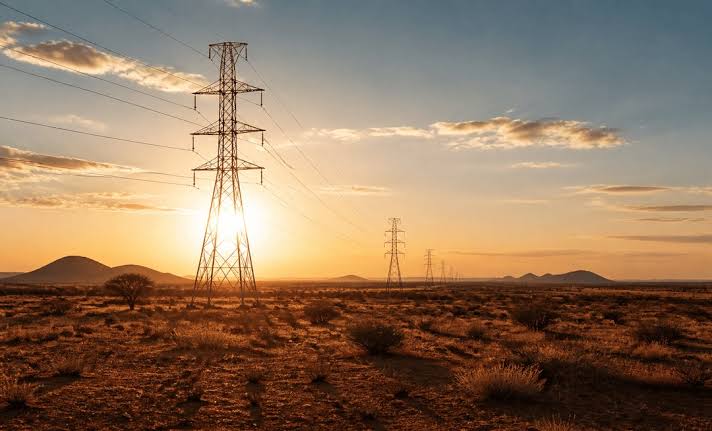
The Democratic Republic of Congo (DRC) and Zambia are advancing a $300 million cross-border electricity transmission project designed to deliver up to 550 megawatts (MW) of power to the DRC’s mining-intensive Copperbelt, as governments and private investors seek to address industrial electricity shortages and expand regional power trading. Under an agreement signed on 6 October 2026, the DRC’s Strategic Investment Fund, Congolese power trader EnPower, infrastructure investor Gridworks and commodities group Trafigura will work together to finance, build and operate the Kalumbila–Kolwezi Interconnector, a roughly 200-kilometre high-voltage line linking Zambia’s electricity grid with Southern DRC.
The project is intended to address a structural electricity deficit of more than 1 gigawatt in the DRC’s Copperbelt, where mining and mineral-processing operations require substantial, consistent power supplies. According to the project partners, the transmission line will have a thermal capacity of 700 MW, with the initial design allowing up to 550 MW of electricity imports into the region. Its capacity could eventually be expanded to more than 1 GW, subject to further development.

The agreement marks a significant step in the development of infrastructure connecting two economies whose mineral industries are closely linked to global demand for copper and other critical minerals. However, the project’s expected benefits will depend on completing financing and construction, securing sufficient electricity supplies for export and establishing the commercial arrangements needed to deliver power across the border.
For the DRC, the immediate concern is the cost and reliability of electricity available to mines and processing facilities in the Katanga region. Power shortages have constrained industrial activity, while some mining operations have relied on diesel generation to maintain production. The new interconnector is intended to provide access to additional electricity from the regional market, potentially reducing reliance on more expensive backup generation and allowing some mining and refining projects to proceed where power availability has been a constraint.
The implications extend beyond the mining companies expected to purchase electricity. Reliable power can influence whether minerals are processed locally or exported in less-processed forms, affecting domestic value addition, employment, tax receipts and the wider industrial base. For a country with substantial mineral resources but persistent infrastructure constraints, electricity availability is therefore closely linked to the government’s ability to capture more economic value from its mining sector.
The project is also designed to create new commercial opportunities for Zambia. Additional transmission capacity could allow licensed Zambian power producers to sell electricity into the DRC, creating an export market while supporting investment in new generation. The actual volume of electricity available for export will depend on domestic supply conditions, demand, transmission constraints and the terms agreed between generators, traders and buyers.
Read also: https://www.africa-energy.com/news-centre/power
That balance is important because cross-border transmission infrastructure does not create electricity on its own. Its economic value depends on the availability of generation, the reliability of the interconnected grids and the ability of power markets to match supply and demand. If Zambia faces domestic shortages or competing demand from industry, the volume available for export could be constrained. Conversely, additional generation and more efficient regional trading could help producers access customers beyond their home markets.
The interconnector will strengthen the DRC’s connection to the Southern African Power Pool (SAPP), the regional electricity market that facilitates cross-border trading among participating countries. SAPP provides a framework for electricity exchanges that can help balance differences in generation and demand across national systems. Greater interconnection can improve access to available power, but its effectiveness also depends on transmission infrastructure, market rules, payment arrangements and coordination among utilities, regulators and traders.
The project’s financing structure is another notable feature. Gridworks has confirmed its intention to become the lead equity investor and majority shareholder, alongside the DRC’s Strategic Investment Fund and EnPower, which retains a minority stake. Trafigura has agreed to arrange a significant share of the project’s debt financing, while discussions are under way with Zambian entities about possible investment participation. The project has an estimated construction cost of $300 million and has secured the concessions, licences and authorisations identified by its partners as necessary to advance to the final stage of development.
The participation of a state-backed investment fund alongside private infrastructure and commodity-sector partners illustrates one way governments can seek to mobilise capital for large energy assets. The DRC’s Strategic Investment Fund, established in 2025, is intended to help finance strategic infrastructure and attract investment alongside domestic and international partners. The interconnector is its first announced investment, according to the project partners.
For African power markets, the model is relevant because transmission infrastructure often requires substantial upfront investment and long development periods, while revenues depend on long-term demand, electricity prices and regulatory arrangements. Private capital can supplement public financing, but investors must be confident that projects have credible offtakers, predictable rules and manageable construction, currency and payment risks. The involvement of a sovereign investment vehicle may help align the project with national development priorities, although it does not remove those risks.
The distinction between a signed financing framework and an operating asset remains important. The October agreement establishes the partners’ intention to advance the project, but the announcement does not mean that the line is already supplying electricity. Construction, financing execution, cross-border coordination and the development of viable power supply contracts will determine when the intended capacity becomes available.
Environmental and economic considerations are also closely connected. Replacing some diesel-based electricity generation with power imported through the regional grid could reduce fuel consumption and associated emissions, depending on the generation sources supplying the interconnector. The climate benefits would therefore depend on the electricity mix, the extent of diesel displacement and the additional generation required to meet new demand. The project’s primary purpose is to address electricity availability and support industrial activity; its emissions impact will depend on how the additional supply is produced and used.
The project also raises a broader question about the relationship between mining expansion and the development needs of surrounding communities. The Copperbelt’s electricity demand is driven partly by large industrial consumers, but the partners say the line will have capacity to serve a wider population. Whether that translates into improved access for households and smaller businesses will depend on distribution networks, utility arrangements, affordability and decisions about how the available power is allocated. Additional transmission capacity alone does not guarantee new household connections or lower electricity bills.
For the wider region, the project adds to efforts to treat electricity infrastructure as a shared economic system rather than a collection of isolated national networks. Cross-border power trade can help countries use generation resources more efficiently, provide additional markets for producers and support industrial development where domestic supply is inadequate. These benefits are particularly relevant in Southern Africa, where mining, manufacturing and mineral processing require dependable electricity and where countries have different generation resources and demand profiles.
The proposed line also sits within a longer-running effort to strengthen electricity connections between Zambia and the DRC. The African Development Bank has previously identified the Kolwezi–Solwezi interconnector as a regional priority, citing the need to improve grid stability and address the uneven distribution of electricity supply and demand between the two countries. The Kalumbila–Kolwezi project is a distinct development with its own commercial structure and route, but it reflects the same underlying challenge: regional electricity trade requires physical links capable of moving power to where it is needed.
For African economies seeking to expand mineral processing, manufacturing and other electricity-intensive industries, transmission investment is increasingly part of industrial policy. Mineral resources alone cannot guarantee domestic value addition if power supplies are expensive or unreliable. Equally, new power lines will not deliver their full economic value unless generation, market access, regulation and distribution infrastructure develop alongside them.
The Kalumbila–Kolwezi Interconnector will therefore be judged not simply by its planned capacity, but by whether it can deliver dependable electricity at commercially viable prices, create a sustainable revenue stream for its investors and support productive activity on both sides of the border. For the DRC, that means testing whether additional power can ease the Copperbelt’s supply constraints and support local processing. For Zambia, it means whether cross-border sales can create a durable market for its electricity producers without compromising domestic supply.

The agreement provides a framework for advancing that ambition, but the decisive stage lies ahead. If financing, construction and electricity-market arrangements proceed as intended, the project could strengthen regional power trade and provide a model for privately financed cross-border transmission elsewhere in Africa. Its wider significance will depend on whether the infrastructure translates into reliable supply, greater industrial productivity and economic benefits that extend beyond the largest electricity consumers.


