


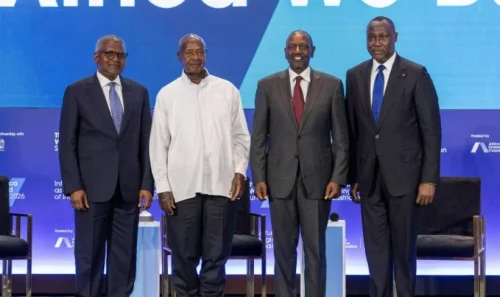
Nigerian industrialist Aliko Dangote has signalled plans to develop a major oil refinery in East Africa, potentially replicating the scale of his flagship Lekki refinery in Nigeria, as African governments intensify efforts to reduce dependence on imported petroleum products amid growing instability in global energy markets.
Speaking in Nairobi during “The Africa We Build” summit last month, Dangote told Kenyan President William Ruto and Ugandan President Yoweri Museveni that he was prepared to construct a 650,000 barrel-per-day refinery in East Africa if regional governments provided the necessary support framework. The proposed project, estimated to cost between $15 billion and $19 billion, would rank among the largest industrial infrastructure investments ever undertaken in the region.
Dangote now appears to favour Mombasa over the Tanzanian port city of Tanga, reflecting a shift in regional calculations over logistics, market access and energy infrastructure. In remarks to the Financial Times, the billionaire cited Mombasa’s superior port infrastructure and Kenya’s larger consumer market as decisive factors in the project’s evolving assessment.
The move comes at a time of heightened concern over global energy security following disruptions linked to Middle East tensions and instability around the Strait of Hormuz, a maritime corridor through which roughly one-fifth of global oil shipments normally pass. Recent volatility in oil markets has renewed debates across Africa over fuel import dependence, supply-chain resilience and the need for greater domestic refining capacity.
East Africa remains heavily reliant on imported refined petroleum products, much of which originates from Gulf producers. Analysts say this dependence exposes regional economies to external price shocks, currency pressures and supply disruptions that directly affect transport, electricity generation, manufacturing and food costs.
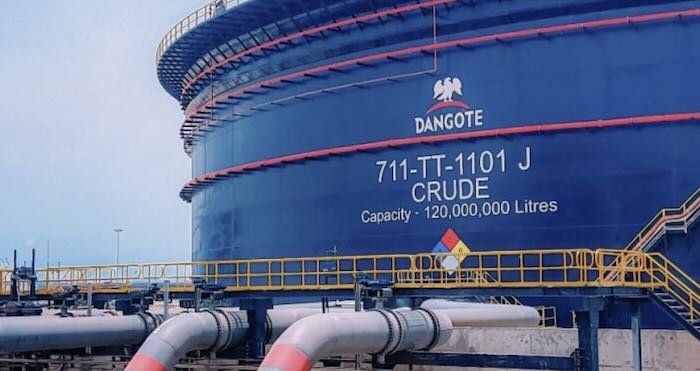
Dangote’s proposal reflects a broader push toward what policymakers increasingly describe as “energy sovereignty” — the effort to process African energy resources locally rather than exporting crude oil while importing higher-value refined products. Since the launch of the Dangote Refinery in Lekki in 2024 and its ramp-up to full operational capacity in early 2026, the Nigerian billionaire has repeatedly argued that Africa requires several large-scale refineries to meet its long-term energy and industrial needs.
The Lekki refinery has already begun exporting refined petroleum products to international markets while also supplying aviation fuel to carriers including Ethiopian Airlines, demonstrating how refining infrastructure can reshape regional fuel trade patterns.
For Kenya, hosting the refinery could strengthen its role as East Africa’s primary logistics and energy hub. The Port of Mombasa already serves as the principal maritime gateway for several regional economies, including Uganda, Rwanda, Burundi, eastern Democratic Republic of the Congo, South Sudan and Ethiopia. Its deep-water infrastructure and established logistics networks are viewed as major advantages for a refinery expected to handle substantial crude imports and refined fuel exports.
“Kenyans consume more. It’s a bigger economy,”
Dangote said, underscoring the importance of domestic demand in determining the commercial viability of the project. Kenya remains one of sub-Saharan Africa’s largest fuel consumption markets and a central distribution point for petroleum products across the region.
The emerging preference for Mombasa also highlights sensitive regional political dynamics surrounding strategic infrastructure projects. Tanzanian President Samia Suluhu Hassan publicly stated that her government had not been formally consulted before references to Tanga were made during the Nairobi summit, exposing tensions over how major cross-border energy projects are negotiated and announced.
Despite the apparent shift toward Kenya, Dangote has maintained that Tanzania remains under consideration if broader regional negotiations produce a favourable framework. He stressed that large-scale refining investments require significant government cooperation, including regulatory certainty, access to land and policies capable of shielding domestic refining operations from cheaper imported fuels.
Industry analysts note that refinery economics remain highly sensitive to global competition, shipping costs and government policy. Many refining projects across Africa have struggled historically due to financing constraints, inconsistent regulation and competition from low-cost exporters in the Middle East and Asia. Dangote suggested that East African governments would need to implement strategic protections similar to those used in other major refining jurisdictions to ensure long-term viability.
Beyond energy security, the proposed refinery also carries broader industrial implications for East Africa. Large refining facilities often stimulate associated industries including petrochemicals, logistics, storage infrastructure and manufacturing, while potentially reducing foreign exchange outflows linked to fuel imports. For governments seeking to accelerate industrialisation under the African Continental Free Trade Area framework, energy infrastructure is increasingly viewed as central to regional economic integration and competitiveness.

At the same time, the scale of the proposed investment raises questions around financing, environmental governance and long-term energy transition pathways. While African governments continue to pursue renewable energy expansion and climate commitments, many policymakers argue that refined petroleum products will remain essential to transportation and industrial systems for decades, particularly in rapidly urbanising economies.
As negotiations continue, the competition between Mombasa and Tanga is evolving into more than a site-selection exercise. It reflects a wider contest over which countries will anchor Africa’s next generation of industrial infrastructure and how the continent positions itself within increasingly volatile global energy markets.


