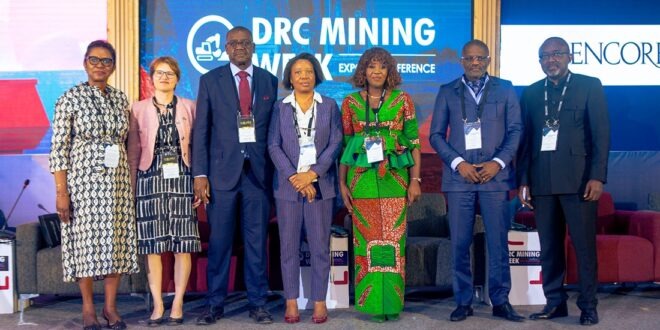

Organizers of DRC Mining Week have announced that the 2026 edition of the continent’s premier extractive industry forum will convene in Lubumbashi from June 17 to 19, focusing on the transition from raw mineral extraction to domestic industrialization.
As the Democratic Republic of Congo (DRC) solidifies its position as the world’s primary source of cobalt and Africa’s leading copper producer, the summit aims to address the structural bottlenecks, specifically power deficits and logistical constraints, that currently limit the country’s ability to capture a larger share of the global battery metals value chain.
The event arrives at a critical juncture for the Congolese economy, as the government faces increasing pressure to translate record mineral outputs into tangible fiscal stability and infrastructure development for its nearly 100 million citizens.
The strategic shift toward in-country beneficiation, a core theme of the 2026 agenda, reflects a broader continental movement toward resource nationalism and value-chain integration. By moving beyond the export of raw ores, the DRC seeks to mitigate its exposure to volatile global commodity prices, which frequently disrupt national budget cycles and public investment programs.
According to the event’s preliminary framework, the discussions will move toward implementation strategies for special economic zones and refinery projects, mirroring the joint initiative between the DRC and Zambia to develop a trans-border electric vehicle battery supply chain. For African markets, the success of these industrial policies is essential for reducing the “export-import” trap, where nations sell minerals at a discount only to import finished products at a premium.
The 2026 forum also highlights the intensifying competition for critical minerals among global powers, with anticipated delegations from China, the United Arab Emirates, Saudi Arabia, and the European Union. This influx of international capital presents both an opportunity and a governance challenge for Congolese institutions.
The shift toward more rigorous Environmental, Social, and Governance (ESG) and responsible sourcing frameworks is no longer an abstract ethical requirement but a financial necessity, as global manufacturers and lenders increasingly demand transparency to de-risk their supply chains.
According to analysts, the ability of the DRC to harmonize these international standards with local content requirements will determine the long-term bankability of its mining projects and their capacity to attract diverse investment beyond traditional partners.
For the local economy, the implications of these developments are most visible in the urgent need for decentralized energy solutions and robust transport corridors. The mining sector remains the largest consumer of electricity in the DRC, often operating at the expense of residential and small-business access.
The summit’s focus on infrastructure solutions suggests a growing recognition that sustainable mining growth requires independent power producers and public-private partnerships to bridge the country’s significant energy gap. By integrating mining development with broader national infrastructure goals, the DRC aims to ensure that the wealth generated from its subsoil contributes to the systemic resilience of its public finances and the modernization of its regional trade networks.
Engage with us on LinkedIn: Africa Sustainability Matters