


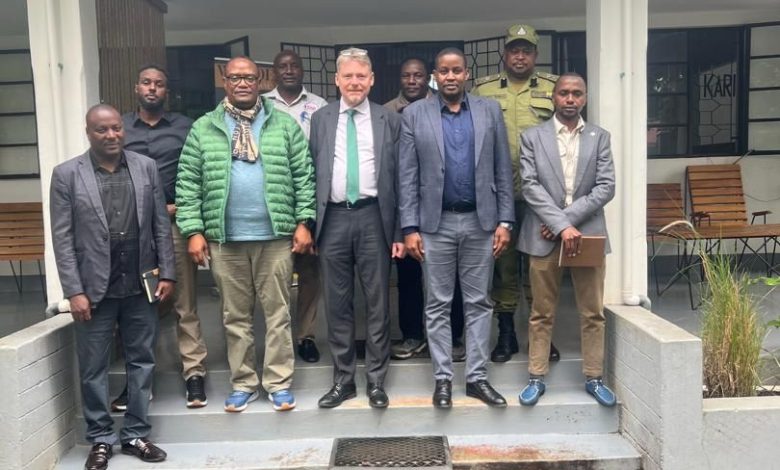
East Africa’s tourism sector can strengthen its global competitiveness and deliver broader economic benefits by prioritising sustainability and deeper regional cooperation, according to discussions held in Arusha, Tanzania, where tourism stakeholders and a senior German diplomat examined the future of one of Africa’s most important economic sectors amid rising international visitor demand and growing environmental pressures.
The discussions took place over the weekend in Arusha, Northern Tanzania’s tourism capital and gateway to some of Africa’s most prominent wildlife destinations, bringing together government officials, tourism associations, development partners and private sector operators. The meeting comes as long-haul travel continues to recover following years of disruption and as European demand for East African tourism products shows renewed growth.
 German diplomat Thomas Müller welcomed Tanzania’s efforts to balance conservation objectives with increasing visitor numbers, noting that sustainability is becoming an increasingly important consideration for international travellers. His remarks reflected a broader shift within the global tourism industry, where environmental stewardship, biodiversity protection and responsible travel practices are increasingly influencing destination choices, investment decisions and tourism policies.
For Tanzania, sustainability is not only an environmental concern but also an economic necessity. Nature-based tourism remains one of the country’s most important sources of foreign exchange earnings, employment and investment. Wildlife safaris, mountain tourism and coastal attractions depend directly on the health of ecosystems that face growing pressures from climate change, population growth and competing land-use demands.
Industry representatives highlighted several conservation initiatives that seek to protect these assets while supporting tourism growth. Among them is the de-snaring programme operating within the Serengeti ecosystem through collaboration between the Tanzania Association of Tour Operators (TATO) and the Frankfurt Zoological Society. The initiative targets illegal hunting activities that threaten wildlife populations and ecosystem integrity. Stakeholders also pointed to environmental management measures on Mount Kilimanjaro, including policies requiring climbers to remove non-biodegradable waste from the mountain, as examples of practical interventions designed to reduce tourism-related environmental impacts.
Such measures carry significance beyond conservation outcomes. According to tourism operators, preserving biodiversity and maintaining high environmental standards helps safeguard the natural capital upon which Tanzania’s tourism industry depends. This has direct implications for revenue generation, local employment and community livelihoods, particularly in rural areas where tourism serves as a major economic driver.
The discussions also focused on the role of tourism as a mechanism for advancing regional integration within the East African Community (EAC). Tourism operators increasingly view cross-border travel packages as an opportunity to expand visitor spending and lengthen stays by combining attractions across multiple destinations. Rather than competing directly, East African countries are seeking to position their tourism offerings as complementary experiences that collectively strengthen the region’s appeal.
Müller argued that East Africa’s diversity represents one of its strongest competitive advantages. Wildlife safaris in Tanzania and Kenya, gorilla trekking in Uganda and Rwanda, Indian Ocean beach tourism and cultural heritage attractions can be combined into integrated regional products capable of attracting higher-value international visitors.
Several initiatives already reflect this strategy. Industry leaders cited collaboration between Tanzanian and Rwandan tour operators, as well as the Tanzania-Uganda “UG-Arusha Connect” campaign, which promotes combined travel itineraries linking Uganda’s mountain gorilla experiences with Tanzania’s safari destinations and coastal tourism offerings. Regional tourism exhibitions, including Uganda’s Pearl of Africa Tourism Expo and Tanzania’s Karibu-KiliFair, have also emerged as platforms for strengthening commercial partnerships and coordinated destination marketing.
According to stakeholders, deeper regional cooperation could help address one of the tourism sector’s longstanding challenges: relatively short visitor stays. Multi-country itineraries may increase average expenditure per visitor while distributing tourism benefits across a wider geographic area. The approach also aligns with broader EAC objectives aimed at facilitating cross-border trade, mobility and investment.
The discussions extended beyond environmental sustainability and regional cooperation to include labour standards and inclusive economic growth. Representatives from Tanzania’s tourism workforce highlighted efforts to improve conditions for porters working on Mount Kilimanjaro, Mount Meru and the Usambara Mountains. Industry stakeholders argued that strengthening worker welfare, training and safety standards is essential not only for social inclusion but also for maintaining service quality and protecting destination reputations in increasingly competitive international markets.
Germany’s relationship with Tanzania’s tourism sector reflects broader economic and development ties between Europe and East Africa. According to Tanzania’s Ministry of Natural Resources and Tourism, German visitor arrivals have nearly doubled over the past eight years and now account for approximately five per cent of international tourist arrivals. In Zanzibar, European travellers represent the majority of international visitors, with Germany among the leading source markets.
Improved air connectivity has further strengthened these links. Expanded services by airlines within the Lufthansa Group, including SWISS and Brussels Airlines, have increased direct access between major European cities and destinations such as Dar es Salaam, Kilimanjaro and Zanzibar. Greater connectivity is widely regarded as a key enabler of tourism growth, facilitating visitor flows, investment and business travel.
Germany’s engagement also extends to tourism development and conservation initiatives. Through the German development agency GIZ, support has been directed towards regional tourism branding under the “Visit East Africa – Feel the Vibe” campaign, while separate programmes seek to attract investment into sustainable tourism infrastructure and enterprises across the region.
The discussions in Arusha highlighted a broader challenge facing tourism-dependent economies across Africa: how to expand visitor numbers and economic returns without undermining the environmental assets that attract travellers in the first place. As global demand for sustainable tourism grows, maintaining biodiversity, improving labour standards and strengthening regional cooperation are increasingly viewed as interconnected priorities rather than separate policy objectives.
 For East Africa, the implications extend beyond tourism. Sustainable management of protected landscapes contributes to climate resilience, ecosystem services and rural development, while regional tourism integration supports trade, investment and economic diversification. The success of these efforts may influence how effectively the region converts its natural and cultural assets into long-term economic value while preserving them for future generations.
Participants concluded that East Africa’s tourism future will depend on maintaining this balance. As visitor demand rises and international competition intensifies, coordinated regional strategies, strong conservation frameworks and inclusive development approaches are likely to become increasingly important determinants of the sector’s resilience and economic contribution.


