


UAE-based energy company ePointZero is set to enter Africa’s power generation market through the planned acquisition of Azura Power Holdings, gaining control of 752 megawatts of operating capacity across Nigeria, Senegal and Mozambique as private investors position themselves to capture rising electricity demand and the continent’s widening need for new generation infrastructure.
ePointZero, the energy arm of UAE conglomerate 2PointZero Group, announced on August 31 that it had partnered with Nigerian investment firm Amaya Capital to acquire stakes in Azura Power held by Actis and Africa50. The transaction, whose value was not disclosed, remains subject to regulatory approvals. Amaya Capital, a founding partner of Azura Power, will retain a 10% minority interest in the company.
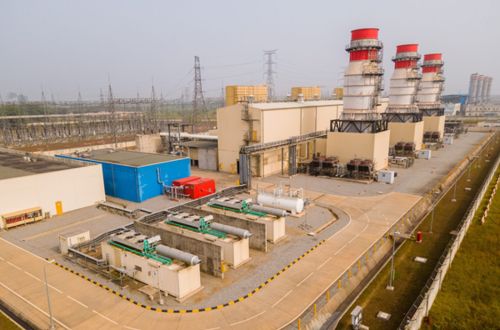
The acquisition would mark ePointZero’s first entry into Africa’s power sector and give the UAE-backed group exposure to three strategically important electricity markets. Azura Power operates the 461 MW Azura-Edo plant in Nigeria, the 116 MW Tobene power plant in Senegal and the 175 MW Central Térmica de Ressano Garcia, or CTRG, plant in Mozambique. Together, the three facilities account for about 10% of baseload generation in each of their respective markets, giving the acquisition significance beyond the size of the portfolio. It places ePointZero directly into markets where electricity supply remains constrained, demand is growing and governments are increasingly seeking private capital to supplement public investment in generation and transmission infrastructure.
The assets are also supported by long-term power purchase agreements, which provide relatively predictable revenue streams and are a key feature of the independent power producer model. Such agreements can improve the bankability of large power projects by providing investors and lenders with greater visibility over future revenues.
Azura’s existing portfolio also provides ePointZero with a platform for expansion rather than simply a portfolio of operating thermal assets. The company has a development pipeline exceeding 1.5 GW across Africa, covering natural gas, renewable energy and battery energy storage systems. That pipeline could become increasingly important as African power markets attempt to balance two competing priorities: expanding electricity supply rapidly enough to support economic growth while reducing the emissions intensity of new generation.
Africa’s electricity deficit remains one of the continent’s most persistent infrastructure challenges. World Bank data published in June estimates that electricity access in sub-Saharan Africa stands at about 53%, leaving nearly 600 million people without access to electricity. The gap creates a structural investment opportunity for independent power producers, particularly in markets where state-owned utilities face financial constraints, ageing infrastructure or limited capacity to fund new generation independently. IPP structures have become an important mechanism for bringing private and foreign capital into power generation. By combining private investment with long-term power purchase agreements, they can help governments expand generation capacity without bearing the entire upfront cost on public balance sheets.
Azura Power illustrates how that model has developed in Africa. Its projects have attracted financing and support from institutions including the World Bank, International Finance Corporation, British International Investment, the U.S. International Development Finance Corporation and Dutch development bank FMO.For investors, the appeal is increasingly extending beyond individual power plants to broader platforms capable of developing multiple projects across different technologies and markets. ePointZero’s acquisition provides such a platform, combining existing contracted generation with a pipeline spanning gas, renewables and energy storage.
The transaction also highlights the growing role of Gulf-based capital in Africa’s infrastructure sectors. UAE investors have increasingly looked beyond traditional markets for opportunities in energy, logistics, agriculture and other strategic sectors, while African governments seek investors capable of bringing both capital and long-term development capacity. For Africa’s power sector, however, the opportunity is not simply about attracting more generation projects. The financial sustainability of utilities, the reliability of transmission networks, currency risks, tariff structures and the ability of governments and utilities to honour power purchase agreements remain critical to whether new investment can translate into reliable electricity for consumers and businesses.

The Azura acquisition therefore comes at a pivotal point for Africa’s electricity market. The continent needs significantly more generation capacity, but it also needs investment models capable of making that capacity financially sustainable. ePointZero’s entry demonstrates that international investors continue to see long-term value in Africa’s power deficit. The larger question is whether this growing pool of private capital can be channelled into projects that simultaneously strengthen energy security, support industrialisation and accelerate the continent’s transition towards cleaner and more resilient power systems.
The Azura transaction is significant because it reflects a broader shift in Africa’s energy investment landscape. Operating power assets with contracted revenues are attracting international investors while development pipelines increasingly combine conventional generation with renewables and battery storage. For African economies, this could mean greater access to capital for generation expansion. But the long-term impact will depend on whether investments are accompanied by improvements in transmission, distribution, utility financial health and affordability. The opportunity is therefore larger than adding megawatts. It is about building power systems capable of supporting Africa’s industrialisation while remaining commercially viable and increasingly aligned with the continent’s energy-transition ambitions.


