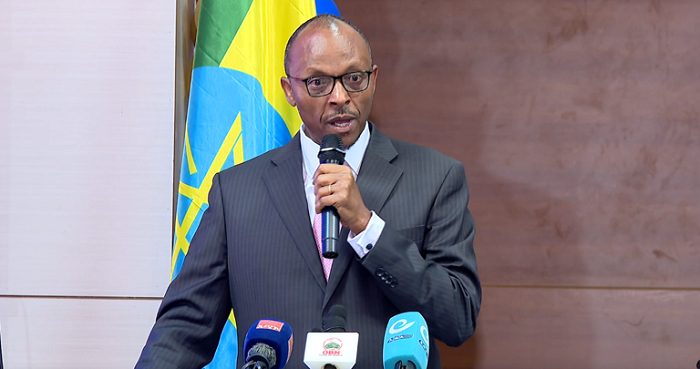

Ethiopia recently pledged to anchor Africa’s 2026 water and sanitation agenda in measurable action rather than rhetoric, as officials gathered in Addis Ababa on February 9 for a civil society pre-summit ahead of the African Union’s Theme of the Year, “Assuring Sustainable Water Availability and Safe Sanitation Systems to Achieve the Goals of Agenda 2063.”
Speaking at the meeting hosted under the auspices of the African Union, Minister of Water and Energy Habtamu Itefa said the country’s recent environmental and water management initiatives reflect a broader continental responsibility to safeguard shared resources amid mounting climate and demographic pressures.
The pre-summit, convened by the African Union Economic, Social and Cultural Council, forms part of preparations for the bloc’s 2026 focus on water security and sanitation. Ethiopia, which hosts the AU headquarters, framed its role as both symbolic and operational. Itefa cited the country’s Green Legacy programme, under which more than 48 billion tree seedlings have been planted over seven years, as an intervention aimed at reducing soil erosion, restoring watersheds and strengthening climate resilience. He also pointed to river rehabilitation efforts in Addis Ababa and policy measures intended to curb water pollution.
While national initiatives vary across member states, the AU’s emphasis on water reflects a structural challenge facing the continent. According to Moses Vilakati, Commissioner for Agriculture, Rural Development, Blue Economy and Sustainable Environment, an estimated 400 million Africans lack access to clean drinking water and more than 700 million do not have adequate sanitation. Those deficits intersect with food security, urbanisation and energy systems, raising fiscal and governance implications for governments already managing constrained public finances.
Water insecurity in Africa is increasingly shaped by climate volatility and competing demands on shared river basins. The Horn of Africa has faced recurrent drought cycles, while parts of West and Central Africa contend with flooding that damages infrastructure and agricultural output. In countries where agriculture contributes a significant share of employment and export earnings, water management directly affects macroeconomic stability.
According to development finance institutions, inadequate sanitation alone costs some African economies several percentage points of GDP annually through healthcare expenses, lost productivity and environmental degradation.
The AU’s 2026 theme situates water within the framework of Agenda 2063, the continent’s long-term development strategy. The agenda links water access to rural transformation, industrialisation and climate adaptation. Vilakati said transboundary cooperation and climate-resilient infrastructure would be central to implementation, alongside efforts to expand inclusive sanitation systems in rapidly growing cities.

For Ethiopia, water governance carries both domestic and regional significance. The country’s river systems underpin hydropower generation, irrigation schemes and urban supply, while also feeding transboundary basins shared with downstream neighbours. Investments in watershed restoration and pollution control therefore have implications beyond national borders, particularly as climate change intensifies rainfall variability.
Across Africa, financing remains a binding constraint. Water infrastructure projects typically require long-term capital and stable regulatory frameworks to attract investment. According to multilateral lenders, annual financing needs for water and sanitation run into tens of billions of dollars continent-wide, yet public budgets face competing priorities including energy access, debt servicing and social protection.
The pre-summit discussions signalled that civil society organisations are expected to play a monitoring and implementation role. That emphasis reflects an acknowledgement that service delivery gaps often stem from institutional weaknesses rather than policy declarations.
Expanding safe water and sanitation will require coordinated planning across ministries, improved data systems and accountability mechanisms that translate continental commitments into local outcomes.
Engage with us on LinkedIn: Africa Sustainability Matters