


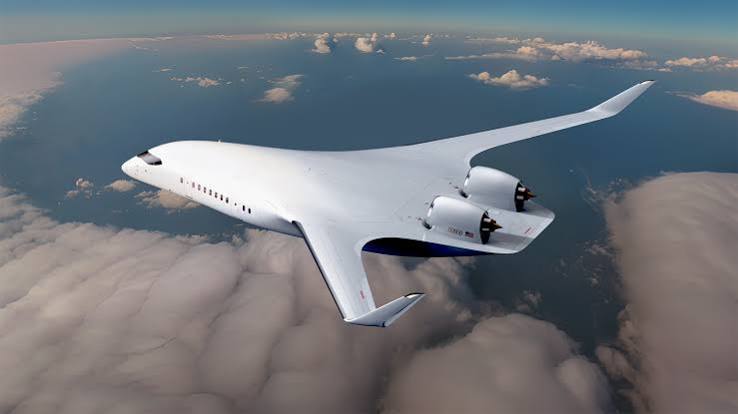
JetZero has secured up to $100 million in senior secured debt financing to accelerate development of its Z4 all-wing aircraft, strengthening the company’s ability to move from demonstration to manufacturing while highlighting the growing role of private credit in financing technologies aimed at reducing aviation’s fuel consumption and emissions.
The financing facility, led by Pinegrove Credit Partners and Silicon Valley Bank, a division of First Citizens Bank, will support development of JetZero’s full-scale Jet1 demonstrator, as well as tooling, manufacturing and testing facilities in Greensboro, North Carolina. Pinegrove is backed by Brookfield and HRTG Partners.
JetZero plans to use the funding to expand its U.S. manufacturing footprint while providing growth and working capital for its operations. The company expects the Z4 to enter commercial service in the early 2030s. The financing represents an important stage in the development of an aircraft concept that seeks to challenge the conventional tube-and-wing design that has dominated commercial aviation for decades.

The Z4 is being designed to carry about 250 passengers over distances of up to 5,000 nautical miles. JetZero says its all-wing configuration could reduce fuel consumption and associated emissions by as much as 50% compared with conventional aircraft carrying a similar number of passengers. If achieved at commercial scale, such efficiency gains could have significant implications for airlines facing rising pressure to reduce operating costs and carbon emissions. Fuel remains one of the largest operating expenses for airlines, while aviation is among the sectors where emissions are particularly difficult to eliminate because of the energy density required for long-distance flight.
JetZero is therefore pursuing an approach focused on reducing the amount of energy required to fly rather than relying solely on replacing conventional jet fuel. The latest financing comes as JetZero moves closer to testing its technology at full scale. The company is building its Jet1 demonstrator in partnership with Scaled Composites, a Northrop Grumman company. The aircraft was about 40% complete as of June 2026, with its first flight scheduled for the fourth quarter of 2027.
The demonstrator will provide an important technical test before JetZero can progress towards certification and commercial production. That development pathway also explains the significance of the debt financing. Aerospace technologies typically require large amounts of capital years before companies generate meaningful commercial revenues. Secured credit can provide an additional source of funding alongside venture capital, strategic investment and government-backed support.
JetZero Chief Financial Officer and Treasurer Sergey Kulyagin said the participation of sophisticated credit providers strengthens the company’s financing roadmap as it moves through development. Pinegrove said the facility had been structured around milestones associated with the Z4 programme rather than as a conventional corporate lending arrangement. That approach reflects the capital intensity and technical risk involved in moving an emerging aviation technology from prototype to industrial production. For climate-technology investors, the development is significant because access to institutional credit can become increasingly important once companies move beyond early-stage research and begin building the physical infrastructure required for commercial deployment.
JetZero is also linking its aircraft programme to a broader manufacturing strategy. The company broke ground in June 2026 on Factory1, its planned Z4 production facility in North Carolina. It expects to create more than 14,000 jobs in the state over the next decade as it develops aircraft manufacturing and testing capacity. The project demonstrates how investments in climate-related technologies can intersect with industrial policy. Advanced manufacturing, domestic supply chains, skilled employment and emissions reduction are increasingly being pursued as interconnected objectives rather than separate policy priorities.
For governments, that creates an opportunity to use industrial investment to support both economic development and the transition towards lower-carbon technologies. For investors, however, the central question remains whether emerging aircraft designs can move successfully through the lengthy and capital-intensive certification process and ultimately achieve reliable commercial production.Commercial aviation remains one of the harder sectors to decarbonise. Unlike road transport, where battery-electric vehicles are already commercially established, long-haul aviation requires technologies capable of delivering high energy density without adding prohibitive weight.
Sustainable aviation fuels, hydrogen, electrification and more efficient aircraft designs are therefore being developed as complementary pathways. JetZero’s strategy places aircraft efficiency at the centre of that transition. By attempting to substantially reduce fuel consumption through an all-wing configuration, the company aims to lower emissions while maintaining conventional aviation operating characteristics.
This could also have a multiplier effect if more efficient aircraft are eventually combined with lower-carbon fuels. Reducing fuel requirements could lower the amount of sustainable aviation fuel or other alternative energy needed to operate a flight, potentially easing some of the supply constraints associated with aviation’s transition.
The technology therefore represents more than an alternative aircraft shape. It is part of a wider effort to reduce the energy intensity of air transport. Although JetZero’s immediate manufacturing strategy is centred on the United States, developments in aircraft efficiency have implications for Africa’s aviation sector. African airlines face persistent challenges around fuel costs, fleet age, financing and connectivity. Jet fuel prices can have a significant impact on airline profitability, while many African carriers operate in markets where access to affordable capital for fleet renewal remains constrained.
More fuel-efficient aircraft could eventually provide airlines with opportunities to reduce operating costs while lowering emissions per passenger. However, the benefits would depend on aircraft availability, purchase and leasing costs, maintenance requirements and the ability of airlines to finance fleet modernisation. Africa’s aviation market is also expected to play a growing role in connecting the continent’s expanding urban and commercial centres. As passenger demand increases, the sector will need to balance connectivity and economic growth with pressure to reduce its environmental footprint.
The emergence of more efficient aircraft technologies could therefore become relevant to African carriers over the longer term, particularly as international climate standards and investor expectations increasingly influence fleet decisions. The continent’s aviation transition will nevertheless require more than aircraft technology. Airports, air traffic management systems, sustainable aviation fuel supply chains and access to climate-aligned finance will all influence how quickly African aviation can reduce its emissions intensity.
JetZero’s $100 million facility also illustrates a broader shift in climate technology financing. Early-stage technologies often depend heavily on equity capital because technical and commercial risks make conventional lending difficult. Once a company reaches clearer development milestones, debt can provide a way to fund manufacturing and infrastructure without relying exclusively on additional equity.
That transition can become particularly important for technologies that require billions of dollars to achieve commercial scale. The Z4 remains years away from commercial service, and significant technical, regulatory and manufacturing hurdles remain. But the willingness of institutional lenders to finance the programme suggests that climate-related technologies are increasingly being assessed not only as research opportunities but also as potential industrial businesses.
For Africa, where access to long-term financing remains one of the major barriers to infrastructure and clean-technology deployment, this evolution in capital markets carries an important lesson.Technological innovation alone does not deliver an energy transition. Projects need financing structures capable of carrying them through development, demonstration, certification, construction and commercial deployment. JetZero’s financing marks one step along that path. Whether the Z4 can deliver its targeted 50% reduction in fuel consumption and emissions at commercial scale will ultimately determine whether the technology becomes a meaningful part of aviation’s decarbonisation toolkit.

But the movement of private credit into capital-intensive climate technology suggests that investors are increasingly preparing to finance the infrastructure required to turn ambitious emissions-reduction concepts into industrial-scale businesses. Africa’s aviation sector is expected to remain important for regional trade, tourism, investment and economic integration, but airlines face high fuel costs and limited access to capital for fleet modernisation.
More efficient aircraft could eventually help address both cost and emissions pressures. However, African aviation will need supporting infrastructure, affordable financing and cleaner fuel supply chains to fully benefit from advances in aircraft technology. JetZero’s financing also highlights a broader issue for Africa’s clean-energy transition: capital must evolve alongside technology. Innovative technologies require patient, milestone-based financing if they are to progress from prototypes to commercially viable infrastructure. As African economies seek to attract investment into clean transport, manufacturing and energy systems, the ability to structure financing around emerging technologies could become as important as the technologies themselves.


