


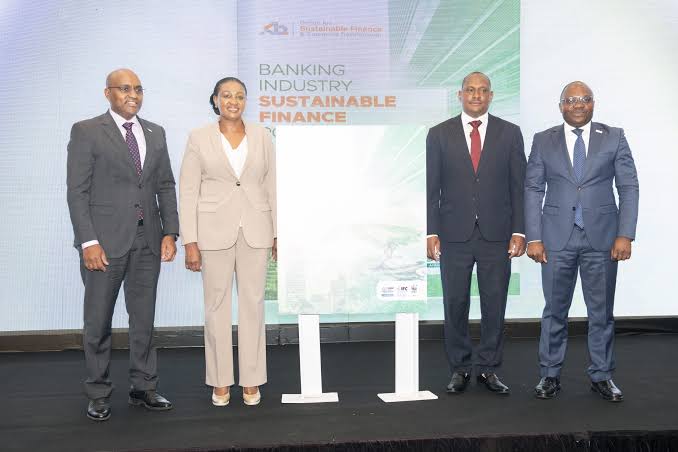
Kenya’s banking industry has launched a 10-year sustainable finance roadmap aimed at integrating climate and nature-related risks into lending, governance and capital allocation, as financial institutions face growing pressure to assess how environmental and social factors affect borrowers, investment decisions and economic resilience. Unveiled in Nairobi on November 3, 2026, the Banking Industry Sustainable Finance Roadmap was developed by the Kenya Bankers Association (KBA), through its Centre for Sustainable Finance and Enterprise Development, in partnership with the International Finance Corporation (IFC) and WWF-Kenya.
The framework is intended to guide banks through 2037 as they strengthen climate risk management, improve sustainability disclosures and direct financing towards projects supporting inclusive and sustainable economic growth. According to KBA, the roadmap brings together existing industry initiatives and establishes a practical approach for incorporating sustainability into governance, risk management, lending decisions, reporting and capital allocation.

The launch comes as Kenya seeks to mobilise private capital for development while managing climate-related risks to infrastructure, businesses and public finances. For the banking sector, the issue extends beyond environmental reporting. Climate shocks can affect agricultural production, household incomes, business operations and the repayment capacity of borrowers, while nature-related pressures can expose companies to disruptions involving water, land and other resources. These risks can ultimately influence banks’ asset quality, lending conditions and financial stability.
KBA Chairman and KCB Group Chief Executive Paul Russo said the roadmap was intended to move the industry from sustainability commitments towards practical implementation. The framework is expected to help financial institutions direct capital towards green and sustainable projects, manage climate and nature-related financial risks, and strengthen sustainability practices across their operations.
KBA Chief Executive Raimond Molenje said the initiative would provide clearer direction for integrating sustainability into institutional governance, risk management, reporting and capital allocation. The emphasis on implementation reflects a broader challenge facing financial institutions: translating ESG policies into decisions that affect the cost, availability and distribution of credit.
For Kenyan businesses, the roadmap could influence how banks evaluate investment proposals and assess exposure to environmental and climate risks. Companies operating in agriculture, manufacturing, energy, transport and construction may increasingly need to demonstrate how they manage resource use, emissions, environmental compliance and operational vulnerabilities when seeking finance. The extent of these requirements will depend on how banks apply the framework and incorporate sustainability considerations into their existing credit processes.
The implications are particularly relevant for micro, small and medium-sized enterprises, which play a significant role in employment, supply chains and domestic economic activity but may have limited capacity to produce detailed sustainability data. KBA said the roadmap was expected to help enterprises, particularly MSMEs, participate in a more resilient and inclusive economy. However, implementation will require banks to balance improved risk assessment with practical approaches that do not unnecessarily restrict access to credit for smaller businesses.
The financial sector’s ability to support sustainable investment will also depend on the availability of viable projects and the conditions under which they can be financed. Renewable energy, resource efficiency, climate-resilient agriculture and sustainable infrastructure may offer opportunities for investment, but projects must still meet commercial, technical and repayment requirements. Sustainability considerations alone do not remove the need for credible revenue models, appropriate risk allocation and reliable infrastructure.
Kenya’s climate exposure makes these questions relevant to the wider economy. Agriculture remains sensitive to rainfall variability, while droughts and floods can disrupt production, transport and access to essential services. Businesses dependent on water, energy and functioning supply chains may face higher operating costs when climate-related disruptions occur. For banks, identifying these exposures could improve assessments of borrowers’ long-term financial resilience, although the effectiveness of such analysis will depend on the quality of available data and the ability to translate risk information into lending decisions.
The roadmap also places sustainability disclosures within the banking industry’s wider governance and reporting agenda. More consistent information on climate and nature-related risks could help financial institutions assess borrowers and portfolios, while improving the information available to investors and regulators. Yet disclosure requirements can impose additional costs on businesses, particularly smaller firms that lack dedicated reporting teams or established systems for collecting environmental and social data.
IFC Regional Director for Eastern Africa Mary Porter Peschka said the partnership would support the mobilisation of capital towards sustainable development priorities. WWF-Kenya Chief Executive Jackson Kiplagat said the framework could help align financial flows with environmental sustainability and support the development of nature transition plans across the banking sector.
The participation of development and environmental institutions reflects the growing role of partnerships in building financial sector capacity. Banks may require technical guidance, risk tools and sector-specific information to assess exposures that are not adequately captured by conventional financial indicators. Such support could be important where climate and nature risks are emerging but reliable historical data remains limited.
Kenya’s banking industry has a substantial role in the country’s investment system. KBA represents 46 financial institutions, with combined assets exceeding KES 7.7 trillion, according to the association. The scale of the sector means that changes in lending practices could affect the financing available to businesses and infrastructure projects across the economy. However, the roadmap’s eventual influence will depend on adoption by individual institutions, the consistency of implementation and the extent to which sustainability factors affect actual credit and investment decisions.
The framework was launched at the Banking Industry Sustainable Finance Summit 2026, which brought together banking leaders, investors, development partners, regulators and policymakers to discuss climate risk governance, sustainability disclosures and the role of finance in Kenya’s environmental and economic objectives.
For Kenya, the next phase will be measured by how the roadmap is incorporated into banks’ operating systems and financing decisions. Its contribution to development will depend on whether institutions can identify material risks, finance viable sustainable investments and maintain access to credit for businesses adapting to changing environmental and economic conditions.
The roadmap also has implications beyond Kenya. African financial institutions are increasingly expected to assess climate exposure and sustainability risks while financing infrastructure, industrial development and expanding energy access. Kenya’s approach could provide a reference for other markets seeking to integrate ESG considerations into banking, although the outcomes will depend on each country’s regulatory environment, financial sector capacity and economic priorities.

The launch establishes an industry framework, but it does not by itself demonstrate that lending has changed or that additional sustainable investment has been mobilised. Those outcomes will depend on implementation, measurable progress and the ability of banks and businesses to turn sustainability information into financially sound decisions. For Kenya’s banking sector, the central test will be whether the roadmap strengthens resilience while supporting productive investment and inclusive access to finance.


