


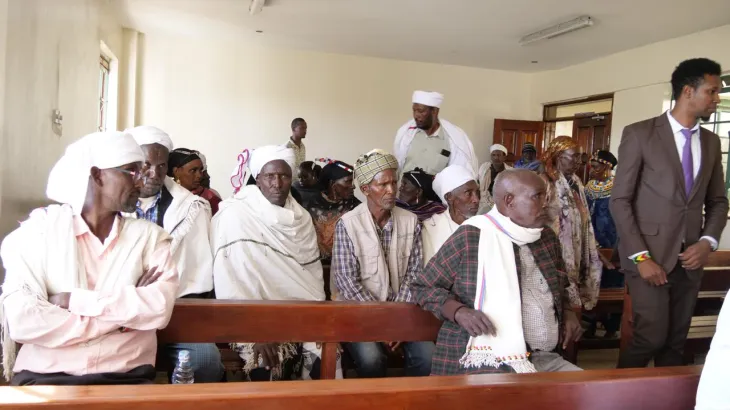
Deep in the Chalbi Desert of northern Kenya, the village of Kargi has lived under a slow-moving catastrophe for decades. Residents describe cancer as the leading cause of death in a community where men, women, and the young have all been claimed by the disease with alarming frequency. The roots of their suffering, they allege, trace back to the 1980s, when crews from Amoco Corporation — the American oil company later acquired by BP in a $48 billion deal in 1998 — arrived to prospect for oil, drilled nearly a dozen dry wells, and then departed, leaving behind what petitioners now describe as a slow-acting poison embedded in the earth and water.
In February 2026, 299 petitioners formally filed their case at Kenya’s Environment and Land Court in Isiolo. Court filings state that toxic and hazardous materials were improperly disposed of at drilling sites, with waste allegedly dumped into unlined pits or left exposed on the surface. On April 16, a Kenyan High Court ruled that the case can proceed as a group lawsuit, a significant procedural milestone that allows the affected communities to present their evidence and seek accountability through the courts.
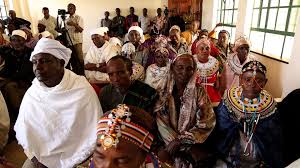
The alleged contamination is documented in troubling detail. Court filings cite specific pollutants — including radium isotopes, arsenic, lead, and nitrates — as having seeped into the groundwater systems that local communities rely upon for drinking water and for their livestock. In an area where over 90 percent of the estimated 30,000 residents live in poverty, with no piped water and no alternative to boreholes and shallow wells, contaminated groundwater amounts to contaminated survival. One of the most unsettling details to emerge from The Intercept’s on-the-ground investigation is that some residents, misled by extreme poverty and unfamiliarity with industrial chemicals, reportedly mistook a white, flaky chemical residue left near the drilling sites for natural salt, and used it in cooking.
The human toll alleged in court documents is staggering. Petitioners claim that more than 500 people have died from cancers and other illnesses linked to contaminated water, with thousands of livestock also lost. In the 1990s, court records allege, a flock of sheep and goats died after drinking from a borehole adjacent to an abandoned Amoco well in the nearby village of Balesa — one of the earliest documented warning signs of what would develop into a prolonged public health emergency. The petitioners are seeking compensation for loss of lives and livelihoods, as well as a full environmental cleanup and restoration of the affected sites. “The documented acts and omissions constitute environmental genocide,” Kelvin Kubai, an attorney for the petitioners, told the court.
BP’s legal exposure in this case turns on the doctrine of corporate succession. When British Petroleum acquired Amoco it inherited both its assets and, petitioners argue, its liabilities — including those connected to environmental damage caused during exploration in Kenya. According to court filings, Amoco drilled ten wells between 1985 and 1990 — eight in the Anza Basin and two in the Mandera Basin — before abandoning the sites without commercially viable oil. The legal question of whether a parent company bears responsibility for the historical actions of an acquired subsidiary is one of the defining issues in this case, and legal observers have flagged its potential significance as a precedent for corporate accountability across the broader extractive industries sector in Africa.
Read also:Environmental Expert Attacks Mauritius Government Over Wakashio Oil Spill
The lawsuit names eleven defendants alongside BP, including the National Oil Corporation of Kenya and the National Environment Management Authority (NEMA). Petitioners accuse these bodies of failing to act despite evidence of contamination. NEMA has noted that Kenya’s environmental legislation was enacted years after the exploration activities took place, a fact that will be tested against the question of ongoing harm. This state accountability dimension is significant: in the 1980s, regulatory frameworks in many developing countries were either absent or poorly enforced, creating conditions in which extractive industries could operate with minimal environmental obligation. The villagers of Kargi are now, in effect, asking the courts to retroactively fill that governance gap.

BP has declined to give an interview and has not issued any public response to the specific allegations. The company attended an early court session virtually but has remained otherwise silent. For the petitioners, however, silence from a multinational energy company worth hundreds of billions is not new — it has been the defining experience of their past four decades. As the case enters its next phase, it is being watched closely as a potential landmark for legacy environmental liability. “We are going to court because we want to know what is the cause of this cancer,” one resident told HapaKenya. “Why is our government — both the county and the national government — why are they silent? We want the culprits from that Amoco company to tell us exactly what they have done.” Their demand for answers is now on record in a Kenyan court.


