



Israel has deployed Africa’s first mobile climate laboratory in Kenya in a move aimed at strengthening climate data collection, improving environmental modelling and supporting evidence-based policymaking across the continent as African economies face mounting pressure from climate-related disruptions to agriculture, water systems and infrastructure.

The mobile research facility, operated by Israel’s Weizmann Institute of Science and currently stationed at the International Livestock Research Institute (ILRI) in Kapiti, Machakos County, is designed to collect ground-based climate data across diverse ecosystems in Kenya and eventually other African countries. The initiative forms part of a broader scientific collaboration between Israeli and African research institutions focused on improving climate resilience and environmental monitoring.
Speaking during a visit to the facility, Israel’s Ambassador to Kenya Gideon Behar said the project seeks to address longstanding gaps in Africa’s climate data infrastructure, which continue to constrain policy planning and climate adaptation strategies across the continent.
We must remember that there is a huge gap in climate data and climate knowledge in Africa, and the work of this laboratory helps us close this gap,” Behar said. “It enables us to be better prepared for climate change and to make better policy decisions based on real and accurate science.”
The laboratory, which has been operational in Kenya for the past two months, is equipped with more than 30 scientific instruments capable of measuring carbon exchange, water use, radiation levels and vegetation dynamics. Scientists involved in the programme said the mobility of the laboratory allows researchers to collect environmental data across multiple ecological zones, improving the calibration of climate models that have historically relied on limited African ground observations.
The project is expected to run for at least three years, with researchers planning to expand operations beyond Kenya into countries including Tanzania and South Africa as part of efforts to establish a broader continental climate dataset.
The deployment comes as African governments and international institutions increase investment in climate intelligence systems amid growing economic losses linked to droughts, floods and shifting weather patterns. According to the World Meteorological Organization, Africa contributes a relatively small share of global greenhouse gas emissions yet remains among the region’s most vulnerable to climate-related economic disruption due to heavy dependence on rain-fed agriculture and limited adaptive infrastructure.
In East Africa, climate variability has intensified pressure on food systems, energy supply, and public finances. Kenya has experienced repeated drought cycles and flash flooding events in recent years, affecting agricultural output, hydropower generation and rural livelihoods. Regional climate experts say improving access to accurate local climate data is becoming increasingly important for forecasting, disaster preparedness, and long-term infrastructure planning.
ILRI Director General Appolinaire Djikeng said the mobile laboratory strengthens Africa’s ability to generate evidence-based climate analysis at a time when precision data is becoming central to agricultural and environmental management.
We are in a society where we need data to make decisions. The pressure from the climate crisis requires precision,” Djikeng said. “This facility allows us to generate the evidence needed to guide sustainable food production and environmental management.”
The Kapiti research site has historically supported livestock and biodiversity research, but the introduction of the mobile laboratory expands its role into atmospheric science and ecosystem monitoring. Researchers say the data collected could improve understanding of how African rangelands, forests and agricultural systems respond to changing climate conditions.
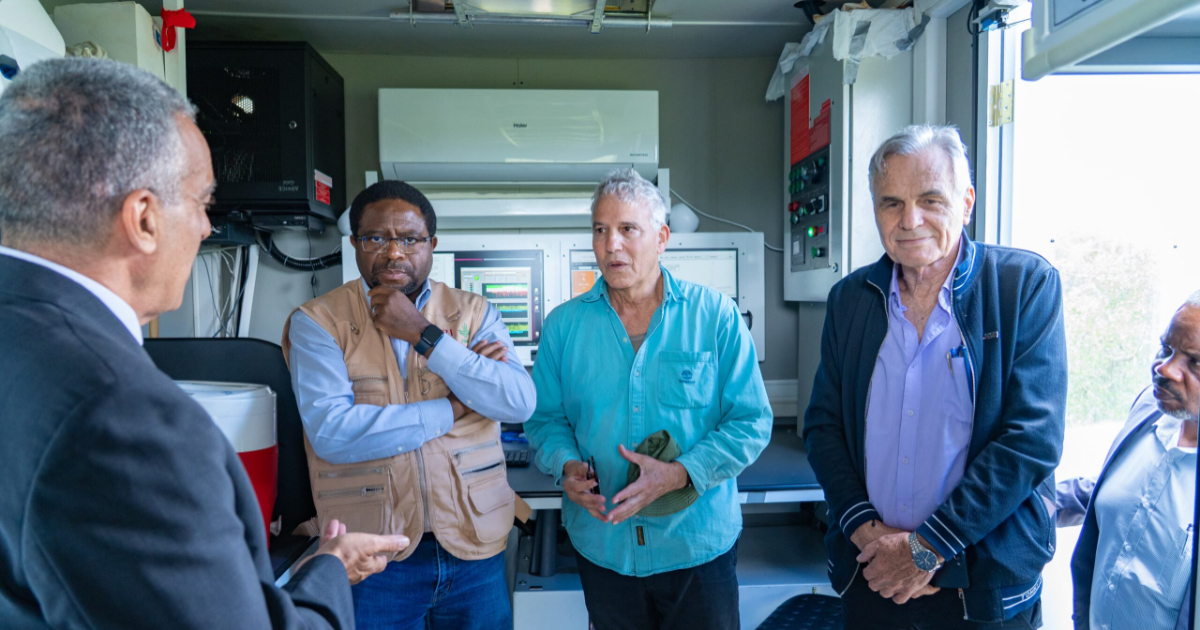
Dr Eyal Rotenberg, one of the lead scientists involved in the project, said many global climate models remain insufficiently calibrated for African ecosystems because of limited field-based measurements.
Models are not well calibrated because there has been very little measurement,” Rotenberg said. “This initiative will provide the data needed to validate and improve those models.”
The project also reflects broader efforts to strengthen scientific infrastructure across Africa as governments seek to improve resilience planning in sectors including agriculture, water management, insurance, and energy. According to the African Development Bank, inadequate climate data and forecasting systems continue to limit the effectiveness of adaptation investments and disaster risk management across many African economies.
Climate information systems are increasingly being integrated into financial and development planning as lenders and insurers incorporate climate risk assessments into infrastructure financing and agricultural investment decisions. Improved environmental monitoring could therefore influence future access to climate finance, sovereign risk assessment, and food security planning across the region.
The initiative further highlights growing international competition and collaboration around climate science, technology and sustainability partnerships in Africa. Israel has expanded engagement with African countries in areas including water management, agricultural technology and renewable energy, while African governments continue to seek technical partnerships capable of supporting climate adaptation and resilience-building efforts.
For African policymakers, the success of projects such as the mobile climate laboratory may increasingly depend on whether data collection systems can be integrated into long-term national planning frameworks and regional climate cooperation mechanisms. Analysts note that climate intelligence infrastructure remains uneven across the continent, with many countries still lacking sufficient monitoring stations, forecasting systems, and technical capacity.
The expansion of mobile climate monitoring systems could help reduce some of these gaps by generating locally relevant environmental data capable of informing agricultural planning, urban development, and disaster preparedness. However, experts caution that sustained investment in scientific institutions, digital infrastructure and technical training will remain necessary if African countries are to fully utilize climate data in economic and governance planning.
As the laboratory prepares for deployment across additional African regions, the project illustrates how climate science is increasingly becoming intertwined with economic resilience, food systems management and long-term development planning across the continent.


