


Organizations across the United States and other major economies are reassessing how they manage workplace conflict, diversity and institutional accountability as growing polarization around Diversity, Equity and Inclusion (DEI) policies exposes the limitations of traditional compliance systems and increases pressure on companies to strengthen internal governance, employee trust and long-term organizational resilience.
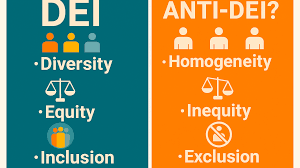
The debate has intensified amid widening disputes over workplace equality initiatives, corporate culture and employee rights, echoing earlier tensions associated with the #MeToo movement. While most organizations continue to maintain formal equal employment opportunity and anti-discrimination frameworks, researchers and governance specialists increasingly argue that compliance-driven systems alone are insufficient to manage complex workplace disputes, particularly those involving identity, fairness and power dynamics.
The shift is prompting companies, non-profits and public institutions to invest in broader conflict navigation systems, including mediation programmes, ombuds offices, restorative justice frameworks and digital employee feedback mechanisms designed to address tensions before they escalate into formal legal disputes or reputational crises.
The issue carries growing significance for African economies and institutions as governments, corporations and development agencies expand ESG-linked governance frameworks, workforce diversity strategies and labour protections under increasing scrutiny from global investors and multinational partners. Across African markets, stronger workplace governance systems are becoming more closely tied to institutional credibility, talent retention, productivity and access to international capital.
According to governance analysts, the ability of organizations to manage internal conflict constructively is increasingly viewed as part of broader environmental, social and governance performance, particularly under the “social” and governance pillars of ESG frameworks. Investors and development finance institutions are placing greater emphasis on labour standards, organizational culture, human capital management and internal accountability systems as indicators of long-term operational resilience.
The discussion around DEI has become increasingly polarized in the United States, where some organizations have scaled back diversity programmes amid legal and political challenges, while others face criticism for failing to achieve measurable progress on workplace inclusion and equality. Yet surveys cited in recent governance research indicate broad public support for principles such as equal opportunity, fairness and workplace inclusion, even as disagreement persists over how such objectives should be implemented.
Researchers argue that many compliance systems remain heavily reactive, relying on formal complaint procedures that employees may avoid because of fear of retaliation, damaged relationships, or career consequences. Studies referenced in workplace governance research estimate that only a small proportion of workplace harassment incidents are formally reported, suggesting significant gaps between organizational policies and employee confidence in institutional processes.
The concern is not limited to advanced economies. Across Africa, workplace disputes linked to discrimination, gender inequality, harassment and organizational governance continue to affect both public and private sector institutions, particularly as labour markets diversify and younger workforces demand greater transparency and accountability.
In sectors such as banking, technology, mining, energy and development finance, African organizations are increasingly integrating ESG reporting standards that require stronger governance structures, employee engagement systems and ethical risk management. According to the International Finance Corporation and several African stock exchanges, governance performance is becoming increasingly important for institutional investors evaluating operational and reputational risk.
The expansion of multinational operations across African economies has also increased pressure on local subsidiaries and supply chain partners to align with international workplace standards. Companies operating within global value chains may face heightened scrutiny regarding labour practices, inclusion of policies and dispute resolution mechanisms as international buyers and investors strengthen social compliance requirements.
Governance experts say organizations that rely exclusively on adversarial compliance systems may struggle to maintain trust and productivity in increasingly diverse and decentralized work environments. Formal legal frameworks remain essential for accountability, but many institutions are now experimenting with supplementary systems designed to identify tensions earlier and encourage constructive engagement.
Among the approaches gaining attention are employee advisory councils, confidential ombuds services, voluntary mediation processes and restorative dialogue programmes. Researchers studying large U.S. firms found that diversity task forces and employee committees often produced more measurable management diversity outcomes than training-only interventions because they created internal accountability structures linked to organizational decision-making.
Digital employee feedback systems are also emerging as governance tools within large institutions. These platforms allow workers to anonymously raise workplace concerns, track management responses, and monitor progress on organizational commitments related to fairness, inclusion, and workplace culture. Analysts say such systems may help reduce information gaps between management and employees while improving transparency and institutional trust.
Restorative justice mechanisms, once largely associated with community mediation and criminal justice reform, are also being introduced into workplace governance models. These approaches focus on structured dialogue, accountability, and relationship repair rather than purely punitive outcomes. Some organizations report declines in formal grievances after introducing restorative systems capable of addressing interpersonal disputes before they escalate.
The growing emphasis on workplace conflict management also reflects broader economic concerns. According to labour productivity specialists, unresolved organizational conflict can reduce employee engagement, weaken innovation and increase operational costs through turnover, absenteeism and litigation exposure. In knowledge-intensive sectors, organizations that manage disagreement constructively may also benefit from stronger collaboration and improved decision-making across diverse teams.
For African economies seeking to strengthen institutional capacity and attract long-term investment, governance systems capable of balancing accountability with organizational cohesion may become increasingly important. Analysts note that many African institutions already operate in environments shaped by ethnic, linguistic, political and socioeconomic diversity, making workplace cohesion and conflict navigation central to organizational performance.
At the same time, governance specialists caution that imported DEI or compliance frameworks may not always align with local labour realities, cultural dynamics or institutional structures across African markets. They argue that successful governance systems require locally adapted mechanisms capable of building trust while maintaining transparency and accountability.
The debate also intersects with broader questions around democratic resilience and institutional legitimacy. Researchers increasingly view workplaces as among the few remaining environments where individuals from different social, ethnic, and ideological backgrounds regularly collaborate toward shared objectives. As polarization deepens across many societies, organizations may face growing expectations to manage disagreement without undermining productivity, inclusion, or institutional stability.
For African businesses expanding into regional and global markets, the ability to demonstrate credible governance systems, effective employee engagement and responsible labour practices is likely to become increasingly intertwined with ESG performance, investor confidence and long-term competitiveness.


