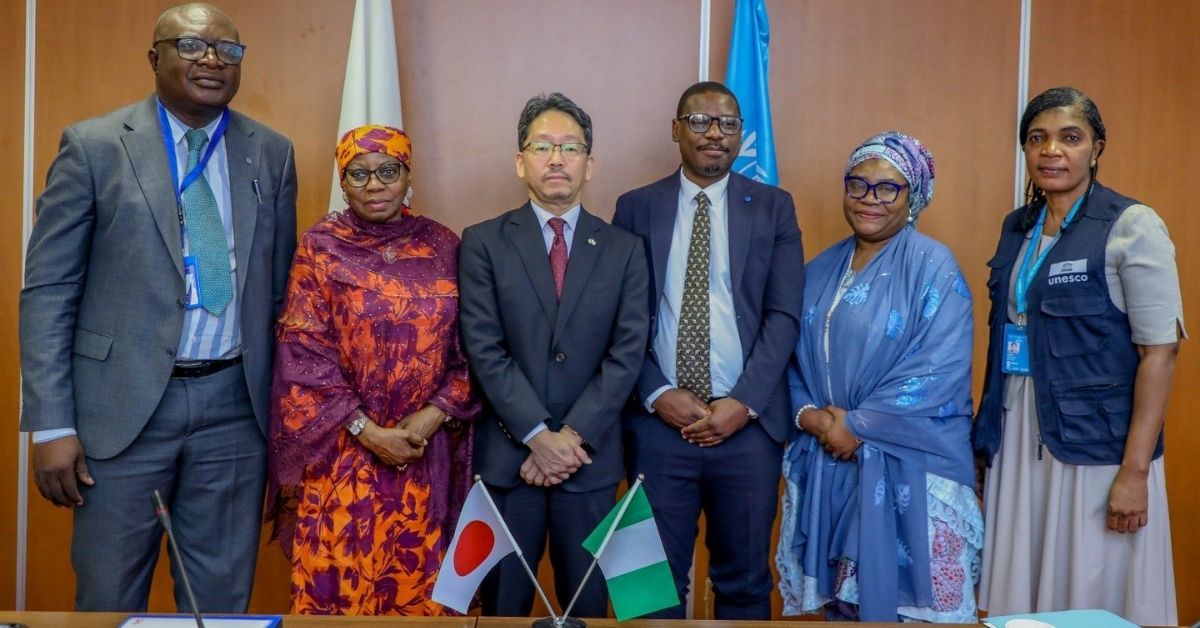

Nigeria has secured new international support for climate adaptation efforts after the Government of Japan committed $50,000 to a UNESCO programme aimed at strengthening flood resilience in Niger State, one of the country’s most flood-prone regions. The funding was formalised on January 28 in Abuja with the signing of an Arrangement Letter between Japan and UNESCO, launching a 12-month intervention focused on Mokwa Local Government Area.
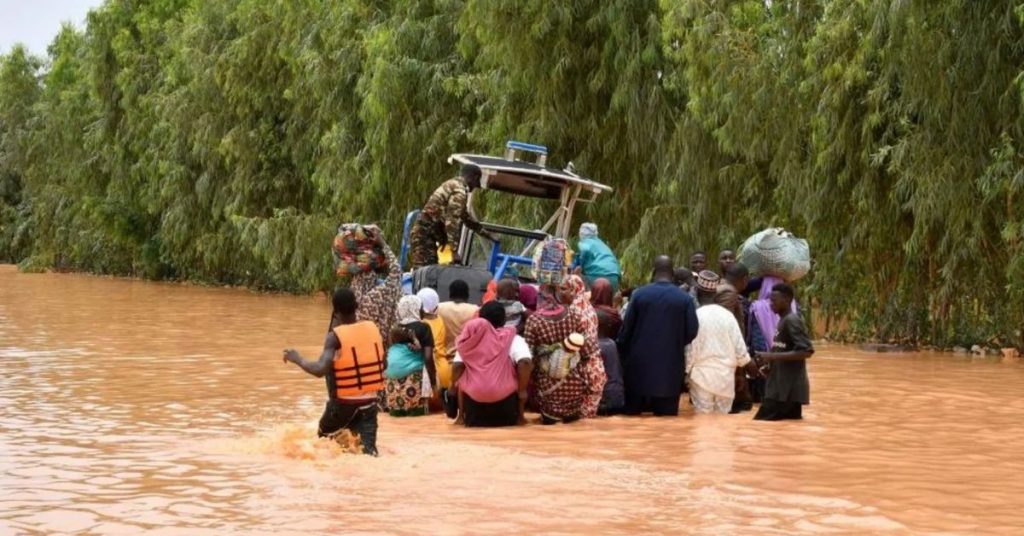
The project, titled Strengthening Flood Resilience in Nigeria to Foster Long-Term Societal Stability with Focus on Niger State, is designed to move flood management away from emergency response towards preparedness and long-term risk reduction. Its launch comes less than a year after severe flooding swept through parts of Niger State, killing more than 500 people, displacing over 1,000 residents and damaging homes, roads and farmland, according to official accounts.
At the signing ceremony, the Ambassador of Japan to Nigeria, Hideo Suzuki, said the initiative reflected a shared effort to turn repeated climate shocks into an opportunity for resilience building. He described the devastation in Mokwa in 2025 not as abstract figures, but as evidence of how climate-induced disasters continue to erode livelihoods and social stability. The Japanese support, he said, would help shift local authorities and communities from reacting to floods after they occur to preparing for them in advance.
Although modest in financial terms, the project is structured around capacity building rather than infrastructure delivery. UNESCO officials say it will focus on strengthening early warning systems, improving coordination between institutions involved in disaster management and introducing climate-risk-informed decision-making tools. Training of Nigerian experts and community-level preparedness are central components, reflecting lessons learned from previous floods where warnings and responses were fragmented.
The intervention aligns with Japan’s broader development cooperation with Africa under the Tokyo International Conference on African Development process and supports global climate and urban resilience goals, particularly Sustainable Development Goals 11 on sustainable communities and 13 on climate action. For Japan, the partnership also reinforces long-standing cooperation with UNESCO in Nigeria on science-driven and community-focused development initiatives.
UNESCO’s Head of Office in Nigeria, John-Paul Abiaga, said the 2025 floods exposed structural weaknesses in disaster preparedness across flood-prone states. He argued that repeated reliance on emergency relief has failed to reduce long-term vulnerability. According to Abiaga, the new project is intended to support early action, improve coordination among institutions and ensure that climate data informs local planning decisions before disasters strike.

Nigeria’s Ecological Project Office, which has statutory responsibility for coordinating national responses to environmental challenges, has committed to supporting implementation. Its Permanent Secretary, Aisha Ndayako, said the scale and frequency of recent floods underscored the need for proactive, community-centred solutions rather than short-term relief. She noted that lessons from Mokwa could inform similar interventions in other flood-prone areas of the country.
Niger State authorities have welcomed the initiative as part of wider efforts to reduce disaster risk in a region traversed by major river systems and vulnerable to increasingly intense rainfall. Although the current project focuses on a single local government area, Nigeria’s Permanent Delegate to UNESCO, Hajo Sani, said it was expected to generate practical models that could be replicated elsewhere.
From UNESCO’s technical perspective, the programme responds to a call for proposals under Japan’s supplementary budget, with an emphasis on institutional coordination and climate-informed planning rather than standalone projects. According to Enang Moma, a National Professional Officer in UNESCO’s Natural Sciences sector, the Arrangement Letter formally establishes the partnership and sets the framework for public awareness, technical cooperation and demonstration of climate-resilient development approaches.
Read also: Nigeria moves to open Ogun Coast to oil drilling and deep seaport development
The project highlights both the urgency and the constraints of climate adaptation financing in Nigeria. Flooding remains one of the country’s most persistent climate risks, yet funding for preparedness and risk reduction continues to lag behind the scale of losses. While $50,000 will not eliminate flood risk in Niger State, officials argue that targeted investments in knowledge, coordination and early warning can deliver outsized benefits if applied effectively.
As implementation begins in Mokwa, attention will focus on whether the project can translate technical planning into measurable improvements on the ground. Its success, stakeholders say, will ultimately be judged by whether future floods result in fewer losses of life, livelihoods and infrastructure, and whether the lessons learned can strengthen resilience beyond a single community.
Engage with us on LinkedIn: Africa Sustainability Matters