


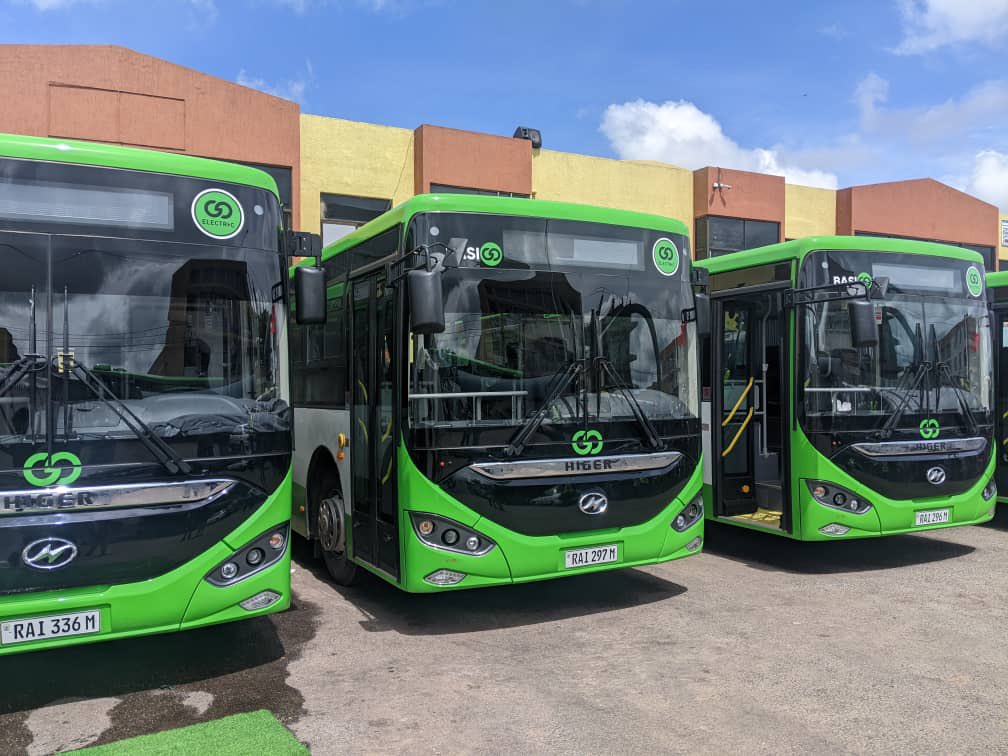
Rwanda’s transition to electric mobility is accelerating as rising fuel costs, government incentives and expanding charging infrastructure encourage motorists and commercial transport operators to adopt electric vehicles, positioning the country as one of Africa’s emerging leaders in sustainable transport development.
The shift is being driven by a combination of economic and policy factors. As global fuel price volatility continues to place pressure on consumers and businesses, Rwanda has intensified efforts to reduce dependence on imported petroleum products through the promotion of electric mobility. The strategy forms part of the country’s broader agenda to strengthen energy security, reduce greenhouse gas emissions and support long-term economic resilience.
 According to Rwanda’s Ministry of Infrastructure (MININFRA), public institutions are now required to ensure that at least 30 per cent of newly procured vehicles are fully electric. The policy is intended to stimulate demand while demonstrating public sector leadership in the transition towards cleaner transport systems. In Kigali, authorities have also restricted the registration of new public transport motorcycles to electric models, creating one of the continent’s most ambitious policy frameworks for two-wheel transport electrification.
The economic case for electric mobility is increasingly influencing consumer behaviour. Vehicle owners and transport operators report that charging costs remain significantly lower than fuel expenses for comparable journeys, particularly as electricity prices remain relatively stable compared to international oil markets. Electric vehicles also require less routine maintenance, reducing operating costs through the elimination of engine oil changes and fewer mechanical components subject to wear and tear.
For a country that imports the majority of its petroleum products, these savings carry wider economic significance. Reducing fuel consumption can help lower import bills, ease pressure on foreign exchange reserves and improve resilience against external energy price shocks. Such considerations have become increasingly important across Africa, where fuel imports continue to represent a substantial fiscal burden for many economies.
Industry participants argue that the economics of electrification are becoming particularly compelling in Rwanda’s motorcycle transport sector, which serves as a critical component of urban mobility. Electric motorcycles offer lower daily operating costs for riders while reducing exposure to fluctuations in fuel prices. The expansion of charging infrastructure and battery-swapping networks has further improved the practicality of electric transport solutions for commercial operators.
Government support has been central to this growth. Rwanda has introduced one of Africa’s most comprehensive incentive packages for electric mobility, including exemptions on import duties, excise taxes and value-added tax for electric vehicles, batteries, spare parts and charging equipment. Investors involved in electric vehicle manufacturing and assembly also benefit from preferential tax treatment, while charging operators receive favourable electricity tariffs.
These measures reflect a broader recognition that transport electrification is not solely an environmental objective but also an industrial and economic development strategy. By encouraging investment in electric mobility value chains, governments can stimulate new business opportunities, create skilled employment and strengthen domestic technological capabilities.
The environmental implications are equally significant. Transport remains a major source of greenhouse gas emissions globally, and African cities increasingly face challenges associated with air pollution, congestion and urban growth. According to studies commissioned by the Rwandan government, large-scale adoption of electric motorcycles could substantially reduce fuel consumption and lower emissions while improving urban air quality and public health outcomes.
The transition also aligns with Rwanda’s commitments under international climate frameworks and broader continental ambitions outlined in the African Union’s Agenda 2063. Sustainable transport is increasingly viewed as an essential component of climate-resilient economic development, particularly as African cities expand and mobility demand rises.
However, sustaining momentum will require continued investment in supporting infrastructure. As electric vehicle adoption increases, demand for charging services and grid capacity is expected to grow. Recognising this challenge, Rwanda has developed a national charging infrastructure master plan that identifies more than 224 potential charging locations across the country. The initiative aims to attract private investment while ensuring that charging facilities expand in line with vehicle uptake.
 The experience offers a broader lesson for African policymakers seeking to balance economic development, energy security and environmental sustainability. While electrification alone will not resolve all transport challenges, Rwanda’s approach demonstrates how coordinated policies, targeted incentives and private-sector participation can create conditions for market transformation.
As governments across the continent explore pathways to reduce transport emissions and strengthen energy resilience, Rwanda’s electric mobility strategy provides an example of how sustainability objectives can be linked to practical economic benefits for households, businesses and public institutions alike.


