


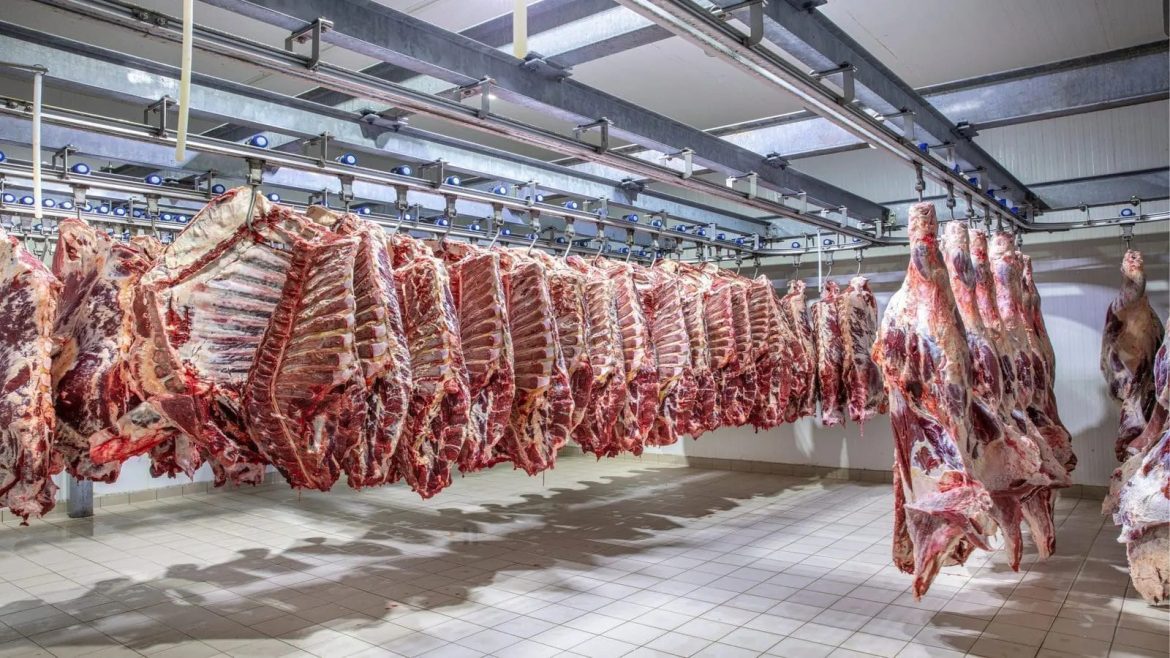
The United States meat industry is urging Washington to use the African Growth and Opportunity Act (AGOA) as a negotiating tool to secure greater access for American red meat exports across key African markets, setting the stage for a potential trade dispute that could test the balance between market liberalization and Africa’s drive for agricultural self-sufficiency.
The push comes as AGOA, the flagship U.S. trade programme granting eligible African countries preferential access to the American market, approaches another critical review period. On June 1, the U.S. Meat Export Federation (USMEF) called on the Office of the U.S. Trade Representative (USTR) to use the agreement more aggressively to challenge what it describes as unjustified barriers to American meat exports in several African countries, including Nigeria, South Africa, Angola, Kenya and Namibia.
According to the federation, AGOA has historically been used to encourage governance, labour and human rights reforms, but has rarely been leveraged to improve access for U.S. agricultural products despite the agreement’s broader objective of promoting two-way trade.
“We see tremendous opportunity on the African continent for red meat exports,” said Jim Remcheck, Director of Export Services at the USMEF. He argued that AGOA should play a greater role in opening markets for American agricultural producers and reducing trade barriers affecting meat exports.
The federation’s concerns centre on a range of import restrictions that continue to limit access for U.S. beef and pork products. In South Africa, USMEF argues that authorities continue to apply sanitary restrictions linked to porcine reproductive and respiratory syndrome (PRRS), despite the removal of an earlier ban on American pork imports. The organization maintains that these measures are inconsistent with science-based trade principles and World Trade Organization commitments.
Beyond South Africa, the federation points to import licensing requirements in Angola that affect certain beef and pork offal products. In Namibia, all imports of American red meat remain prohibited, while transit permits allowing shipments to neighbouring markets have reportedly been discontinued.
In East Africa, Kenya is viewed by U.S. exporters as a market with significant growth potential, but one where regulatory uncertainty, customs procedures and tariffs continue to complicate market entry. Nigeria, Africa’s most populous country, remains largely closed to fresh and frozen American red meat, permitting only a narrow category of processed products.
USMEF has gone further in the Nigerian case, encouraging U.S. trade officials to consider suspending the country’s AGOA benefits until restrictions on American meat imports are lifted. The federation describes Nigeria’s ban as lacking scientific justification and sees the market as one of the most significant long-term opportunities for American exporters.
The proposal revives memories of a previous trade confrontation between Washington and Pretoria that demonstrated the influence AGOA can exert in agricultural negotiations. In the early 2000s, South Africa imposed anti-dumping duties on American poultry imports to protect local producers from what it considered unfair competition from low-cost imports.
For years, the dispute remained unresolved as South Africa defended its measures as necessary to safeguard a strategic domestic industry. However, as AGOA renewal discussions intensified ahead of the programme’s 2015 expiration date, the United States signalled that South Africa’s preferential access to the American market could be at risk if the poultry dispute remained unresolved.
The pressure eventually proved effective. Faced with the prospect of losing preferential access for exports including citrus, wine and automobiles, South Africa agreed to reopen its market to American poultry products in 2016, preserving its AGOA eligibility while ending one of the most contentious agricultural trade disputes between the two countries.
The USMEF now appears hopeful that a similar approach could yield results across other African markets. Yet analysts note that the circumstances today differ significantly from those that shaped the earlier South African poultry dispute.

Africa’s livestock sector has evolved considerably over the past decade, with many governments placing greater emphasis on food security, domestic value addition and agricultural industrialization. Several of the countries targeted by U.S. exporters have invested heavily in strengthening local meat production and processing capacity, creating strong political and economic incentives to maintain protective measures.
South Africa, for example, has developed a competitive beef industry that serves both domestic and international markets, including export destinations in the Middle East. Namibia likewise operates a well-established export-oriented livestock sector and became the first African country to export beef to the United States in 2020.
In both countries, policymakers may view unrestricted imports as a threat to local producers and long-term investment in domestic agricultural value chains. The argument is likely to resonate strongly at a time when governments across the continent are seeking to reduce import dependence and create jobs through local agro-processing industries.
Nigeria provides another illustration of this policy direction. In November 2024, the federal government signed an agreement with Brazilian meat giant JBS to establish six meat processing and packaging facilities valued at approximately $2.5 billion over five years. The initiative forms part of a broader strategy to strengthen domestic production capacity, increase value addition and reduce reliance on imported food products.
At the same time, the commercial opportunity attracting American exporters is substantial. Rapid urbanization, population growth, rising incomes and changing consumer preferences are driving increased demand for animal protein across many African economies. According to USDA data, beef accounts for roughly two-thirds of meat consumption in Kenya, while South Africa remains one of the continent’s largest beef markets.

https://www.aecweek-registration.com/2026/
Long-term projections suggest that demand will continue to expand. The Food and Agriculture Organization estimates that Nigeria’s beef consumption could nearly triple by 2050, reaching approximately 1.39 million tonnes compared with 470,000 tonnes in 2015. Such growth underscores why international meat producers increasingly view Africa as one of the world’s most promising future markets.
The emerging debate therefore extends beyond meat imports alone. It reflects broader questions about the future of AGOA, the extent to which trade preferences should be linked to market access commitments, and how African governments balance international trade obligations with domestic industrial development goals.
As discussions over AGOA’s future continue ahead of the programme’s expiration at the end of the year, pressure from American agricultural exporters is likely to intensify. Whether African governments choose to accommodate those demands or defend existing protections will help shape the next chapter of U.S.-Africa trade relations and the future development of the continent’s livestock and agro-processing industries.


