


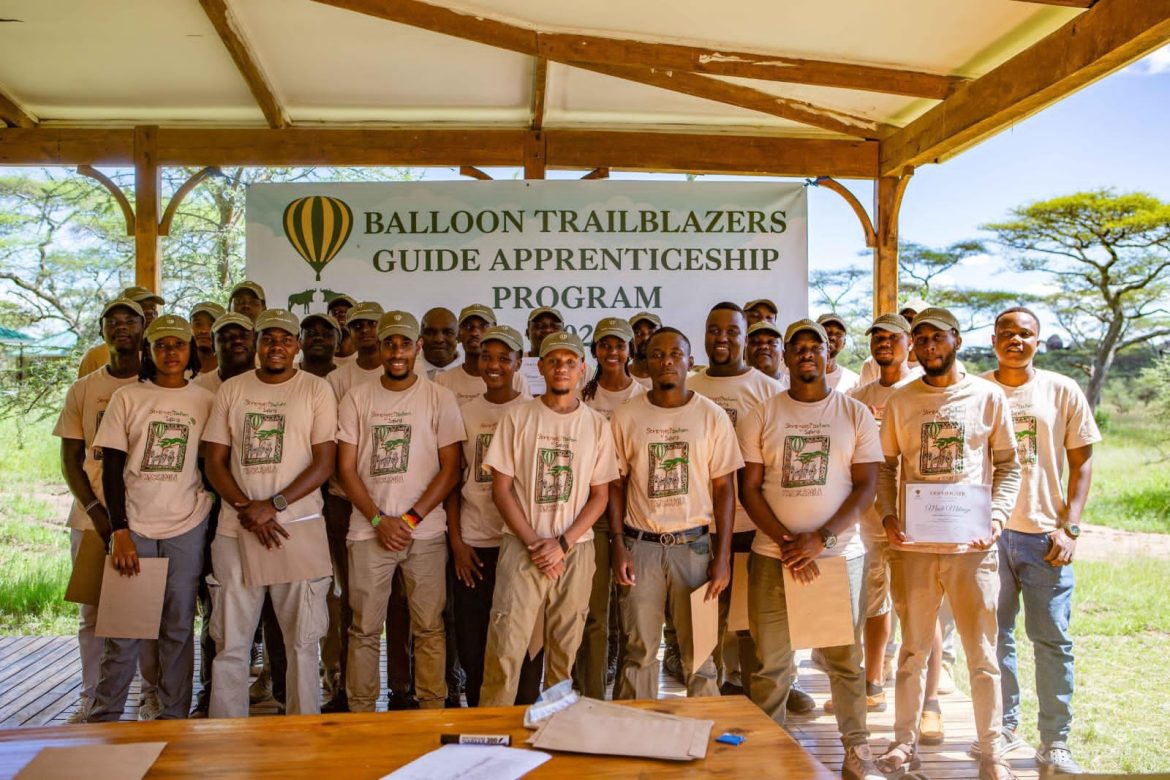
Serengeti Balloon Safaris has launched a structured internship and apprenticeship programme in Tanzania aimed at addressing persistent skills shortages within the tourism sector, underscoring growing private-sector efforts to strengthen workforce readiness in one of the country’s most important economic industries.
The Trailblazers Guide Apprenticeship Programme, introduced in Arusha and currently in its second intake, combines classroom instruction with practical field experience to equip young Tanzanians with industry-relevant skills. The initiative is designed to bridge the gap between academic training and workplace expectations, a challenge that continues to affect labour markets across East Africa despite rising educational attainment among young people.
The programme targets graduates and young professionals transitioning from educational institutions into the workforce. According to Serengeti Balloon Safaris Managing Director John Corse, the initiative was developed in response to a long-standing mismatch between theoretical education and the practical competencies required by employers in tourism and hospitality.
 Tourism remains one of Tanzania’s largest sources of foreign exchange earnings and employment. The sector contributes significantly to national income through wildlife tourism, hospitality services, transport, conservation activities and related value chains. However, industry stakeholders have frequently identified workforce preparedness as a constraint to improving service quality and maintaining competitiveness in an increasingly sophisticated global tourism market.
Through the apprenticeship programme, participants receive training in a range of operational areas that are central to tourism activities in protected ecosystems. These include defensive and off-road driving, wilderness first aid, customer service, vehicle maintenance, safety management and compliance with regulations established by the Tanzania National Parks Authority. The latest intake comprises 28 trainees, including a growing number of women entering roles traditionally dominated by men.
The initiative reflects a broader trend across Africa in which private companies are taking a more active role in workforce development. According to regional labour market assessments, many employers continue to report difficulties finding graduates with practical experience despite rising levels of educational participation. Skills mismatches have become a particular concern in sectors such as tourism, agriculture, technology and manufacturing, where operational competence often requires substantial workplace exposure.
For Tanzania, the programme carries implications that extend beyond individual employment outcomes. Tourism supports more than one million jobs directly and indirectly and remains a critical contributor to rural livelihoods, conservation financing and foreign exchange generation. Improving workforce capability can enhance visitor experiences, strengthen safety standards and support higher-value tourism offerings, all of which influence the sector’s long-term competitiveness.
The initiative also highlights the increasing recognition that sustainability in tourism depends on investments in both natural and human capital. Conservation areas, wildlife resources and tourism infrastructure form the foundation of Tanzania’s tourism economy, but the quality of services delivered by guides, operators and support personnel remains equally important to sustaining growth and attracting international visitors.
According to industry observers, structured apprenticeship models can help reduce youth unemployment while creating clearer pathways into formal employment. Such programmes also enable employers to cultivate specialised skills aligned with operational needs, reducing recruitment costs and strengthening workforce retention over time.
 The focus on practical skills development aligns with Tanzania’s broader economic objectives of strengthening human capital, increasing youth employment and improving productivity across key sectors. It also reflects the priorities outlined under the African Union’s Agenda 2063, which emphasises skills development, inclusive growth and the creation of employment opportunities for Africa’s growing youth population.
As Tanzania seeks to expand the economic benefits generated by tourism, initiatives that strengthen the connection between education systems and labour market demands may play an increasingly important role. While conservation investments often receive significant attention within tourism development strategies, workforce development programmes such as the Trailblazers Guide Apprenticeship Programme demonstrate that building human capacity remains equally critical to the sector’s resilience, competitiveness and long-term sustainability.


