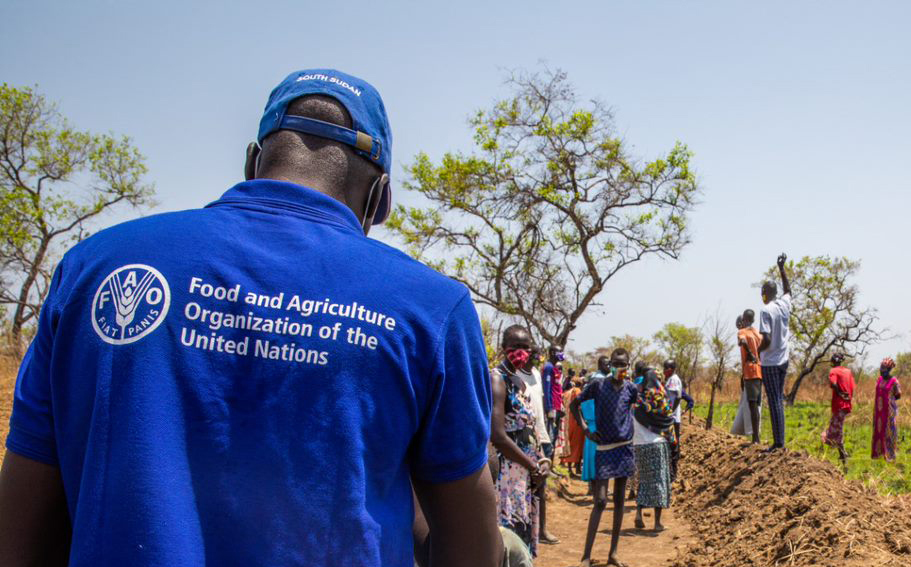

A new agricultural voucher programme launched by the UN Food and Agriculture Organization (FAO), with the support of Zimbabwe’s government and funding from France, is supplying subsidised drought-tolerant seeds and farming inputs to thousands of rural households threatened by crop failure after months of below-average rainfall.
The scheme, now active in Masvingo and Mwenezi districts, targets about 4,000 families whose food security has deteriorated sharply following an El Niño-driven dry spell that scorched early maize crops and drained community granaries.
Read also: Inside Africa’s 2026 energy outlook: New gas hubs, funding gaps and the battle for power access
The intervention is part of FAO’s Nourish and Thrive initiative, and it functions in a manner designed to support both households and rural markets. Registered farmers receive vouchers, logged digitally through the Identification, Delivery and Empowerment Application (IDEA), and redeem them at authorised agro-dealers for climate-resilient seed varieties such as sorghum, cowpeas and pearl millet.
While the individual allocations are modest, they offer a crucial lifeline for smallholder farmers who grow mainly for home consumption and lack the cash reserves to restock on their own.
Conditions on the ground show why such support is urgently needed. Rainfall deficits during the 2024–25 planting season exceeded 30 percent in parts of Masvingo, according to government monitoring data. In many wards, maize planted in November never reached maturity, and livestock troughs ran dry before the end of January.
Markets reacted quickly, with the consumer price of basic staples spiking just as household harvest stocks depleted. In a district where more than 70 percent of families rely on non-mechanised farming, a single failed season can erase household resilience built over several years.

The situation mirrors a broader regional pattern as southern Africa heads into another vulnerable harvest cycle. Zambia recorded a nearly 50 percent collapse in maize output last year and has identified more than 80 districts requiring food support. Malawi reported that one in every five hectares under cultivation in its southern districts failed due to delayed rains and unusually high temperatures. These cascading impacts illustrate the cumulative pressure climate variability is placing on rural economies that were already fragile from inflation, weak infrastructure, and pandemic-era income stress.
Voucher programmes are gaining traction partly because they reinforce existing market systems rather than displacing them. Instead of distributing imported seed, implementers contract local suppliers, track transactions electronically, and allow farmers to select the crops most suitable to their soils and family needs.
The cash value remains within rural trading centres, helping agro-dealers stay afloat during lean seasons. Where voucher schemes have scaled in other countries, they have occasionally sparked new investment in remote agribusiness outlets that previously lacked reliable demand.
A secondary but significant dimension of the FAO initiative is its insistence on safeguarding. Communities participating in the scheme are briefed on how to identify and report misconduct or abuse associated with programme activities. The move reflects hard lessons drawn across Africa’s emergency assistance landscape, where scarcity can place beneficiaries at risk of coercion. By embedding ethics and accountability into the mechanics of food support, FAO and its partners are signalling a shift toward more community-centred delivery.

How far this injection of seed and support can stretch will depend on the remainder of the rainy season and the ability of national authorities and donors to maintain funding. Local officials warn that as many as 2.7 million Zimbabweans may need assistance before the next harvest if rainfall patterns do not stabilise. However, they argue that preserving the means of production, rather than supplying food alone, is critical to preventing the next food emergency.
Should the voucher model expand and be replicated in neighbouring states facing similar shocks, it could mark a practical step toward safeguarding food systems in a region where the climate signal grows louder each year, and where the margin of error for smallholder farmers continues to shrink.
Engage with us on LinkedIn: Africa Sustainability Matters